The best conditioners for men
The useful question is not which conditioner is best, it is whether you are conditioning hair or scalp - because those are different products.
By Sawyer V. · Published · Last updated
We have not tested any of this. Everything below is compiled from published manufacturer specifications, and the arithmetic is printed so you can check it. This page carries affiliate links: if you buy through one we earn a commission at no extra cost to you, and it does not change the order of the picks. Full disclosure.
The short answer
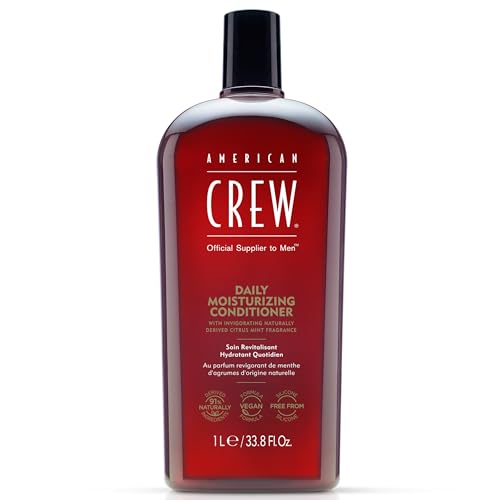
Buy the American Crew Daily Moisturizing Conditioner. Its published ingredient list contains no silicone, which matters because silicone conditioners feel better immediately and then build up until hair goes flat. Buy the Jack Black instead if the problem is your scalp rather than your hair - tea tree and peppermint oils high on the list, aimed at itch rather than at softness. Those are two different complaints and most men buy for the wrong one.
| # | Pick | Lasts | Score | Price |
|---|---|---|---|---|
| 1 | American Crew Daily Moisturizing Conditioner Silicone-free, so it does not build up | ~130 uses | 9.3/10 | $30.00 - view on Amazon |
| 2 | Jack Black Nourishing Hair and Scalp Conditioner When the scalp is the problem, not the hair | ~150 uses | 9.1/10 | $21.25 - view on Amazon |
| 3 | Every Man Jack 2-in-1 Shampoo + Conditioner (Sea Salt) One bottle, and the honest limits of that | ~200 uses | 9.4/10 | $19.13 - view on Amazon |
Prices last verified September 24, 2026. They move constantly; the figure on Amazon when you click is the real one.
Two different jobs sold as one product
A shampoo removes oil. A conditioner puts something back. But there are two entirely different reasons to want that, and the products that serve them share almost nothing except the word on the bottle.
- Conditioning the hair. The ends of a long hair are older than the roots - months older - and have been through more washing, sun and friction. Conditioner smooths the cuticle so they behave. This only matters above about an inch of length.
- Treating the scalp. Itch, tightness and flaking are skin problems that happen to be under hair. A scalp-targeted conditioner puts actives where the skin is, and applying it to the ends - as everybody is taught to - misses the target completely.
Work out which you have before reading the picks, because the first two products on this page are good answers to different questions.
The silicone question, which is the real ranking axis
Silicones - dimethicone and its relatives - coat the hair shaft. That coating is why a silicone conditioner feels dramatically better on the first wash: you are feeling a smooth polymer, not smoother hair.
Over weeks it accumulates. Hair gets progressively heavier and flatter, the conditioner appears to stop working, and the usual response is to buy a different one - which, if it also contains silicone, restarts the cycle. Escaping it needs a clarifying wash, which most people do not know to do.
| Product | Silicone? | Target | Size |
|---|---|---|---|
| American Crew Daily Moisturizing | None published | The lengths | 250 ml |
| Jack Black Hair and Scalp | None published | The scalp | 295 ml |
| Every Man Jack 2-in-1 | Dimethicone copolyol | Both, compromised | 400 ml |
Why the American Crew is first
Because the ingredient list is published and it is genuinely silicone-free. It conditions with cetyl alcohol and behentrimonium-class ingredients, which rinse rather than accumulate, so what you feel in month three is the same as what you felt in week one.
American Crew also publishes the rest: panthenol, peppermint oil, rosemary leaf extract and thyme extract are named rather than hidden in a “botanical complex”, and the product is stated as 91 per cent naturally derived and vegan.
The mark against it is the menthol and peppermint oil. That tingle is fragrance doing theater - it is not conditioning, and on a scalp that is already irritated it is the wrong direction. Which is what the second pick is for.
Why the Jack Black is a different product, not a worse one
Tea tree leaf oil and peppermint oil near the top of a published list, plus panthenol and hydrolyzed rice protein. It is aimed at the skin under the hair rather than at the hair itself, and if your complaint is itch or tightness that is the correct target.
Two honest caveats. Jack Black publishes no concentration for the tea tree oil, which is the whole proposition of the product - so you know what is in it and not how much. And tea tree is a common contact allergen; if your scalp reacts to things, this is not the low-irritant option it sounds like.
The 2-in-1, and the chemistry it is fighting
Every Man Jack publishes a full ingredient list, which is more than a lot of drugstore 2-in-1s manage, and the conditioning agents are named: shea butter, hydrolyzed wheat protein, panthenol, aloe.
The problem is structural rather than a formulation choice. Cleansing surfactants are anionic - negatively charged. Conditioning agents are cationic - positively charged. Put them in one bottle and they attract each other, which is precisely what you do not want, because each is then partly neutralized by the other. Every 2-in-1 is a managed compromise between those two, and management is not the same as solving.
On fine hair, showering daily, it is genuinely fine and the shelf space saved is real. If you have a hair or scalp complaint you are trying to fix, this is the product that will make it look like nothing works.
Using conditioner so it does something
- Squeeze the water out of your hair first. Conditioner applied to soaking hair is diluted before it touches anything. This costs three seconds and is the single biggest improvement available.
- Ends first, roots last or not at all - unless it is a scalp product, in which case the reverse.
- Leave it for a minute. Applying and rinsing immediately is the second most common way to waste it. Wash somewhere else while it sits.
- Rinse cool. Not cold - cool. Hot water re-opens the cuticle you have just smoothed.
And the honest prerequisite: if you wash your hair every day with a stripping shampoo, no conditioner is going to keep up. How often to wash is the page that fixes that, and it costs nothing.
Every pick, with the working
Each entry shows the published specifications, the axis scores they produce and what you give up. The order is the computed order, not a commercial one, and the arithmetic is open underneath every score.
Our pickSilicone-free, so it does not build up
American Crew Daily Moisturizing Conditioner
The full INCI is published and there is no dimethicone in it. That matters more than any marketing claim on the bottle: silicone conditioners coat the hair and read as softer immediately, then build up until the hair goes flat and needs a clarifying wash. This one conditions with cetyl alcohol and behentrimonium-class ingredients instead, which rinse.
- Volume
- 250 ml
- Fragrance
- Fragranced
- Made in
- United States
- Refill
- Nothing to refill
- Warranty
- Not applicable
- How long it lasts
- 130 uses
Published key ingredients: Cetyl alcohol, Panthenol, Peppermint oil, Rosemary leaf extract, No silicones.
The arithmetic: 250 ml / 2 ml per application (assumed) = about 130 applications.
What it gets right
- Published full ingredient list, and it is genuinely silicone-free
- Panthenol and peppermint oil published as named ingredients, not a proprietary blend
- Published as 91 per cent naturally derived and vegan
- The 250 ml bottle is a normal size rather than a salon-only liter
Flaws
- Menthol and peppermint oil: the tingle is fragrance, not conditioning
- American Crew publishes no concentration for anything
- Fragranced, so it is the wrong choice if the scalp is the problem
The working behind the 9.3
- How long it lasts: 10.0
- 250 ml / 2 ml per application (assumed) = about 130 applications. At five shaves a week, that is about 6.0 months. A 3-month supply scores 10 in this category, so 6.0 / 3 x 10 = 10.0.
- Ease of switching: 9.0
- Full ingredient list published and verifiably silicone-free (++), named actives rather than a blend (+), normal bottle size (+), but fragranced with menthol and peppermint (-) and no concentrations published (-).
- Refill economics: 8.0
- Nothing to refill. The only future cost is replacing the item itself.
- What the maker publishes: 10.0
- 4 of 4 specifications a buyer would expect are published: volumeMl, keyIngredients, fragranceFree, madeIn. 4 / 4 x 10 = 10.0.
Axes with no published input are dropped and the remaining weights re-normalized, so a product is not punished for a category where an axis does not apply. Specifications compiled 3 September 2026 from American Crew Daily Moisturizing Conditioner published ingredient list.
2When the scalp is the problem, not the hair
Jack Black Nourishing Hair and Scalp Conditioner
Built around tea tree leaf oil, peppermint and panthenol, aimed at the scalp rather than the lengths. If your complaint is itch and flaking rather than dry ends, that is the right target - and it is a different product from a conditioner that only softens hair. Full ingredient list published; no concentrations.
- Volume
- 295 ml
- Fragrance
- Fragranced
- Made in
- United States
- Refill
- Nothing to refill
- Warranty
- Not applicable
- How long it lasts
- 150 uses
Published key ingredients: Tea tree leaf oil, Peppermint oil, Panthenol, Hydrolyzed rice protein.
The arithmetic: 295 ml / 2 ml per application (assumed) = about 150 applications.
What it gets right
- Tea tree leaf oil and peppermint oil published as named ingredients near the top of the list
- Panthenol (pro-vitamin B5) and hydrolyzed rice protein published
- Aimed at the scalp, which is where most male hair complaints actually originate
- Full INCI published in order
Flaws
- No published concentration for the tea tree oil, which is the whole proposition
- Fragranced, including grapefruit peel oil and multiple mint oils
- Tea tree oil is a common contact allergen and this is not a low-irritant formula
The working behind the 9.1
- How long it lasts: 10.0
- 295 ml / 2 ml per application (assumed) = about 150 applications. At five shaves a week, that is about 6.9 months. A 3-month supply scores 10 in this category, so 6.9 / 3 x 10 = 10.0.
- Ease of switching: 8.5
- Named scalp actives published high on the ingredient list (+), full INCI (+), a genuinely different target from a lengths-only conditioner (+), but no published concentration for the tea tree oil the product is built on (-) and multiple known contact allergens (-).
- Refill economics: 8.0
- Nothing to refill. The only future cost is replacing the item itself.
- What the maker publishes: 10.0
- 4 of 4 specifications a buyer would expect are published: volumeMl, keyIngredients, fragranceFree, madeIn. 4 / 4 x 10 = 10.0.
Axes with no published input are dropped and the remaining weights re-normalized, so a product is not punished for a category where an axis does not apply. Specifications compiled 3 September 2026 from Jack Black Hair and Scalp Conditioner published ingredient list.
3One bottle, and the honest limits of that
Every Man Jack 2-in-1 Shampoo + Conditioner (Sea Salt)
Skip this one. A 2-in-1 asks an anionic cleansing system and a cationic conditioning system to share a bottle, and the chemistry means one of them is always losing. On fine hair with a daily shower it is genuinely fine. If you have any actual hair or scalp complaint, two bottles is not a luxury - it is the fix, and buying this instead is why the complaint persists.
400 ml of a combined wash and conditioner with a fully published ingredient list including shea butter, hydrolyzed wheat protein and panthenol. A 2-in-1 is a compromise by construction - a cleanser and a conditioner want opposite charges - and it is on this page because a lot of men buy one, not because it beats two bottles.
- Volume
- 400 ml
- Fragrance
- Fragranced
- Made in
- United States
- Refill
- Nothing to refill
- Warranty
- Not applicable
- How long it lasts
- 200 uses
Published key ingredients: Shea butter, Hydrolyzed wheat protein, Panthenol, Aloe vera leaf juice, Sodium chloride (sea salt).
The arithmetic: 400 ml / 2 ml per application (assumed) = about 200 applications.
What it gets right
- Full INCI published, which not every drugstore 2-in-1 gives you
- Shea butter, hydrolyzed wheat protein and panthenol named and published
- 400 ml for both jobs, so it is the smallest shelf footprint here
- Published as free of parabens, phthalates and dyes
Flaws
- Ammonium lauryl sulfate and sodium coco-sulfate first among the surfactants, which is a real cleanser fighting a real conditioner in one bottle
- Contains dimethicone copolyol, so it does deposit silicone
- Fragranced, with limonene and linalool published
The working behind the 9.4
- How long it lasts: 10.0
- 400 ml / 2 ml per application (assumed) = about 200 applications. At five shaves a week, that is about 9.2 months. A 3-month supply scores 10 in this category, so 9.2 / 3 x 10 = 10.0.
- Ease of switching: 9.5
- One bottle for two jobs and a full published ingredient list (+), named conditioning agents (+), but the surfactant system and the conditioning system are chemically at odds (-), it deposits silicone (-), and it is fragranced (-).
- Refill economics: 8.0
- Nothing to refill. The only future cost is replacing the item itself.
- What the maker publishes: 10.0
- 4 of 4 specifications a buyer would expect are published: volumeMl, keyIngredients, fragranceFree, madeIn. 4 / 4 x 10 = 10.0.
Axes with no published input are dropped and the remaining weights re-normalized, so a product is not punished for a category where an axis does not apply. Specifications compiled 3 September 2026 from Every Man Jack 2-in-1 published size and ingredient list.
Prices last verified September 24, 2026. They move constantly; the figure on Amazon when you click is the real one.
Questions people actually ask
Do men need conditioner?
If your hair is above about an inch, probably not - there is not enough length for the ends to be older than the roots, which is the problem conditioner solves. Above that, or if you use a drying shampoo, yes. The genuine exception is a scalp complaint, where the right conditioner is doing a completely different job.
Are silicones in conditioner bad?
Not harmful, but they accumulate. A silicone coats the hair shaft and reads as instantly softer; over weeks the coating builds up, weighs hair down and needs a clarifying wash to remove. If your hair goes limp a fortnight after switching conditioners, that is what happened.
How do I know if a conditioner has silicone in it?
Look for ingredients ending in -cone, -conol, -silane or -siloxane - dimethicone is the common one. American Crew publishes a full list with none of them; Every Man Jack's published list includes dimethicone copolyol. That is a checkable difference rather than a marketing one.
Should conditioner go on the scalp or the ends?
The ends, for an ordinary conditioner - the roots are the newest hair and the scalp is already producing oil. The exception is a scalp-targeted product like the Jack Black, where the actives are meant to reach skin. Read what the product is for and apply it accordingly; this is the most common misuse in the category.
Can I use conditioner on my beard?
You can, and it is better than nothing, but the formulations differ for a real reason - facial skin produces less sebum than a scalp and hair conditioners are built for the scalp's oil load. A dedicated beard wash and an oil is the better answer.