Scissors vs clippers for home haircuts
One sets a length, the other makes a shape. Almost every bad home haircut is one of them being asked to do the other one's job.
By Sawyer V. · Published
We have not tested any of this. Everything below is compiled from published manufacturer specifications, and the arithmetic is printed so you can check it. This page carries affiliate links: if you buy through one we earn a commission at no extra cost to you, and it does not change the order of the picks. Full disclosure.
The short answer
Clippers for the back and sides, scissors for the top. A clipper with a guard cuts everything to one length, which is exactly what you want where the head is a smooth curve and exactly wrong where it is not. Scissors cut to a shape, which the top of a head needs and a guard cannot produce. If you buy one thing first, buy clippers - they do two thirds of a haircut and they are far easier to learn.
| # | Pick | Lasts | Score | Price |
|---|---|---|---|---|
| 1 | Equinox Razor Edge 6.5 in Hair Shears Scissor-over-comb, and everything clippers cannot do | 2,600 shaves* | 6.5/10 | $8.90 - view on Amazon |
| 2 | Wahl Elite Pro (79602) The widest published guard range | 1,300 shaves* | 5.6/10 | $69.99 - view on Amazon |
| 3 | Wahl 5 Star Magic Clip (8148) Fading and blending at home | 1,300 shaves* | 5.9/10 | $139.99 - view on Amazon |
Prices last verified September 24, 2026. They move constantly; the figure on Amazon when you click is the real one.
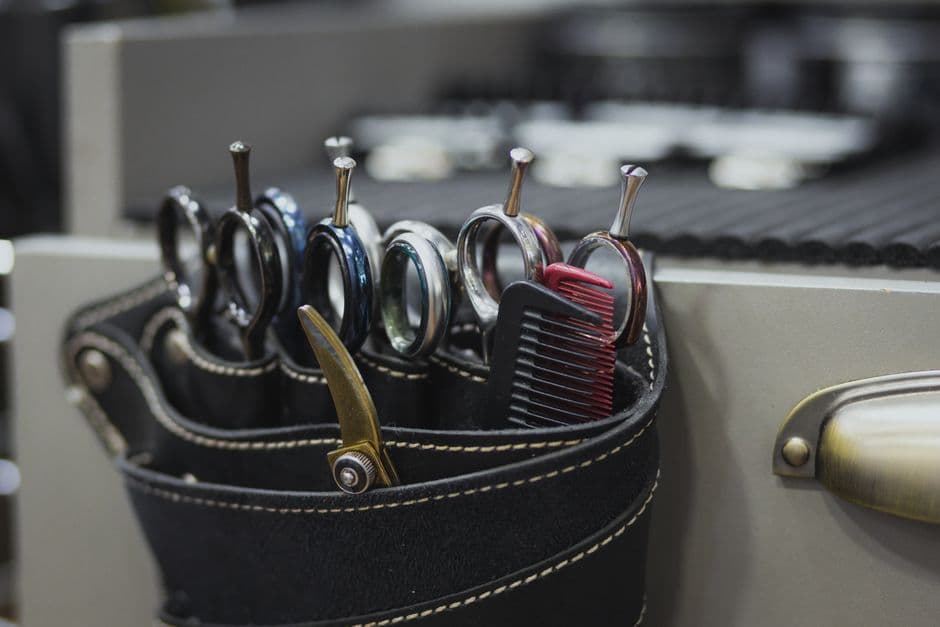
Length against shape
A clipper with a guard cuts every hair it passes over to the same length, measured from the skin. That is a wonderful property on the back and sides of a head, where the surface is a reasonably smooth curve and one length is exactly what you want.
It is the wrong property on top. Hair on top of a head is not meant to be one distance from the scalp - it is meant to be a shape, longer at the front, shorter towards the crown, blending at the corners. A guard cannot produce that, because a guard has no opinion about anything except distance from skin.
Scissors cut wherever you hold them. That is harder and it is the entire reason they exist.
Who owns which part of the head
| Area | Tool | Why |
|---|---|---|
| Back and sides | Clippers with a guard | Smooth curve, one length wanted |
| The fade or taper | Clippers with a taper lever | Only a lever makes a gradient |
| Top | Scissors | Needs a shape, not a distance |
| The corner where top meets sides | Scissors, over a comb | The blend a guard cannot make |
| Hairline and nape | Clippers, bare blade | A crisp line, quickly |
| Around the ears | Either, carefully | Clipper for speed, scissors for control |
The specification that separates shears
Hair shears are sold on steel, and steel is mostly not the differentiator at the prices people actually pay. The differentiator is the tension screw.
Two blades meeting at a pivot need a specific pressure between them. Too loose and they separate slightly under the load of a thick section, which folds the hair over instead of cutting it - you feel this as a pair that “pushes”. Too tight and they bind, wear each other and become hard work. An adjustable screw lets you set that, and reset it as the pair wears in.
Shears without one cannot be corrected. They arrive at whatever tension the factory set and drift from there. This is why cheap shears do not go blunt so much as go useless.
The Equinox publishes the figures that matter for evaluating a pair: 6.5 inches overall on 2.55 inch blades, 3.5 ounces, adjustable tension, Japanese stainless with a hand-sharpened convex edge. What it does not publish is a steel grade or a hardness figure - which is a real gap, and it is the reason it scores where it does on our disclosure axis.
The honest learning curve
Clippers with a guard: an afternoon. The guard makes the length decision, and the failure mode is missing a patch, which you can see and fix. Add a taper lever and a fade takes a few months of monthly attempts.
Scissor-over-comb: considerably longer, because you are managing three things at once.
- How much hair you are holding - too big a section and the ones at the back are cut longer than the ones at the front.
- The angle you hold it at - which is what actually creates the shape, and which changes across the head.
- The tension - pull tighter and the hair springs back shorter than you cut it. This is the one that catches everybody, and it is worse on curly hair.
The practical route in: cut the sides with clippers first, then use scissors only for the top, in small sections, taking less than you think. Point-cutting - snipping into the ends vertically rather than straight across - hides unevenness and is the single most forgiving technique available to a beginner.
What each needs from you
- Clippers: brush and oil after every cut. Blades are proprietary and essentially nobody in the category publishes a replacement interval, which makes maintenance the whole game - the two-minute routine is here.
- Shears: a drop of oil at the pivot, wiped dry, stored closed and not loose in a drawer. Professional sharpening eventually, on no published schedule - nobody publishes one.
And one rule for both: never use hair tools on anything else, and never use anything else on hair. A pair of shears used once on paper is a pair of shears that folds hair from then on.
Every pick, with the working
Each entry shows the published specifications, the axis scores they produce and what you give up. The order is the computed order, not a commercial one, and the arithmetic is open underneath every score.
Our pickScissor-over-comb, and everything clippers cannot do
Equinox Razor Edge 6.5 in Hair Shears
6.5 inches overall on 2.55 inch blades, Japanese stainless, 3.5 ounces, with an adjustable tension screw. The tension screw is the specification that matters: shears without one drift loose and start folding hair instead of cutting it, and no amount of steel quality fixes that. This is the tool for the top of a head, where a guard cannot follow the shape.
- Weight
- 99 g
- Length
- 165 mm
- Material
- Japanese stainless steel, hand-sharpened convex edge
- Made in
- Not published
- Refill
- Nothing to refill
- Warranty
- Not published
- Assumed service life
- 2,600 uses
The arithmetic: 260 uses a year x 10 years of assumed service life = 2600 uses.
What it gets right
- Published overall length, blade length and weight, which most shear listings do not give
- Adjustable tension screw, so the pivot can be reset rather than replaced
- Japanese stainless with hand-sharpened convex edges, published
- 3.5 oz: light enough that the wrist is not fighting it on a long cut
Flaws
- Equinox publishes no steel grade or Rockwell hardness - only Japanese stainless
- Shears are a skill: scissor-over-comb is harder than any clipper technique
- Needs oiling and eventual professional sharpening, neither of which has a published interval
The working behind the 6.5
- How long it lasts: not scored
- Not scored. This is a durable item, not a consumable, so how long it lasts is an assumption about service life rather than something the pack size tells us.
- Ease of switching: 5.0
- Published overall length, blade length and weight (+), an adjustable tension screw that keeps them cutting rather than folding (+), but no published steel grade or hardness (-) and scissor technique is the steepest skill in home haircutting (--).
- Refill economics: 8.0
- Nothing to refill. The only future cost is replacing the item itself.
- What the maker publishes: 7.5
- 3 of 4 specifications a buyer would expect are published: weightG, lengthMm, material. Not published: madeIn. 3 / 4 x 10 = 7.5.
Axes with no published input are dropped and the remaining weights re-normalized, so a product is not punished for a category where an axis does not apply. Specifications compiled 3 September 2026 from Equinox Razor Edge shears listed dimensions, weight and tension adjustment.
2The widest published guard range
Wahl Elite Pro (79602)
Corded, with self-sharpening precision blades Wahl publishes as cutting 40 per cent faster, twelve color-coded guards spanning 1/16 inch to 1 inch, an adjustable taper lever and an eight-foot braided cord. The guard range is the reason to pick it: 1/16 to 1 inch covers a skin-close neckline and a long top from one box.
- Material
- Not published
- Runtime
- Not published
- Charge time
- Not published
- Length settings
- 12
- Waterproof
- Not published
- Made in
- Not published
- Refill
- Proprietary to the maker
- Warranty
- Not published
- Assumed service life
- 1,300 uses
The arithmetic: 260 uses a year x 5 years of assumed service life = 1300 uses.
What it gets right
- Twelve published guards from 1/16 in to 1 in - the widest range in this ledger
- Self-sharpening precision blades with a published cutting-speed claim
- Secure-Fit guides with stainless steel clips, so a guard does not pop mid-stroke
- Eight-foot braided cord, which is the difference between reaching your own neckline and not
Flaws
- Corded only
- Twelve guards is a lot of plastic to store and keep in order
- No published motor rating or warranty
The working behind the 5.6
- How long it lasts: not scored
- Not scored. This is a durable item, not a consumable, so how long it lasts is an assumption about service life rather than something the pack size tells us.
- Ease of switching: 8.5
- Twelve published guards from 1/16 in to 1 in cover every length a head needs from one box (++), secure-fit clips (+), corded with no runtime to manage (+), but no published motor or warranty figure (-).
- Refill economics: 4.0
- Only this maker's refill fits, so the ongoing price is set by the maker rather than by a market. This is where the real cost of ownership hides.
- What the maker publishes: 2.0
- 1 of 5 specifications a buyer would expect are published: settings. Not published: runtimeMin, chargeMin, material, warrantyLabel. 1 / 5 x 10 = 2.0.
Axes with no published input are dropped and the remaining weights re-normalized, so a product is not punished for a category where an axis does not apply. Specifications compiled 3 September 2026 from Wahl Elite Pro 79602 published specifications.
3Fading and blending at home
Wahl 5 Star Magic Clip (8148)
Cord or cordless with a published 90-minute lithium runtime and zero-overlap 2161 blades, plus a taper lever you can work with your thumb mid-stroke. The taper lever is the whole reason this is the fade pick: it changes cutting length continuously rather than in guard-sized jumps, which is what a blend actually needs.
- Material
- Not published
- Runtime
- 90 min
- Charge time
- Not published
- Length settings
- 8
- Waterproof
- Not published
- Made in
- Not published
- Refill
- Proprietary to the maker
- Warranty
- Not published
- Assumed service life
- 1,300 uses
The arithmetic: 260 uses a year x 5 years of assumed service life = 1300 uses.
What it gets right
- Published 90-minute lithium runtime, and it runs corded when flat
- Zero-overlap 2161 blades with a thumb-operated taper lever for continuous length change
- Eight attachment combs, oil and cleaning brush in the box
- Cord-or-cordless, so a dead battery never ends a haircut halfway
Flaws
- A taper lever rewards practice; on a first attempt it is one more thing to get wrong
- Wahl does not publish a motor rating for it, so it cannot be compared numerically to the corded Andis
- No published charge time
The working behind the 5.9
- How long it lasts: not scored
- Not scored. This is a durable item, not a consumable, so how long it lasts is an assumption about service life rather than something the pack size tells us.
- Ease of switching: 8.0
- Cord-or-cordless removes the flat-battery failure entirely (++), 90 minutes published (+), eight combs is a sane number (+), but a taper lever is a skill and a first-time home barber has enough of those already (-).
- Refill economics: 4.0
- Only this maker's refill fits, so the ongoing price is set by the maker rather than by a market. This is where the real cost of ownership hides.
- What the maker publishes: 4.0
- 2 of 5 specifications a buyer would expect are published: runtimeMin, settings. Not published: chargeMin, material, warrantyLabel. 2 / 5 x 10 = 4.0.
Axes with no published input are dropped and the remaining weights re-normalized, so a product is not punished for a category where an axis does not apply. Specifications compiled 3 September 2026 from Wahl 5 Star Magic Clip 8148 published specifications.
Prices last verified September 24, 2026. They move constantly; the figure on Amazon when you click is the real one.
Questions people actually ask
Can you cut your own hair with just clippers?
Yes, if you want one length all over or a very short crop. What you cannot do with clippers alone is leave meaningful length on top with any shape to it, because a guard follows the curve of the head rather than the shape of the haircut. The self-cut guide covers the clipper-only version.
Can you cut hair with normal scissors?
Badly. Kitchen and stationery scissors have a blunter edge geometry, so they push and fold the hair rather than slicing it - which produces split ends and an uneven line. Hair shears have a convex, hand-sharpened edge and, crucially, an adjustable tension screw. That screw is the specification that matters.
What does the tension screw on hair shears do?
It sets how tightly the two blades press against each other at the pivot. Too loose and the blades separate under load, folding hair instead of cutting it; too tight and they bind and wear. Shears without an adjustable screw drift loose over time and cannot be brought back - which is why a cheap pair stops working rather than getting blunt.
Which is harder to learn?
Scissors, by a wide margin. Clippers with a guard are almost deterministic - the guard sets the length and your job is to cover the area evenly. Scissor-over-comb requires you to control length, angle and tension simultaneously with two hands on a head you are looking at in a mirror.
Do I need thinning shears?
Not for a first pair, and probably not at all. Thinning shears remove bulk by cutting some hairs and not others, and used at home they very reliably produce visible gaps and stick-out ends. If your hair is too bulky, the answer is usually shorter sides.