Electric shaver vs manual razor
Electric buys you speed and almost no nicks. It costs you the last fraction of closeness, and a refill you cannot shop around for.
By Sawyer V. · Published
We have not tested any of this. Everything below is compiled from published manufacturer specifications, and the arithmetic is printed so you can check it. This page carries affiliate links: if you buy through one we earn a commission at no extra cost to you, and it does not change the order of the picks. Full disclosure.
The verdict
Electric if you want your mornings back; manual if you want the closest shave and the cheapest running cost. An electric shaver is faster, works dry, and almost never cuts you. A safety razor gets closer, costs far less to run because the blade is a commodity standard nobody owns, and takes three weeks to learn. If your skin is the problem, electric usually wins regardless.
| # | Pick | Lasts | Score | Price |
|---|---|---|---|---|
| 1 | Astra Superior Platinum The blade to start on | ~500 shaves | 9.6/10 | $11.99 - view on Amazon |
| 2 | Merkur 34C HD One razor, no research | 5,200 shaves* | 8.9/10 | $60.00 - view on Amazon |
| 3 | Braun Series 9 PRO+ The closest electric shave | 1,300 shaves* | 7.4/10 | $429.99 - view on Amazon |
| 4 | Philips Norelco OneBlade 360 Trimming, edging and shaving with one blade | 1,300 shaves* | 7.1/10 | $29.96 - view on Amazon |
Prices last verified October 19, 2026. They move constantly; the figure on Amazon when you click is the real one.
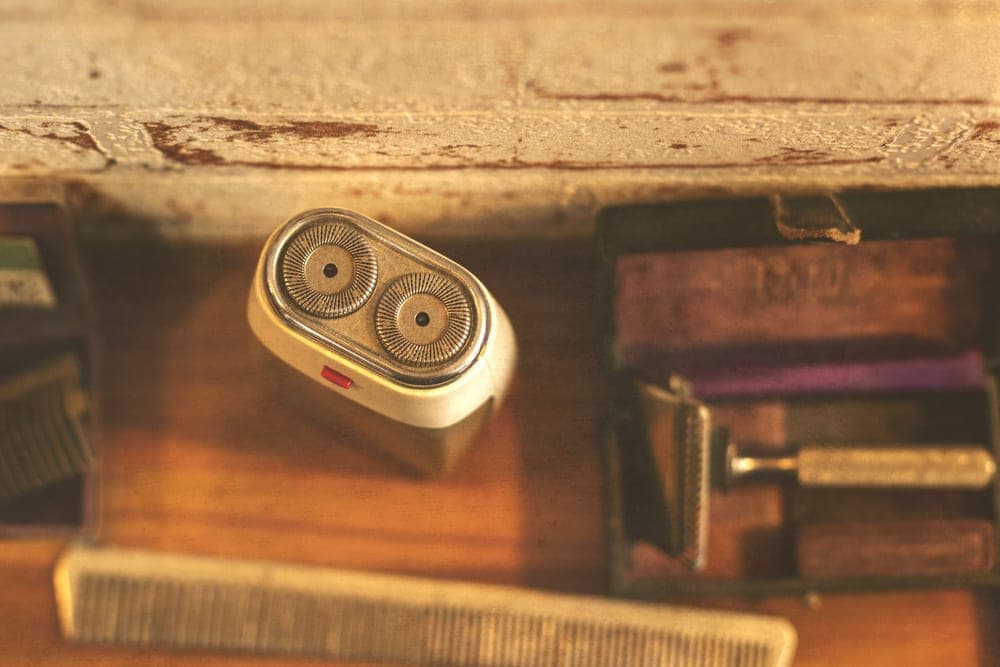
The comparison, in one table
| Electric shaver | Safety razor | |
|---|---|---|
| Time per shave | 2 to 4 minutes | 5 to 15 minutes |
| Closeness | Close | Closest |
| Nicks and weepers | Almost never | Occasionally, until technique settles |
| Learning curve | 2 to 3 weeks of skin adjustment | 2 to 3 weeks of technique |
| Works dry | Yes | No |
| Refill standard | Proprietary to the maker | Universal double edge |
| Refill interval | About 18 months (Braun, published) | About every 5 shaves |
| Cabin baggage | Yes | Razor yes, blades no |
Closeness: the blade wins, and by less than you think
A blade severs hair at or slightly below the skin surface. An electric shaver cuts it a fraction above. That difference is what people mean by closeness and it is real.
It is also smaller in practice than the argument about it suggests. A good foil shaver on daily growth leaves a face that most people cannot distinguish by touch a few hours later. If your standard is smooth-by-touch at nine in the morning, the blade wins. If it is “looks and feels shaved”, it is closer to a draw than the category's marketing on either side implies.
Cost: not close, and the reason is structural
A double-edge blade is a commodity standard nobody owns. Factories in Russia, Turkey, Japan and elsewhere all make blades that fit every safety razor in existence, and they compete on price. A hundred of them at our assumed five shaves each is 500 shaves.
An electric shaver's foil and cutter block fits one shaver, is made by one company, and is priced by that company. Braun's guidance is to replace it about every 18 months - which is creditable disclosure and also a cost you cannot shop around for.
That is the entire difference, and it is why our refill-economics axis scores every electric shaver low and every safety razor at the maximum. Put your own prices in and it will size the gap for your actual shaving frequency.
Time: the honest version
An electric shave is two to four minutes and needs no water, no lather and no cleanup beyond a rinse of the head. A three-pass safety razor shave is ten to fifteen minutes while you are learning and five to six afterwards, plus lather, plus a sink.
Whether that is a cost depends entirely on what you want from the ten minutes. A meaningful number of people who switch to wet shaving do it because they want the ten minutes, not despite it. If that sounds absurd to you, buy the electric - the site is not going to try to talk you into a hobby.
The third option nobody frames as one
Stop shaving bare. The Philips OneBlade is on this page precisely because it is neither of the two things this comparison is about: a single oscillating blade that trims at a published 1 to 5 mm and edges at 0.2 mm, and never goes under the skin at all.
For somebody whose real complaint is that shaving makes their face angry, that is often the answer to a question they did not know they were asking. The full review is here, and the sensitive-skin roundup ranks it first for the same reason.
How to decide, in one line each
Want the closest shave and the cheapest running cost, and have ten minutes: a safety razor. Want your mornings back and almost no nicks: an electric. Want your face to stop reacting: try not shaving bare at all before you buy anything else.
Every pick, with the working
Each entry shows the published specifications, the axis scores they produce and what you give up. The order is the computed order, not a commercial one, and the arithmetic is open underneath every score.
Our pickThe blade to start on
Astra Superior Platinum
Platinum-coated stainless, made in Russia, sold in hundreds. Astra is the blade almost every wet shaver eventually recommends to a beginner because it is forgiving enough to survive bad technique and cheap enough that throwing one away early costs nothing. Start here, and only move if your face tells you to.
- Material
- Platinum-coated stainless steel
- Blades per pack
- 100
- Made in
- Russia
- Refill
- Universal standard
- Warranty
- Not applicable
- How long it lasts
- 500 uses
The arithmetic: 100 blades x 5 shaves per blade (assumed) = 500 shaves.
What it gets right
- Sold in 100-blade boxes of twenty five-packs, individually wax-wrapped
- Platinum-coated stainless, made by Gillette's Russian operation
- Forgiving rather than aggressive, which is what a new hand needs
- Fits every standard double-edge razor in this ledger
Flaws
- Not the sharpest blade available, which a very coarse beard will notice
- Astra publishes no edge geometry, so 'forgiving' is a description, not a figure
The working behind the 9.6
- How long it lasts: 9.6
- 100 blades x 5 shaves per blade (assumed) = 500 shaves. At five shaves a week, that is about 23.1 months. A 24-month supply scores 10 in this category, so 23.1 / 24 x 10 = 9.6.
- Ease of switching: 9.0
- Widely described as a forgiving rather than a keen edge (+), sold in 100s so a discarded blade costs almost nothing (+), no published edge geometry to verify the claim (-).
- Refill economics: 10.0
- The refill is a commodity standard that dozens of factories make, so the price is set by competition and no single maker can raise it.
- What the maker publishes: 10.0
- 3 of 3 specifications a buyer would expect are published: unitsPerPack, material, madeIn. 3 / 3 x 10 = 10.0.
Axes with no published input are dropped and the remaining weights re-normalized, so a product is not punished for a category where an axis does not apply. Specifications compiled 3 September 2026 from Astra Superior Platinum listed specifications.
2One razor, no research
Merkur 34C HD
Buy this one if you want to stop reading and start shaving. It is 68 grams of chrome-plated brass on a short knurled handle, which is heavy enough that you naturally stop pressing, and the head is a plain closed comb with nothing to set, adjust or get wrong. It has been in production in Solingen for decades, so parts, advice and blades are everywhere.
- Weight
- 68 g
- Length
- 80 mm
- Material
- Chrome-plated brass
- Head
- Closed comb, two-piece
- Blade gap
- Not published
- Blades in the box
- 0
- Made in
- Germany
- Refill
- Universal standard
- Warranty
- Not published
- Assumed service life
- 5,200 uses
The arithmetic: 260 shaves a year x 20 years of assumed service life = 5200 shaves.
What it gets right
- 68 g in a 80 mm body: the weight does the work, which is exactly the habit a cartridge user has to unlearn
- Closed comb with no adjustment, so there is one variable fewer on your first month
- Two-piece construction; the head unscrews as a unit and there is nothing to lose in the sink
- Takes any standard double-edge blade, so the refill is a commodity
Flaws
- The 80 mm handle is short for large hands, and Merkur's own longer handles are a separate purchase
- No blade in the box, so the first order needs a blade pack alongside it
- Chrome over brass will show wear at the edges over years in a way stainless will not
The working behind the 8.9
- How long it lasts: not scored
- Not scored. This is a durable item, not a consumable, so how long it lasts is an assumption about service life rather than something the pack size tells us.
- Ease of switching: 8.5
- Closed comb (+), no adjustment to set (+), 68 g published weight in the range where the razor's own mass supplies the pressure (+), no blade included so the first order is two items (-).
- Refill economics: 10.0
- The refill is a commodity standard that dozens of factories make, so the price is set by competition and no single maker can raise it.
- What the maker publishes: 8.6
- 6 of 7 specifications a buyer would expect are published: weightG, lengthMm, material, madeIn, headType, bladesIncluded. Not published: bladeGapNote. 6 / 7 x 10 = 8.6.
Axes with no published input are dropped and the remaining weights re-normalized, so a product is not punished for a category where an axis does not apply. Specifications compiled 3 September 2026 from Merkur 34C HD listed specifications (Fendrihan).
3The closest electric shave
Braun Series 9 PRO+
Five synchronized shaving elements — two gliding foils, a SkinGuard, a Direct & Cut blade and a Lift & Cut blade — plus a titanium-coated ProLift blade, 60 minutes of runtime, a five-minute charge for one shave, and it is fully waterproof. If the requirement is 'as close as an electric gets', this is the answer and there is not much argument about it.
- Runtime
- 60 min
- Charge time
- Not published
- Cutting elements
- 5
- Head replacement
- Every 18 months
- Waterproof
- Yes
- Made in
- Not published
- Refill
- Proprietary to the maker
- Warranty
- Not published
- Assumed service life
- 1,300 uses
The arithmetic: 260 uses a year x 5 years of assumed service life = 1300 uses.
What it gets right
- Five published cutting elements, each with a stated job, plus the ProLift blade
- 60-minute Li-Ion runtime, the longest of the shavers here
- 5-minute quick charge for a full shave
- 100% waterproof; usable wet with lather
Flaws
- Replacement head cassettes are proprietary and are the real long-run cost
- Braun's published 18-month replacement interval is guidance on its parts pages rather than a figure on the product specification, so it is easy to miss before you buy
- The most expensive way to remove hair in this ledger
The working behind the 7.4
- How long it lasts: not scored
- Not scored. This is a durable item, not a consumable, so how long it lasts is an assumption about service life rather than something the pack size tells us.
- Ease of switching: 9.0
- Wet-and-dry with 60 minutes of runtime and a 5-minute quick charge; nothing about daily use requires a decision (++). Braun publishes an 18-month foil-and-cutter replacement interval, which at least makes the running cost plannable (+), but the cassettes are proprietary so the price of it is Braun's to set (-).
- Refill economics: 4.0
- Only this maker's refill fits, so the ongoing price is set by the maker rather than by a market. This is where the real cost of ownership hides.
- What the maker publishes: 8.0
- 4 of 5 specifications a buyer would expect are published: runtimeMin, cuttingElements, waterproof, headReplacementMonths. Not published: chargeMin. 4 / 5 x 10 = 8.0.
Axes with no published input are dropped and the remaining weights re-normalized, so a product is not punished for a category where an axis does not apply. Specifications compiled 3 September 2026 from Braun Series 9 PRO+ published specifications.
4Trimming, edging and shaving with one blade
Philips Norelco OneBlade 360
Not a shaver and not a trimmer: a single oscillating blade that trims with a comb, edges without one and takes stubble down close without ever going properly bare. 45 minutes of runtime, five comb lengths from 0.2 to 5 mm, waterproof, and Philips publishes a four-month blade life with an indicator that tells you when it is up.
- Runtime
- 45 min
- Charge time
- Not published
- Length settings
- 5
- Cutting range
- 0.2 - 5 mm
- Head replacement
- Every 4 months
- Waterproof
- Yes
- Made in
- Not published
- Refill
- Proprietary to the maker
- Warranty
- Not published
- Assumed service life
- 1,300 uses
The arithmetic: 260 uses a year x 5 years of assumed service life = 1300 uses.
What it gets right
- Published four-month blade life with a wear indicator on the blade itself
- Five comb settings from 0.2 mm to 5 mm plus bare-blade edging
- 45-minute runtime, 100% waterproof, usable in the shower
- The cheapest entry point to a powered shave here by a wide margin
Flaws
- It will not give you a properly bare shave; that is a design decision, not a fault
- Proprietary blades, replaced on a schedule, which is the real cost of ownership
- 45 minutes of runtime
The working behind the 7.1
- How long it lasts: not scored
- Not scored. This is a durable item, not a consumable, so how long it lasts is an assumption about service life rather than something the pack size tells us.
- Ease of switching: 9.5
- Published 4-month blade life with an indicator, so the one maintenance decision is made for you (++), waterproof and shower-usable (+), five published comb lengths (+), proprietary blades on a schedule (-).
- Refill economics: 4.0
- Only this maker's refill fits, so the ongoing price is set by the maker rather than by a market. This is where the real cost of ownership hides.
- What the maker publishes: 6.0
- 3 of 5 specifications a buyer would expect are published: runtimeMin, waterproof, headReplacementMonths. Not published: chargeMin, cuttingElements. 3 / 5 x 10 = 6.0.
Axes with no published input are dropped and the remaining weights re-normalized, so a product is not punished for a category where an axis does not apply. Specifications compiled 3 September 2026 from Philips Norelco OneBlade 360 published specifications.
Prices last verified October 19, 2026. They move constantly; the figure on Amazon when you click is the real one.
Questions people actually ask
Is an electric shaver as close as a razor?
No. A good foil gets close enough that most people cannot tell by the afternoon, and a blade is closer. Any page claiming an electric matches a blade is selling something.
Which is better for sensitive skin?
Electric, usually, and for a specific reason: it does not remove the outermost layer of skin along with the hair, and it does not cut below the skin surface. That helps both surface irritation and ingrown hairs. The razor bumps guide explains the second mechanism.
Which is cheaper to run?
Manual, by a large margin, and the reason is the refill. A double-edge blade is a commodity standard that many factories make and compete on price for. An electric shaver's head is proprietary. That is the whole difference, and the calculator will size it with your prices.
How long does each take?
Two to four minutes for an electric, ten to fifteen for a three-pass safety razor shave when you are learning and five to six once you are not. Whether that is a cost or the point of the exercise is the question this comparison really turns on.
Can I use both?
Plenty of people do: an electric on weekday mornings and a blade at the weekend. There is nothing wrong with it, and it is worth knowing that owning both is a legitimate answer rather than a failure to decide.