Safety razor vs cartridge
The closeness is a draw. The comfort depends on your technique. The cost is not close, and this page shows you how to work out by exactly how much.
By Sawyer V. · Published · Last updated
We have not tested any of this. Everything below is compiled from published manufacturer specifications, and the arithmetic is printed so you can check it. This page carries affiliate links: if you buy through one we earn a commission at no extra cost to you, and it does not change the order of the picks. Full disclosure.
The verdict
Switch, unless you shave once a week or travel constantly. A cartridge system is cheap at the handle and expensive forever, because only one company makes the refill. A double-edge razor is the reverse: a real one-off outlay, then a blade that any of a dozen factories will sell you for pennies. The closeness of the shave is a draw. The comfort depends on technique for three weeks and then favors the safety razor.
| # | Pick | Lasts | Score | Price |
|---|---|---|---|---|
| 1 | Merkur 34C HD One razor, no research | 5,200 shaves* | 8.9/10 | $60.00 - view on Amazon |
| 2 | Astra Superior Platinum The blade to start on | ~500 shaves | 9.6/10 | $11.99 - view on Amazon |
| 3 | Arko shaving soap stick Travel, and the cheapest honest lather | ~50 lathers | 7.4/10 | $7.45 - view on Amazon |
Prices last verified October 19, 2026. They move constantly; the figure on Amazon when you click is the real one.
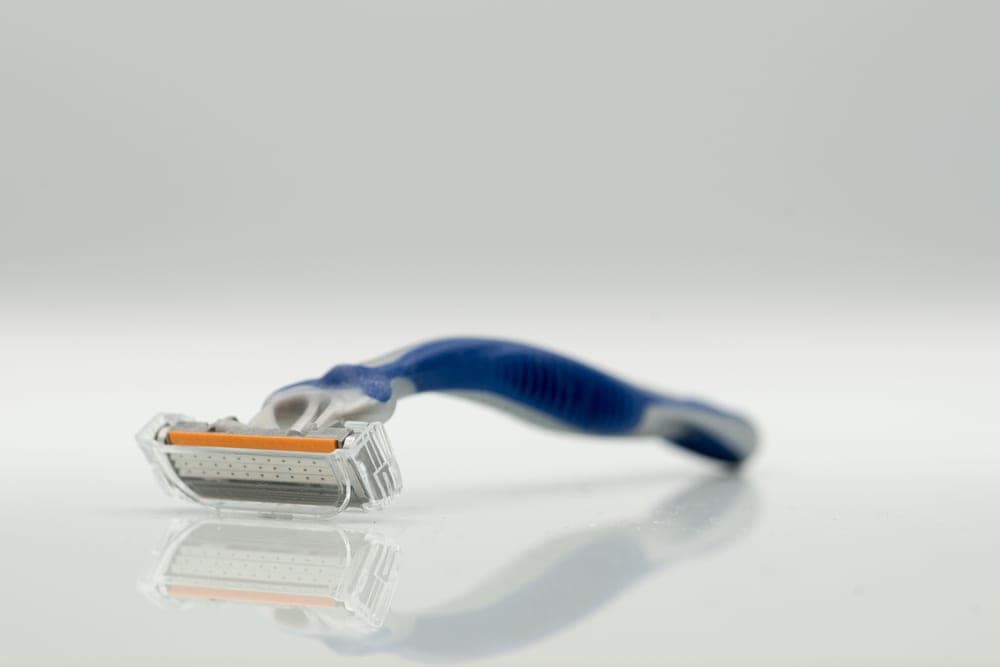
The comparison, in one table
| Safety razor | Cartridge system | |
|---|---|---|
| Blades per stroke | 1 | 3 to 5 |
| Refill standard | Universal - any maker | Proprietary to the handle |
| Blades in a typical pack | 100 | 4 to 8 |
| Assumed shaves per blade | 5 | 10 |
| Shaves in that pack | 500 | 40 to 80 |
| Hardware lifetime (assumed) | 20 years | Until the range is discontinued |
| Learning curve | 2 to 3 weeks | None |
| Cabin baggage | Razor yes, blades no | Yes |
Where the money actually goes
This is the whole argument, and it is an argument about who sets the price of the refill.
A cartridge system sells you a handle cheaply, sometimes free, because the handle is not the product. The cartridge is the product, only that company's cartridge fits, and there is no competitive market to hold the price down. That is not a criticism of the engineering, which is genuinely good. It is a description of the business model, and it is working exactly as intended.
A double-edge blade is a commodity standard nobody owns. Factories in Russia, Turkey, Japan and elsewhere all make blades that fit every razor on this site, and they compete on price. A hundred of them at our assumed five shaves each is 500 shaves, which at five shaves a week is close to two years.
Which one actually shaves better
On the first pass, the cartridge. It is designed to lift a hair with the leading blade and cut it with the following ones, and that is a real mechanism that works. If your standard is one quick stroke down the cheek in the shower, a cartridge wins and this page is not going to pretend otherwise.
Over a full shave, a draw. Three light passes with a single blade - with the grain, then across, then against if you want it - reaches the same smoothness. It takes longer. Whether that is a cost or a feature depends on what your mornings look like.
Over months, the safety razor pulls ahead on comfort for one specific reason: the lift-and-cut mechanism that makes cartridges good also cuts hair slightly below the skin surface, and hair cut below the surface is hair that can grow back into the skin. That is the mechanism behind razor bumps, and it is why the ingrown hair guide recommends a less close shave rather than a closer one.
The three weeks nobody warns you about
The switch is not free. A cartridge is built to be pressed into the face; a safety razor is built to be rested on it. Unlearning that habit takes most people two to three weeks and the first fortnight can be genuinely worse than what you left behind.
Everything on this site that looks like fussiness is aimed at shortening that period: a heavier razor so the weight does the pressing, a forgiving blade so mistakes are cheap, a proper lather so the blade glides, and an alcohol-free balm so your face recovers overnight. The starter kit is that list, and the technique guide is the fifteen minutes of reading that saves most of the fortnight.
When a cartridge is genuinely the right answer
- You shave once or twice a week. The economics barely move at that frequency and neither does the comfort argument.
- You fly constantly with cabin baggage only. Loose double-edge blades are not permitted in the cabin. This is real and it is not solvable.
- You have ninety seconds and no interest. A safety razor rewards attention. If you have none to give it, it will punish you for that, and there is no shame in the alternative.
If none of those describes you, the switch is worth making. Start with a mild razor, a blade sampler and a soap, and give it three weeks before you decide. The electric option is a third road entirely, and it is the better one if what you actually want is to spend less time on this rather than less money.
Every pick, with the working
Each entry shows the published specifications, the axis scores they produce and what you give up. The order is the computed order, not a commercial one, and the arithmetic is open underneath every score.
Our pickOne razor, no research
Merkur 34C HD
Buy this one if you want to stop reading and start shaving. It is 68 grams of chrome-plated brass on a short knurled handle, which is heavy enough that you naturally stop pressing, and the head is a plain closed comb with nothing to set, adjust or get wrong. It has been in production in Solingen for decades, so parts, advice and blades are everywhere.
- Weight
- 68 g
- Length
- 80 mm
- Material
- Chrome-plated brass
- Head
- Closed comb, two-piece
- Blade gap
- Not published
- Blades in the box
- 0
- Made in
- Germany
- Refill
- Universal standard
- Warranty
- Not published
- Assumed service life
- 5,200 uses
The arithmetic: 260 shaves a year x 20 years of assumed service life = 5200 shaves.
What it gets right
- 68 g in a 80 mm body: the weight does the work, which is exactly the habit a cartridge user has to unlearn
- Closed comb with no adjustment, so there is one variable fewer on your first month
- Two-piece construction; the head unscrews as a unit and there is nothing to lose in the sink
- Takes any standard double-edge blade, so the refill is a commodity
Flaws
- The 80 mm handle is short for large hands, and Merkur's own longer handles are a separate purchase
- No blade in the box, so the first order needs a blade pack alongside it
- Chrome over brass will show wear at the edges over years in a way stainless will not
The working behind the 8.9
- How long it lasts: not scored
- Not scored. This is a durable item, not a consumable, so how long it lasts is an assumption about service life rather than something the pack size tells us.
- Ease of switching: 8.5
- Closed comb (+), no adjustment to set (+), 68 g published weight in the range where the razor's own mass supplies the pressure (+), no blade included so the first order is two items (-).
- Refill economics: 10.0
- The refill is a commodity standard that dozens of factories make, so the price is set by competition and no single maker can raise it.
- What the maker publishes: 8.6
- 6 of 7 specifications a buyer would expect are published: weightG, lengthMm, material, madeIn, headType, bladesIncluded. Not published: bladeGapNote. 6 / 7 x 10 = 8.6.
Axes with no published input are dropped and the remaining weights re-normalized, so a product is not punished for a category where an axis does not apply. Specifications compiled 3 September 2026 from Merkur 34C HD listed specifications (Fendrihan).
2The blade to start on
Astra Superior Platinum
Platinum-coated stainless, made in Russia, sold in hundreds. Astra is the blade almost every wet shaver eventually recommends to a beginner because it is forgiving enough to survive bad technique and cheap enough that throwing one away early costs nothing. Start here, and only move if your face tells you to.
- Material
- Platinum-coated stainless steel
- Blades per pack
- 100
- Made in
- Russia
- Refill
- Universal standard
- Warranty
- Not applicable
- How long it lasts
- 500 uses
The arithmetic: 100 blades x 5 shaves per blade (assumed) = 500 shaves.
What it gets right
- Sold in 100-blade boxes of twenty five-packs, individually wax-wrapped
- Platinum-coated stainless, made by Gillette's Russian operation
- Forgiving rather than aggressive, which is what a new hand needs
- Fits every standard double-edge razor in this ledger
Flaws
- Not the sharpest blade available, which a very coarse beard will notice
- Astra publishes no edge geometry, so 'forgiving' is a description, not a figure
The working behind the 9.6
- How long it lasts: 9.6
- 100 blades x 5 shaves per blade (assumed) = 500 shaves. At five shaves a week, that is about 23.1 months. A 24-month supply scores 10 in this category, so 23.1 / 24 x 10 = 9.6.
- Ease of switching: 9.0
- Widely described as a forgiving rather than a keen edge (+), sold in 100s so a discarded blade costs almost nothing (+), no published edge geometry to verify the claim (-).
- Refill economics: 10.0
- The refill is a commodity standard that dozens of factories make, so the price is set by competition and no single maker can raise it.
- What the maker publishes: 10.0
- 3 of 3 specifications a buyer would expect are published: unitsPerPack, material, madeIn. 3 / 3 x 10 = 10.0.
Axes with no published input are dropped and the remaining weights re-normalized, so a product is not punished for a category where an axis does not apply. Specifications compiled 3 September 2026 from Astra Superior Platinum listed specifications.
3Travel, and the cheapest honest lather
Arko shaving soap stick
A 75 gram stick from Turkey that you rub straight onto a wet face and then work with a brush. No bowl, no loading, nothing to knock over, and it costs less than a sandwich. The fragrance is a powdery soap smell people describe in strong terms in both directions.
- Net weight
- 75 g
- Fragrance
- Fragranced
- Made in
- Turkey
- Refill
- Nothing to refill
- Warranty
- Not applicable
- How long it lasts
- 50 uses
Published key ingredients: Stearic acid, Potassium tallowate, Potassium cocoate, Glycerin.
The arithmetic: 75 g net weight / 1.5 g per lather (assumed) = about 50 lathers.
What it gets right
- 75 g published net weight in a stick you apply directly to the face
- No bowl, no loading technique, nothing to spill — the lowest-friction lather here
- Travels without leaking or breaking
Flaws
- The scent is divisive in a way no other soap here is
- Contains fragrance and a paraffin ingredient; not the choice for reactive skin
The working behind the 7.4
- How long it lasts: 1.9
- 75 g net weight / 1.5 g per lather (assumed) = about 50 lathers. At five shaves a week, that is about 2.3 months. A 12-month supply scores 10 in this category, so 2.3 / 12 x 10 = 1.9.
- Ease of switching: 9.5
- Applied directly to the face, so there is no loading technique to learn at all (++), 75 g published (+), fragrance is strongly polarizing (-).
- Refill economics: 8.0
- Nothing to refill. The only future cost is replacing the item itself.
- What the maker publishes: 10.0
- 4 of 4 specifications a buyer would expect are published: netWeightG, madeIn, keyIngredients, fragranceFree. 4 / 4 x 10 = 10.0.
Axes with no published input are dropped and the remaining weights re-normalized, so a product is not punished for a category where an axis does not apply. Specifications compiled 3 September 2026 from Arko shaving stick published specifications.
Prices last verified October 19, 2026. They move constantly; the figure on Amazon when you click is the real one.
Questions people actually ask
Is a safety razor cheaper than cartridges?
Almost always, and the size of the gap depends entirely on what you pay for cartridges. That is why this page gives you a calculator instead of a headline figure: the arithmetic is simple, the inputs are personal, and a number we invented would be worth nothing to you.
Does a safety razor shave closer than a cartridge?
Not on the first pass. A multi-blade cartridge is engineered to lift and cut in one stroke and it is genuinely good at that. A safety razor gets there in two or three light passes and ends up in the same place, with less of the stretching and re-cutting that causes ingrown hairs.
Is a safety razor harder on sensitive skin?
Usually the opposite, once your technique settles. One blade passing over the skin three times gently does less damage than five blades dragged over it once under pressure. The first fortnight is worse, though, and that is worth knowing before you start.
Can I take a safety razor on a plane?
The razor yes, the blades no - loose double-edge blades are not permitted in US cabin baggage, so they travel in the hold or get bought at the destination. It is the one genuine practical advantage cartridges retain, and for frequent flyers it is not a small one.