Clipper blade types explained
The guard sets the length. The blade decides whether the clipper cuts cleanly, runs hot, and can fade at all.
By Sawyer V. · Published
We have not tested any of this. Everything below is compiled from published manufacturer specifications, and the arithmetic is printed so you can check it. This page carries affiliate links: if you buy through one we earn a commission at no extra cost to you, and it does not change the order of the picks. Full disclosure.
The short version
Steel blades are standard and cut well; ceramic runs cooler and is more brittle; zero-overlap is a geometry rather than a material. Wahl publishes a zero-overlap 2161 blade on the Magic Clip, which means the two blades sit flush so the clipper can cut very close - that is what makes it a fading blade. And the figure that matters most is one nobody in this category publishes at all: how long a blade lasts.
| # | Pick | Lasts | Score | Price |
|---|---|---|---|---|
| 1 | Wahl 5 Star Magic Clip (8148) Fading and blending at home | 1,300 shaves* | 5.9/10 | $139.99 - view on Amazon |
| 2 | Andis Master (01557) Dense hair and a blade you set by lever | 1,300 shaves* | 4.2/10 | Check price on Amazon |
| 3 | Wahl Elite Pro (79602) The widest published guard range | 1,300 shaves* | 5.6/10 | $69.99 - view on Amazon |
Prices last verified September 24, 2026. They move constantly; the figure on Amazon when you click is the real one.
What a clipper blade actually is
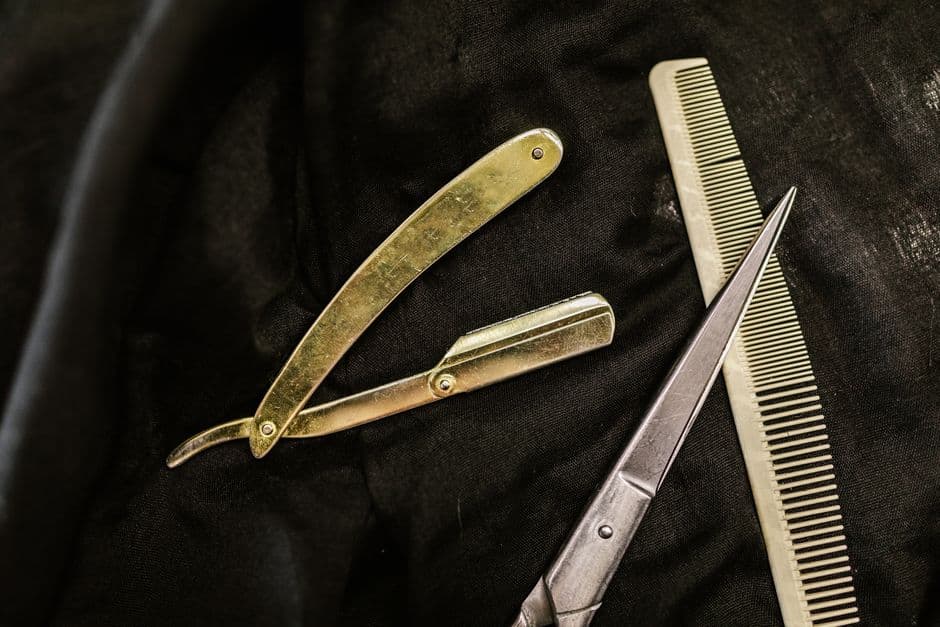
Two combs, one fixed and one moving. The moving blade oscillates side to side against the fixed one, and any hair that enters between the teeth is sheared off. That is the whole mechanism, and everything below is a variation on how the two blades are made and how they are set relative to each other.
The guard, by contrast, does nothing to the cutting. It is a spacer that holds the whole assembly a fixed distance from the skin - which is why guard numbers transfer as millimeters and blade numbers do not transfer at all.
The three materials
| Material | Runs | Durability | Best for |
|---|---|---|---|
| Carbon steel | Warm | Holds an edge well; can corrode | General cutting, most clippers |
| Stainless steel | Warm | Corrosion resistant, slightly softer | Wet environments |
| Ceramic | Cool | Brittle - chips if dropped | Long sessions, back-to-back cuts |
The heat argument is the honest one for ceramic and it is often oversold. A blade heats up because it is doing work against friction; ceramic conducts that heat away from the cutting surface less readily, so the blade itself stays cooler against skin. Over one haircut a month that is close to imperceptible. Over eight clients in a day it is the reason professionals buy them.
Zero-overlap, which is a geometry not a material
On a conventional blade set, the moving blade sits fractionally behind the fixed one. That offset is a safety margin - it keeps the cutting edge from sitting directly against skin.
A zero-overlap blade sets the two flush. The result is a clipper that cuts noticeably closer, which is what allows the bottom of a fade to blend down into a bare edge without a visible step. Wahl publishes the 2161 zero-overlap blade on the Magic Clip specifically as a fading feature, and it is the reason that clipper appears on the fading roundup.
The trade is real: closer cutting means less margin for error against skin. It is a specialist geometry, not a straight upgrade.
Blade numbers, which run backwards
This is the single most confusing thing in the category and it is worth being explicit.
- Guard numbers count up with length. #1 is 3 mm, #2 is 6 mm, #4 is 12.5 mm. Bigger number, longer hair.
- Blade numbers count down with length. A 000 blade cuts shorter than a 0A, which cuts shorter than a #1. Bigger number, longer hair - but on a completely different and much shorter scale, all of it below where guards start.
So a #1 blade and a #1 guard have nothing to do with each other, and the millimeter figure is again the only thing worth writing down.
And the lever, which is neither
The taper lever moves the cutting blade continuously across a range relative to the fixed blade - so it is effectively a variable blade setting without changing the blade. That continuity is what makes a gradient possible, and it is why a fade cannot be done with guards alone.
If you are buying a clipper and expect to blend anything, the lever is the specification to check for. It is rarely on the front of the box and it matters more than the attachment count that always is.
Maintenance is the whole strategy
Because nobody publishes a replacement interval, and because blades are proprietary, the practical approach is to postpone the question indefinitely.
- Brush the cut hair out after every use. Hair packed between the blades holds moisture against steel and increases friction.
- Oil before every cut, not after. Three drops along the blade, run it for ten seconds, wipe the excess. This is the step that decides blade life.
- Check the blade alignment occasionally. A blade knocked out of alignment cuts unevenly and can catch skin.
The full routine is two minutes, and on a tool with no published consumable schedule it is the only lever you have.
Every pick, with the working
Each entry shows the published specifications, the axis scores they produce and what you give up. The order is the computed order, not a commercial one, and the arithmetic is open underneath every score.
Our pickFading and blending at home
Wahl 5 Star Magic Clip (8148)
Cord or cordless with a published 90-minute lithium runtime and zero-overlap 2161 blades, plus a taper lever you can work with your thumb mid-stroke. The taper lever is the whole reason this is the fade pick: it changes cutting length continuously rather than in guard-sized jumps, which is what a blend actually needs.
- Material
- Not published
- Runtime
- 90 min
- Charge time
- Not published
- Length settings
- 8
- Waterproof
- Not published
- Made in
- Not published
- Refill
- Proprietary to the maker
- Warranty
- Not published
- Assumed service life
- 1,300 uses
The arithmetic: 260 uses a year x 5 years of assumed service life = 1300 uses.
What it gets right
- Published 90-minute lithium runtime, and it runs corded when flat
- Zero-overlap 2161 blades with a thumb-operated taper lever for continuous length change
- Eight attachment combs, oil and cleaning brush in the box
- Cord-or-cordless, so a dead battery never ends a haircut halfway
Flaws
- A taper lever rewards practice; on a first attempt it is one more thing to get wrong
- Wahl does not publish a motor rating for it, so it cannot be compared numerically to the corded Andis
- No published charge time
The working behind the 5.9
- How long it lasts: not scored
- Not scored. This is a durable item, not a consumable, so how long it lasts is an assumption about service life rather than something the pack size tells us.
- Ease of switching: 8.0
- Cord-or-cordless removes the flat-battery failure entirely (++), 90 minutes published (+), eight combs is a sane number (+), but a taper lever is a skill and a first-time home barber has enough of those already (-).
- Refill economics: 4.0
- Only this maker's refill fits, so the ongoing price is set by the maker rather than by a market. This is where the real cost of ownership hides.
- What the maker publishes: 4.0
- 2 of 5 specifications a buyer would expect are published: runtimeMin, settings. Not published: chargeMin, material, warrantyLabel. 2 / 5 x 10 = 4.0.
Axes with no published input are dropped and the remaining weights re-normalized, so a product is not punished for a category where an axis does not apply. Specifications compiled 3 September 2026 from Wahl 5 Star Magic Clip 8148 published specifications.
2Dense hair and a blade you set by lever
Andis Master (01557)
Skip this one. Not your first clipper. It ships with no guards, its blade adjusts to a length that will take you to skin, and it assumes you already know what you are doing. Buy it when you have cut your own hair a dozen times and want a better tool, not to learn on.
The one clipper here that publishes a motor figure: a magnetic motor rated to 14,000 strokes per minute, driving an adjustable carbon-steel blade that a single lever moves from 000 to 1. Unbreakable aluminum housing, eight-foot cord. It ships with no guards at all, which tells you exactly who it is for.
- Material
- Aluminum housing, carbon steel blade
- Runtime
- Not published
- Charge time
- Not published
- Length settings
- Not published
- Waterproof
- Not published
- Made in
- Not published
- Refill
- Proprietary to the maker
- Warranty
- Not published
- Assumed service life
- 1,300 uses
The arithmetic: 260 uses a year x 5 years of assumed service life = 1300 uses.
What it gets right
- Published 14,000 SPM magnetic motor - the only motor rating anybody in this category discloses
- Adjustable carbon steel blade, 000 to 1, moved by one lever
- Unbreakable aluminum housing and an 8 ft chemical-resistant cord
- Side-mounted switch you can find with a thumb without looking
Flaws
- Guards are not included - budget for a set on top
- Corded only, and heavier in the hand than the plastic-bodied kits
- A bare adjustable blade at 000 is very close to skin for a first-timer
The working behind the 4.2
- How long it lasts: not scored
- Not scored. This is a durable item, not a consumable, so how long it lasts is an assumption about service life rather than something the pack size tells us.
- Ease of switching: 5.5
- Published motor rating and a real adjustable blade (+), but no guards in the box and a blade that adjusts down to 000 is the opposite of a forgiving first tool (--).
- Refill economics: 4.0
- Only this maker's refill fits, so the ongoing price is set by the maker rather than by a market. This is where the real cost of ownership hides.
- What the maker publishes: 2.0
- 1 of 5 specifications a buyer would expect are published: material. Not published: runtimeMin, chargeMin, settings, warrantyLabel. 1 / 5 x 10 = 2.0.
Axes with no published input are dropped and the remaining weights re-normalized, so a product is not punished for a category where an axis does not apply. Specifications compiled 3 September 2026 from Andis Master 01557 published specifications.
3The widest published guard range
Wahl Elite Pro (79602)
Corded, with self-sharpening precision blades Wahl publishes as cutting 40 per cent faster, twelve color-coded guards spanning 1/16 inch to 1 inch, an adjustable taper lever and an eight-foot braided cord. The guard range is the reason to pick it: 1/16 to 1 inch covers a skin-close neckline and a long top from one box.
- Material
- Not published
- Runtime
- Not published
- Charge time
- Not published
- Length settings
- 12
- Waterproof
- Not published
- Made in
- Not published
- Refill
- Proprietary to the maker
- Warranty
- Not published
- Assumed service life
- 1,300 uses
The arithmetic: 260 uses a year x 5 years of assumed service life = 1300 uses.
What it gets right
- Twelve published guards from 1/16 in to 1 in - the widest range in this ledger
- Self-sharpening precision blades with a published cutting-speed claim
- Secure-Fit guides with stainless steel clips, so a guard does not pop mid-stroke
- Eight-foot braided cord, which is the difference between reaching your own neckline and not
Flaws
- Corded only
- Twelve guards is a lot of plastic to store and keep in order
- No published motor rating or warranty
The working behind the 5.6
- How long it lasts: not scored
- Not scored. This is a durable item, not a consumable, so how long it lasts is an assumption about service life rather than something the pack size tells us.
- Ease of switching: 8.5
- Twelve published guards from 1/16 in to 1 in cover every length a head needs from one box (++), secure-fit clips (+), corded with no runtime to manage (+), but no published motor or warranty figure (-).
- Refill economics: 4.0
- Only this maker's refill fits, so the ongoing price is set by the maker rather than by a market. This is where the real cost of ownership hides.
- What the maker publishes: 2.0
- 1 of 5 specifications a buyer would expect are published: settings. Not published: runtimeMin, chargeMin, material, warrantyLabel. 1 / 5 x 10 = 2.0.
Axes with no published input are dropped and the remaining weights re-normalized, so a product is not punished for a category where an axis does not apply. Specifications compiled 3 September 2026 from Wahl Elite Pro 79602 published specifications.
Prices last verified September 24, 2026. They move constantly; the figure on Amazon when you click is the real one.
Questions people actually ask
What does zero-overlap mean?
The cutting blade is set flush with the fixed blade rather than sitting slightly behind it, so the clipper cuts closer to the skin. It is what lets a clipper take hair down far enough to blend into a bare edge, which is why it is a fading feature. The fade guide covers where that matters.
Is a ceramic blade better than steel?
Cooler, not sharper. Ceramic conducts heat poorly, so the blade stays cool through a long cut - genuinely useful for a barber doing back-to-back clients and largely irrelevant for one head a month. It is also more brittle: a dropped ceramic blade chips where a steel one dents.
Are blade numbers the same as guard numbers?
No, and this catches people constantly. Guard numbers count upward in eighths of an inch as the length increases. Blade numbers - 000, 0A, 1 - count the other way: a lower number cuts shorter. A #1 blade and a #1 guard are not related at all.
How often do clipper blades need replacing?
Nobody publishes a figure - not Wahl, not Andis, nobody in this ledger. That is a total disclosure gap across a whole category with a proprietary consumable. In practice blades are sharpened or replaced when they start pushing hair rather than cutting it, which is a judgment rather than a schedule.
Can you sharpen clipper blades yourself?
There are honing services and DIY kits, and both are a real option since replacements are proprietary. What matters far more for most people is oiling - a dry blade dulls fast, and two minutes of maintenance postpones the question by a long way.