Adjustable vs fixed razors
One of these tells you the number. The other asks you to trust an adjective - and it is still the better first purchase.
By Sawyer V. · Published
We have not tested any of this. Everything below is compiled from published manufacturer specifications, and the arithmetic is printed so you can check it. This page carries affiliate links: if you buy through one we earn a commission at no extra cost to you, and it does not change the order of the picks. Full disclosure.
The short answer
Buy a fixed razor first. One variable is easier to learn than two, and in month one your technique is changing faster than any setting could usefully track. Buy the adjustable second, and buy it for the disclosure: the Rockwell 6S publishes six blade gaps as actual figures, which makes it the only razor on this site that tells you what it is doing rather than describing itself as “mild”.
| # | Pick | Lasts | Score | Price |
|---|---|---|---|---|
| 1 | Merkur 34C HD One razor, no research | 5,200 shaves* | 8.9/10 | $60.00 - view on Amazon |
| 2 | Rockwell 6S Dialing in your own aggression | 5,200 shaves* | 8.6/10 | $120.00 - view on Amazon |
| 3 | Mühle R89 The mildest of the classic three | 5,200 shaves* | 8.7/10 | $48.00 - view on Amazon |
Prices last verified September 24, 2026. They move constantly; the figure on Amazon when you click is the real one.
The difference that matters is disclosure
Every fixed razor on this site describes its own aggression in adjectives. Mild. Efficient. Smooth. Those are marketing words with no test behind them, and they are not comparable between two makers.
An adjustable razor has to publish something, because the whole product is the range. The Rockwell 6S publishes six blade gaps as figures, which means for the first time you can say “my face is comfortable at this gap” and take that number somewhere else. No fixed razor in this ledger lets you do that.
What you pay for the range
| Fixed | Adjustable | |
|---|---|---|
| Variables to learn | Blade, lather, pressure | Blade, lather, pressure, setting |
| Parts to keep track of | 2-3 | 3-8 depending on system |
| Published aggression figure | Almost never | Yes, that is the product |
| Travel | Simple | Plates or a dial to lose |
| Adapts as your beard changes | No | Yes |
| Adapts as your technique improves | No | Yes |
The last two rows are the honest case for buying one eventually. Your beard in your fifties is not your beard in your twenties, and your technique in year two is not your technique in month one. A fixed razor cannot follow either.
Why fixed still goes first
Because the first month is a diagnosis problem. A new safety razor shaver has at least four unknowns running at once: which blade suits their face, whether the lather is right, whether they are pressing, and whether their angle is consistent.
Adding a fifth variable that can be changed at will does not help - it gives you somewhere to put the blame that is not your technique. The most common failure pattern with an adjustable first razor is exactly that: the setting gets moved after every mediocre shave and nothing is ever held constant long enough to learn from.
A fixed mild razor holds three of those variables still while you sort out the other two. That is why the beginner roundup has no adjustables on it.
And the blade matters more than the setting anyway
Worth saying plainly, because it reorders the shopping list. The difference between two double-edge blades in the same razor is larger than the difference between two adjacent settings on an adjustable one.
Blade preference depends on your beard, your skin, your water and your razor, and it is the one question reading cannot answer - a sampler settles it in six weeks. Do that before spending money on adjustability.
Who should actually buy one
- Anybody past the first six months who wants a number. If you have ever wondered whether your razor is mild or you are just used to it, this is how you find out.
- People whose beard varies by area. A milder plate for the neck and a larger gap for the cheeks is a real technique, and it is only available here.
- Anybody sharing a razor. Two faces, two settings, one razor.
- Not somebody chasing a closer shave. Closeness comes from preparation, blade choice and a second pass, and turning the gap up to get it is the most reliable way to trade a good shave for a sore face.
Every pick, with the working
Each entry shows the published specifications, the axis scores they produce and what you give up. The order is the computed order, not a commercial one, and the arithmetic is open underneath every score.
Our pickOne razor, no research
Merkur 34C HD
Buy this one if you want to stop reading and start shaving. It is 68 grams of chrome-plated brass on a short knurled handle, which is heavy enough that you naturally stop pressing, and the head is a plain closed comb with nothing to set, adjust or get wrong. It has been in production in Solingen for decades, so parts, advice and blades are everywhere.
- Weight
- 68 g
- Length
- 80 mm
- Material
- Chrome-plated brass
- Head
- Closed comb, two-piece
- Blade gap
- Not published
- Blades in the box
- 0
- Made in
- Germany
- Refill
- Universal standard
- Warranty
- Not published
- Assumed service life
- 5,200 uses
The arithmetic: 260 shaves a year x 20 years of assumed service life = 5200 shaves.
What it gets right
- 68 g in a 80 mm body: the weight does the work, which is exactly the habit a cartridge user has to unlearn
- Closed comb with no adjustment, so there is one variable fewer on your first month
- Two-piece construction; the head unscrews as a unit and there is nothing to lose in the sink
- Takes any standard double-edge blade, so the refill is a commodity
Flaws
- The 80 mm handle is short for large hands, and Merkur's own longer handles are a separate purchase
- No blade in the box, so the first order needs a blade pack alongside it
- Chrome over brass will show wear at the edges over years in a way stainless will not
The working behind the 8.9
- How long it lasts: not scored
- Not scored. This is a durable item, not a consumable, so how long it lasts is an assumption about service life rather than something the pack size tells us.
- Ease of switching: 8.5
- Closed comb (+), no adjustment to set (+), 68 g published weight in the range where the razor's own mass supplies the pressure (+), no blade included so the first order is two items (-).
- Refill economics: 10.0
- The refill is a commodity standard that dozens of factories make, so the price is set by competition and no single maker can raise it.
- What the maker publishes: 8.6
- 6 of 7 specifications a buyer would expect are published: weightG, lengthMm, material, madeIn, headType, bladesIncluded. Not published: bladeGapNote. 6 / 7 x 10 = 8.6.
Axes with no published input are dropped and the remaining weights re-normalized, so a product is not punished for a category where an axis does not apply. Specifications compiled 3 September 2026 from Merkur 34C HD listed specifications (Fendrihan).
2Dialing in your own aggression
Rockwell 6S
The 6S is the one razor here that publishes the number everybody else hides. Three reversible plates give six blade gaps from 0.008 to 0.031 inches, so you can start on R1, find the setting your face tolerates, and never wonder whether the razor or your technique is the problem. It is 118 grams of 316L stainless and it ships with five blades.
- Weight
- 118 g
- Length
- 95 mm
- Material
- 316L stainless steel
- Head
- Adjustable, three reversible plates
- Blade gap
- 0.008 in to 0.031 in across R1-R6
- Blades in the box
- 5
- Length settings
- 6
- Made in
- USA
- Refill
- Universal standard
- Warranty
- Not published
- Assumed service life
- 5,200 uses
The arithmetic: 260 shaves a year x 20 years of assumed service life = 5200 shaves.
What it gets right
- Published blade gaps from 0.008 in to 0.031 in across six settings — the only razor in this ledger that discloses them
- 316L stainless, so there is no plating to wear through
- Five blades in the box; usable the day it arrives
- 118 g, the heaviest here, which suits a heavy beard and a light hand
Flaws
- Six settings is six chances to blame the razor instead of your angle in the first month
- Three loose plates are three things to keep track of
- Heaviest and largest of the group at 95 mm overall
The working behind the 8.6
- How long it lasts: not scored
- Not scored. This is a durable item, not a consumable, so how long it lasts is an assumption about service life rather than something the pack size tells us.
- Ease of switching: 7.0
- R1 plate is the mildest published gap in this ledger at 0.008 in (+), blades included (+), but six settings and three loose plates add decisions in exactly the month a new wet shaver has too many (-).
- Refill economics: 10.0
- The refill is a commodity standard that dozens of factories make, so the price is set by competition and no single maker can raise it.
- What the maker publishes: 10.0
- 7 of 7 specifications a buyer would expect are published: weightG, lengthMm, material, madeIn, headType, bladeGapNote, bladesIncluded. 7 / 7 x 10 = 10.0.
Axes with no published input are dropped and the remaining weights re-normalized, so a product is not punished for a category where an axis does not apply. Specifications compiled 3 September 2026 from Rockwell 6S published specifications (Fendrihan).
3The mildest of the classic three
Mühle R89
The R89 is the lightest of the three classic closed combs at 64 grams and the only one that puts a blade in the box, which matters more than it sounds when the alternative is ordering two things and waiting for both. Mühle publishes a 41 x 94 mm envelope and nothing else, which is the one place it is less forthcoming than Edwin Jagger.
- Weight
- 64 g
- Length
- 94 mm
- Material
- Chrome-plated metal, engraved handle
- Head
- Closed comb
- Blade gap
- Not published
- Blades in the box
- 1
- Made in
- Germany
- Refill
- Universal standard
- Warranty
- Not published
- Assumed service life
- 5,200 uses
The arithmetic: 260 shaves a year x 20 years of assumed service life = 5200 shaves.
What it gets right
- Ships with a blade, so it is a complete first purchase on its own
- 64 g — the lightest of the three classics, which suits a lighter touch
- Closed comb, nothing adjustable, chrome-plated with an engraved handle for grip
- Standard blade fitment
Flaws
- Mühle does not publish a blade gap, so its mildness cannot be compared numerically to anything
- Lightest of the three, which means slightly more of the pressure is yours to supply
- One blade in the box is a sample, not a supply
The working behind the 8.7
- How long it lasts: not scored
- Not scored. This is a durable item, not a consumable, so how long it lasts is an assumption about service life rather than something the pack size tells us.
- Ease of switching: 8.0
- Closed comb (+), no adjustment (+), one blade included so it works on arrival (+), 64 g is the lightest of the classic three, so slightly more pressure is yours to control (-).
- Refill economics: 10.0
- The refill is a commodity standard that dozens of factories make, so the price is set by competition and no single maker can raise it.
- What the maker publishes: 8.6
- 6 of 7 specifications a buyer would expect are published: weightG, lengthMm, material, madeIn, headType, bladesIncluded. Not published: bladeGapNote. 6 / 7 x 10 = 8.6.
Axes with no published input are dropped and the remaining weights re-normalized, so a product is not punished for a category where an axis does not apply. Specifications compiled 3 September 2026 from Mühle R89 listed specifications (Maggard Razors).
Prices last verified September 24, 2026. They move constantly; the figure on Amazon when you click is the real one.
Questions people actually ask
What does an adjustable razor actually adjust?
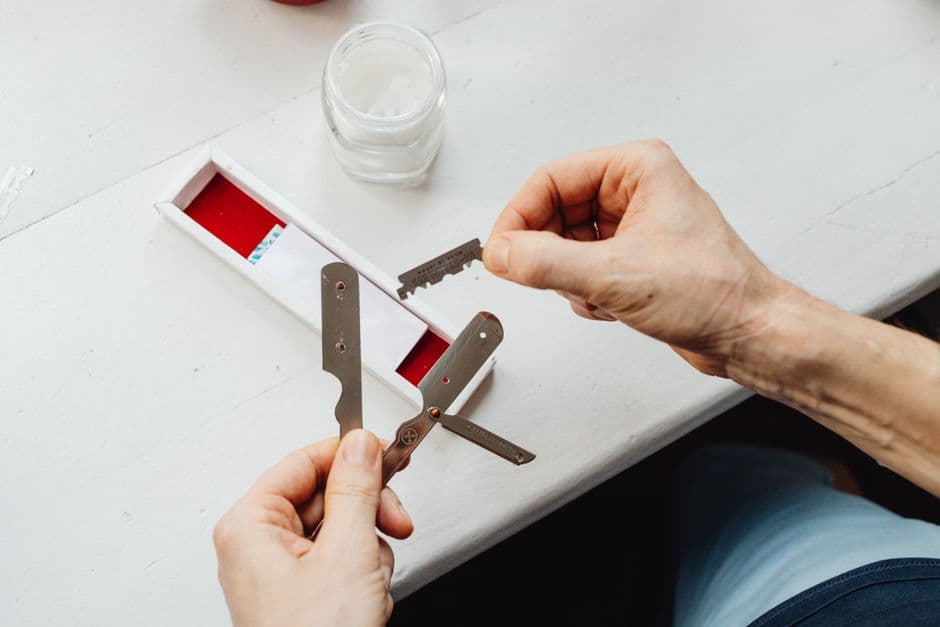
The blade gap - the distance between the blade edge and the guard - and with it the blade exposure. A larger gap lets more blade reach the skin per stroke, which cuts more hair and is less forgiving. On the Rockwell that adjustment is made by swapping base plates rather than turning a dial, and each plate publishes its gap.
Should a beginner buy an adjustable razor?
No, and the reason is not that it is dangerous. It is that a beginner cannot yet tell whether a bad shave was the setting, the blade, the lather or the pressure. Adding a variable to a problem with four unknowns makes it harder, not easier.
Is an adjustable razor more aggressive?
It can be set that way, and can also be set milder than most fixed razors. That range is the point. What it is not is inherently harsh - a Rockwell on its smallest plate is a mild razor by any measure.
How do you find your setting?
Start at the mildest and stay there for a full week before changing anything. Then move up one step and give it another week. The mistake is changing the setting after a single bad shave, which tells you about that shave rather than that setting.
Do fixed razors publish their blade gap?
Almost never. Merkur and Mühle both publish weight, length and head type and describe aggression in words rather than millimeters. That is the disclosure gap the adjustable category exists inside, and it is what our scoring marks down.