How to trim your eyebrows
The job is tidying, not shaping, and the only real risk is doing too much. A brow grows back at the speed it chooses, which is about six weeks.
By Sawyer V. · Published
We have not tested any of this. Everything below is compiled from published manufacturer specifications, and the arithmetic is printed so you can check it. This page carries affiliate links: if you buy through one we earn a commission at no extra cost to you, and it does not change the order of the picks. Full disclosure.
The short version
Comb the brow straight up, then trim only the hair that stands above the natural top line. Nothing else. That single move removes the stray length that makes a brow look unkempt without changing its shape, which is the thing you do not want to change. Use a tool with an eyebrow comb attachment rather than trimming freehand - the Philips Nose Trimmer 3000 is the only one in this ledger that publishes two eyebrow guards, so the length is set rather than guessed. Do not thin the brow, do not shorten the whole thing, and do not shave underneath it. A brow takes roughly 6 weeks to recover, so every mistake here is a long one.
| # | Pick | Lasts | Score | Price |
|---|---|---|---|---|
| 1 | Philips Norelco Nose Trimmer 3000 (NT3600) Nose, ears and eyebrows in one body | 1,300 shaves* | 7.4/10 | $14.96 - view on Amazon |
| 2 | Equinox Razor Edge 6.5 in Hair Shears Scissor-over-comb, and everything clippers cannot do | 2,600 shaves* | 6.5/10 | $14.42 - view on Amazon |
| 3 | Panasonic ER-GN70 The only one that publishes a motor figure | 1,300 shaves* | 6.9/10 | Check price on Amazon |
| 4 | Kent 81T Beard and Mustache Comb Not tearing hair while you tidy | 1,300 shaves* | 9.2/10 | $6.00 - view on Amazon |
Prices last verified October 19, 2026. They move constantly; the figure on Amazon when you click is the real one.
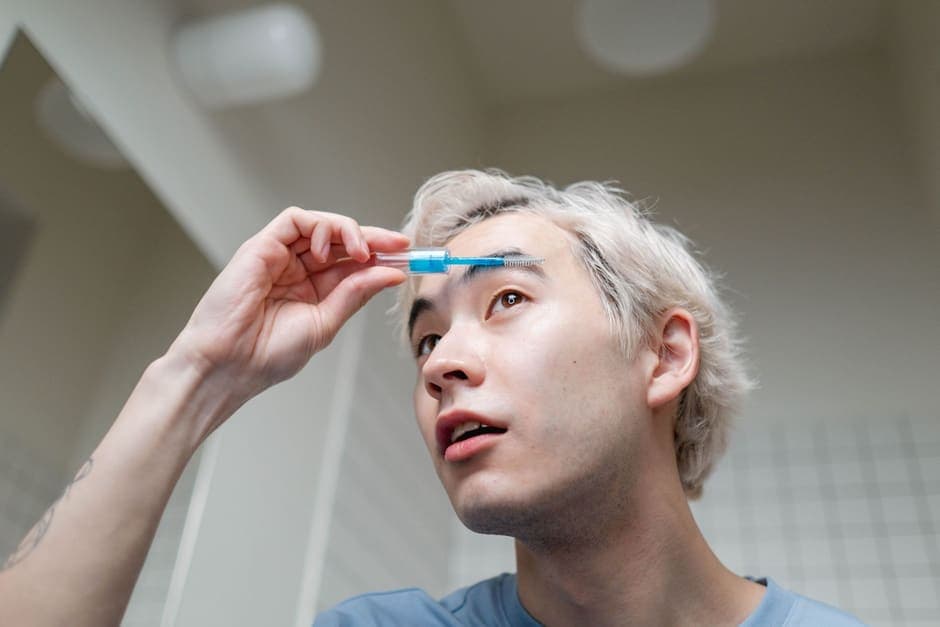
One principle: length is the problem, shape is not
An untidy brow is almost never the wrong shape. It is the right shape with a dozen hairs that have grown longer than the rest and now stand up, cross over, or point in directions of their own.
That distinction is the whole guide. Trimming length is low-risk, reversible within a few weeks, and fixes the thing people actually notice. Changing shape or density - thinning, shortening the whole brow, or tidying the bottom edge - is high-risk, slow to recover, and fixes a problem you probably did not have.
The method, in four minutes
- Good light, normal mirror, dry brows. Light from the side rather than directly above, because overhead light flattens the shadows that show you which hairs are actually long. And use your ordinary mirror - a magnifying mirror shows you hairs that nobody standing in front of you can see, and acting on them is how overtrimming starts.
- Comb the brow straight up. This is the step that does the work. Combed vertically, the hairs that are genuinely too long stand clear above the brow's natural top line and the rest sit below it. You are no longer guessing which is which.
- Take off only what stands above that line. Small scissors held parallel to the brow, or a trimmer with an eyebrow comb fitted. Follow the line the brow already has. Snip the standing tips; do not cut into the body of the brow.
- Comb it back down and stop. Look at it. In most cases you are done, and the temptation to even things up is where this goes wrong - the second brow never matches the first exactly, because they never did.
Strays outside the brow come last and individually: a hair on the bridge of the nose, a hair high on the forehead. One at a time, and only hairs that are clearly not part of either brow.
Why the comb attachment matters more than the tool
There is a reason this page keeps saying "with a comb on". A trimmer without one cuts at whatever height your hand happens to hold it, which on a surface as small and curved as a brow is a variance of several millimeters across one pass.
| Tool | Eyebrow combs published | What it is actually for |
|---|---|---|
| Philips Nose Trimmer 3000 | Two | The one here designed to do brows to a length |
| Panasonic ER-GN70 | None published | Nose and ear; a published 9,400 cpm motor |
| Equinox 6.5 in shears | Not applicable | Scissors plus a comb - the safest method |
| Kent 81T comb | Not applicable | The comb; sawcut, so it does not split hair |
Scissors and a comb is the method a barber uses and the one that gives you the most control, at the lowest price, with no battery. A trimmer with a brow guard is faster and almost as safe. A trimmer without a guard is the combination to avoid, and the roundup ranks the category on exactly that.
The three things never to do
- Never shave or trim the bottom edge. The lower line is soft and uneven by nature. A clean line there is the single most recognizable sign of an overgroomed brow, and it grows back as visible stubble long before it grows back as a brow.
- Never thin the brow out. Thinning is a density change, and density is what makes a brow look like a man's. It is also the hardest thing to recover, because plucked hairs do not all come back.
- Never shorten the whole brow to even it up. Both brows cut short look worse than one brow with a long hair in it, and you cannot undo it by going shorter still. If one side looks off, leave it a week.
While you are there
Brows usually get attention at the same time as two other jobs, and both have their own constraints.
Nose and ear hair is a removal job rather than a shaping one, which is why a rotary blade behind a guard is the right tool and freehand is fine - the nose and ear roundup ranks on published motor figures and guard design. Never use scissors inside a nostril, and never pluck nose hair.
A mustache is the opposite problem from a brow - it is a shaping job where length is the tool rather than the enemy - and it has its own guide.
Every pick, with the working
Each entry shows the published specifications, the axis scores they produce and what you give up. The order is the computed order, not a commercial one, and the arithmetic is open underneath every score.
Our pickNose, ears and eyebrows in one body
Philips Norelco Nose Trimmer 3000 (NT3600)
Skip this one. This is the thinnest disclosure of the three, and it is not close: Panasonic publishes a motor speed on one model and a blade angle on the other, and Philips publishes neither on this one. Buy it for the eyebrow guards, which are genuinely the only reason to pick it, and know that you are buying the least documented tool on the page.
Dual-sided steel blades behind a protective guard, with linear and rotary trimmers plus two eyebrow guards - so it is the only one of the three that does brows with an actual comb rather than freehand. Fully washable, water resistant, one AA cell. Philips publishes the guard system and the attachments and no performance figure at all.
- Material
- Dual-sided steel blades
- Runtime
- Not published
- Length settings
- 2
- Waterproof
- Yes
- Refill
- Nothing to refill
- Warranty
- Not published
- Assumed service life
- 1,300 uses
The arithmetic: 260 uses a year x 5 years of assumed service life = 1300 uses.
What it gets right
- Two eyebrow guards included, so brow trimming is set to a length rather than guessed
- Protective guard system published as a barrier between blade and skin
- Fully washable and water resistant
- Single AA cell, included in the box
Flaws
- Philips publishes no motor speed, no blade angle and no replacement interval
- No vacuum collection - the clippings go where they fall
- The published dimensions are the only hard numbers Philips gives for this product
The working behind the 7.4
- How long it lasts: not scored
- Not scored. This is a durable item, not a consumable, so how long it lasts is an assumption about service life rather than something the pack size tells us.
- Ease of switching: 9.0
- Two eyebrow guards so brows are cut to a length rather than freehand (+), protective guard system (+), fully washable with the AA cell included (+), but no motor speed, no blade angle and no replacement interval published (--).
- Refill economics: 8.0
- Nothing to refill. The only future cost is replacing the item itself.
- What the maker publishes: 4.0
- 2 of 5 specifications a buyer would expect are published: material, waterproof. Not published: weightG, runtimeMin, warrantyLabel. 2 / 5 x 10 = 4.0.
Axes with no published input are dropped and the remaining weights re-normalized, so a product is not punished for a category where an axis does not apply. Specifications compiled 3 September 2026 from Philips Norelco NT3600 published guard system, attachments and dimensions.
2Scissor-over-comb, and everything clippers cannot do
Equinox Razor Edge 6.5 in Hair Shears
6.5 inches overall on 2.55 inch blades, Japanese stainless, 3.5 ounces, with an adjustable tension screw. The tension screw is the specification that matters: shears without one drift loose and start folding hair instead of cutting it, and no amount of steel quality fixes that. This is the tool for the top of a head, where a guard cannot follow the shape.
- Weight
- 99 g
- Length
- 165 mm
- Material
- Japanese stainless steel, hand-sharpened convex edge
- Made in
- Not published
- Refill
- Nothing to refill
- Warranty
- Not published
- Assumed service life
- 2,600 uses
The arithmetic: 260 uses a year x 10 years of assumed service life = 2600 uses.
What it gets right
- Published overall length, blade length and weight, which most shear listings do not give
- Adjustable tension screw, so the pivot can be reset rather than replaced
- Japanese stainless with hand-sharpened convex edges, published
- 3.5 oz: light enough that the wrist is not fighting it on a long cut
Flaws
- Equinox publishes no steel grade or Rockwell hardness - only Japanese stainless
- Shears are a skill: scissor-over-comb is harder than any clipper technique
- Needs oiling and eventual professional sharpening, neither of which has a published interval
The working behind the 6.5
- How long it lasts: not scored
- Not scored. This is a durable item, not a consumable, so how long it lasts is an assumption about service life rather than something the pack size tells us.
- Ease of switching: 5.0
- Published overall length, blade length and weight (+), an adjustable tension screw that keeps them cutting rather than folding (+), but no published steel grade or hardness (-) and scissor technique is the steepest skill in home haircutting (--).
- Refill economics: 8.0
- Nothing to refill. The only future cost is replacing the item itself.
- What the maker publishes: 7.5
- 3 of 4 specifications a buyer would expect are published: weightG, lengthMm, material. Not published: madeIn. 3 / 4 x 10 = 7.5.
Axes with no published input are dropped and the remaining weights re-normalized, so a product is not punished for a category where an axis does not apply. Specifications compiled 3 September 2026 from Equinox Razor Edge shears listed dimensions, weight and tension adjustment.
3The only one that publishes a motor figure
Panasonic ER-GN70
Panasonic publishes 9,400 cuts per minute for this motor, and it is the only published motor figure anywhere in the nose-trimmer category. Dual-edge blades, a vacuum that collects the clippings rather than dropping them, wet/dry operation and a body that rinses under a tap. It runs on two AAA cells rather than a rechargeable battery, which is a feature in a drawer item.
- Weight
- 110 g
- Material
- Stainless steel dual-edge blade
- Runtime
- Not published
- Length settings
- Not published
- Waterproof
- Yes
- Refill
- Proprietary to the maker
- Warranty
- Not published
- Assumed service life
- 1,300 uses
The arithmetic: 260 uses a year x 5 years of assumed service life = 1300 uses.
What it gets right
- Published 9,400 cpm motor - no other nose or ear trimmer publishes one at all
- Vacuum collection: the clippings go into a chamber rather than into the sink
- Dual-edge blade cuts from the top and the sides, published as hypoallergenic stainless
- AAA cells rather than a sealed battery, so it does not die permanently in three years
Flaws
- AAA cells are not included and are an ongoing consumable
- About 110 g, which is heavy for the category
- Panasonic publishes no blade replacement interval, and the blade is proprietary
The working behind the 6.9
- How long it lasts: not scored
- Not scored. This is a durable item, not a consumable, so how long it lasts is an assumption about service life rather than something the pack size tells us.
- Ease of switching: 9.0
- Published motor speed, which nothing else in the category offers (++), vacuum collection (+), rinsable and wet/dry (+), replaceable AAA cells rather than a sealed battery (+), but batteries not included (-) and no published blade interval (-).
- Refill economics: 4.0
- Only this maker's refill fits, so the ongoing price is set by the maker rather than by a market. This is where the real cost of ownership hides.
- What the maker publishes: 6.0
- 3 of 5 specifications a buyer would expect are published: weightG, material, waterproof. Not published: runtimeMin, warrantyLabel. 3 / 5 x 10 = 6.0.
Axes with no published input are dropped and the remaining weights re-normalized, so a product is not punished for a category where an axis does not apply. Specifications compiled 3 September 2026 from Panasonic ER-GN70 published motor speed, blade type and cleaning system.
4Not tearing hair while you tidy
Kent 81T Beard and Mustache Comb
73 mm, sawcut from cellulose acetate and hand-sanded in England. Sawcut matters more than it sounds: a molded comb has a seam along every tooth that catches and splits hair, and a sawcut one does not. On a beard, split ends are most of what scratchiness actually is.
- Length
- 73 mm
- Material
- Sawcut cellulose acetate
- Made in
- England
- Refill
- Nothing to refill
- Warranty
- Not published
- Assumed service life
- 1,300 uses
The arithmetic: 260 shaves a year x 5 years of assumed service life = 1300 shaves.
What it gets right
- Sawcut and hand-sanded, so there is no molding seam to split hair
- 73 mm - pocket-sized, which is the size you will actually carry
- Cellulose acetate rather than injection-molded plastic
- Made in England by a firm that has done nothing else for two centuries
Flaws
- Costs several times an ordinary drugstore comb that looks identical
- 73 mm is too small to be useful on a long beard's full length
- Kent publishes tooth spacing nowhere
The working behind the 9.2
- How long it lasts: not scored
- Not scored. This is a durable item, not a consumable, so how long it lasts is an assumption about service life rather than something the pack size tells us.
- Ease of switching: 9.5
- Sawcut teeth with no molding seam is a real, checkable construction difference that prevents split ends (++), pocket-sized (+), but tooth spacing is unpublished and it costs many times a visually identical drugstore comb (-).
- Refill economics: 8.0
- Nothing to refill. The only future cost is replacing the item itself.
- What the maker publishes: 10.0
- 2 of 2 specifications a buyer would expect are published: material, madeIn. 2 / 2 x 10 = 10.0.
Axes with no published input are dropped and the remaining weights re-normalized, so a product is not punished for a category where an axis does not apply. Specifications compiled 3 September 2026 from Kent handmade sawcut comb published construction.
Prices last verified October 19, 2026. They move constantly; the figure on Amazon when you click is the real one.
Questions people actually ask
How do I trim my eyebrows without ruining them?
Comb up, trim only what stands above the top line, stop. The entire risk in this job is doing more than that. Length is what makes a brow look untidy; shape and density are what make it look like yours, and both are easy to damage and slow to recover.
Scissors or a trimmer?
Either, but a trimmer only with a comb attachment on it. Freehand trimming - with a trimmer held at whatever distance your hand chooses - is how a gap appears, and that is why the eyebrow trimmer roundup names the Panasonic ER430K as its skip: it is a good nose trimmer and publishes no eyebrow comb at all. Small scissors plus a comb is the safest combination and costs the least.
How often should I trim them?
Every three to four weeks for most men, and it is genuinely a once-a-month job rather than a weekly one. If you find yourself tidying them often, you are almost certainly taking too much each time and chasing the regrowth.
Should I pluck or trim?
Trim for length, pluck only for genuine strays. Plucking removes the hair from the follicle, so it changes density rather than length - and repeated plucking of the same hairs can stop them coming back at all. Reserve it for individual hairs clearly outside the brow: the bridge of the nose, or a lone hair high on the forehead.
What about the hair between my eyebrows?
That is the one place where removal rather than trimming is the right call, because whatever is there does not belong to either brow. Pluck it, or run a trimmer across it without a comb - it is the one spot where freehand is safe, because there is no line to damage.
Can I shave under my eyebrows to tidy the line?
No. It is the most visible mistake in this whole job. The lower edge of a brow is soft and irregular, and a shaved line is straight and hard - the result reads as obviously groomed from across a room, and it grows back as stubble inside a week before it grows back as brow over about six.
My eyebrows are going gray and wiry. Does that change anything?
Only in that gray brow hairs often grow longer and faster than the rest, so a single wiry hair standing well proud of the line is normal and removing just that one is reasonable. The method does not change. The gray hair page covers the texture change more generally.