How to care for your nails
Two minutes a fortnight, and one of the four rules prevents an ingrown toenail rather than a cosmetic problem.
By Sawyer V. · Published
We have not tested any of this. Everything below is compiled from published manufacturer specifications, and the arithmetic is printed so you can check it. This page carries affiliate links: if you buy through one we earn a commission at no extra cost to you, and it does not change the order of the picks. Full disclosure.
The four rules
1. Cut after a shower, when the nail is soft and cuts cleanly. 2. Fingernails follow the fingertip curve; toenails go straight across - that second one prevents ingrown toenails rather than being a style choice. 3. File in one direction only, because sawing back and forth separates the nail layers and causes peeling. 4. Push cuticles back, never cut them - the cuticle is a seal, and removing it is trading a barrier for an appearance.
| # | Pick | Lasts | Score | Price |
|---|---|---|---|---|
| 1 | Seki Edge SS-105 Nail Clipper Hand-sharpened edges and a catcher that works | 2,600 shaves* | 8.3/10 | Check price on Amazon |
| 2 | O'Keeffe's Working Hands Hands that split open in winter | ~48 uses | 9.0/10 | $8.75 - view on Amazon |
| 3 | Neutrogena Norwegian Formula Hand Cream A published 40 per cent humectant in seven ingredients | ~28 uses | 8.1/10 | $5.49 - view on Amazon |
Prices last verified September 24, 2026. They move constantly; the figure on Amazon when you click is the real one.
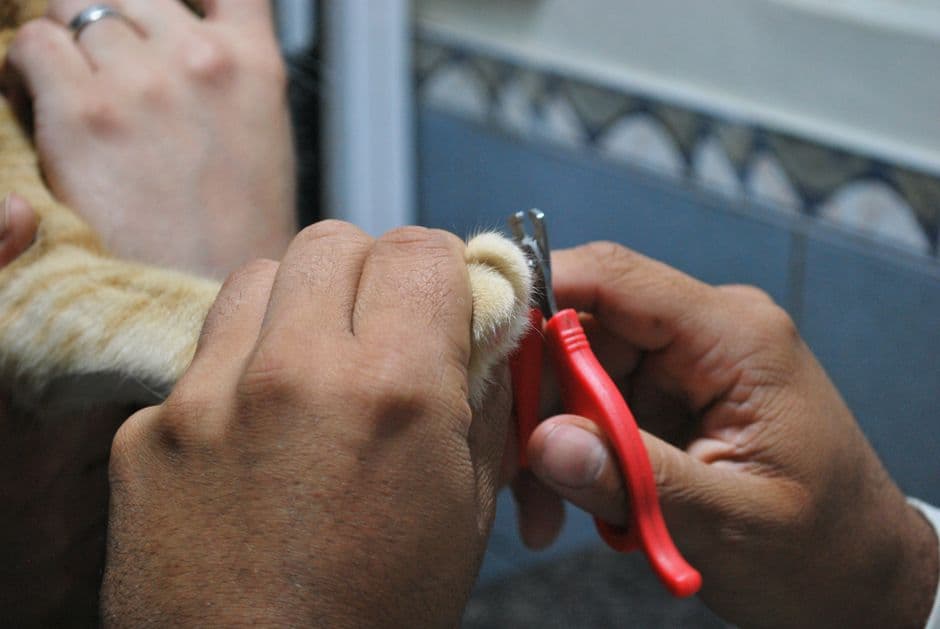
Two different shapes, and one of them is not cosmetic
Fingernails and toenails get cut differently, and the reason is not aesthetic.
| Fingernails | Toenails | |
|---|---|---|
| Shape | Follow the fingertip curve | Straight across |
| Corners | Softened with a file | Left square, not rounded down |
| Length | About 1 mm of white | Slightly more |
| Why | Corners catch and tear | Rounded corners cause ingrown toenails |
| Frequency | Weekly | Every 2-3 weeks |
After a shower, not before
Nail plate is keratin, and keratin softens with water. A dry nail - particularly a thick toenail - shatters and splits under a clipper, leaving a jagged edge that then catches and tears further.
Five minutes of warm water is enough. This is the same principle as softening a beard before shaving, and it is free.
Filing, in one direction
A nail plate is layered, like plywood. Sawing a file back and forth across the edge works those layers apart, and the result is the peeling and flaking that people commonly attribute to diet.
- File in one direction only - from the outside edge toward the center.
- Lift the file off and return to the start rather than dragging it back.
- Do it on dry nails, unlike cutting. Wet nails file raggedly.
- Finish the corners rather than shaping the whole nail with the file.
Cuticles, and the mistake
The cuticle is not decorative. It is a seal where the nail plate meets the skin, and its job is keeping water and bacteria out of the nail matrix underneath.
Cutting it removes that seal. The tidy appearance lasts a few days and the barrier does not come back until it regrows. The alternative achieves the same look: soften it in the shower, then push it back gently with a towel-wrapped fingertip or a cuticle stick. Thirty seconds, no cutting.
The tool, briefly
The specification that matters is whether the cutting edges are actually sharp. Seki publishes hand-sharpened edges made in Seki, Japan, and specifies them as suited to hard nails - which is the relevant claim, because a stamped edge crushes a thick toenail rather than shearing it, leaving the jagged edge that then tears.
What Seki does not publish is dimensions, weight or steel grade - the same disclosure gap that hair shears have, and for the same reason: small hand tools are sold on photographs.
One practical rule regardless of brand: keep a separate pair for toenails. Fungal transfer between toes and fingers is a real thing and two pairs of clippers costs very little.
The step that is already in your routine
You do not need a cuticle oil. Whatever hand cream you own, worked into the nail fold rather than only over the back of the hand, does most of the same job - it is a humectant and an occlusive applied to skin that is dry, which is the entire mechanism.
A published 40 per cent glycerin cream is doing more of that than a scented oil with no published concentration, which is the same argument the hand cream roundup makes.
Finally, the boundary: nail discolouration, thickening, separation from the bed, or pain are not grooming problems. Fungal nail infections and several other conditions present that way and have real treatments. Nothing on this site is medical advice.
Every pick, with the working
Each entry shows the published specifications, the axis scores they produce and what you give up. The order is the computed order, not a commercial one, and the arithmetic is open underneath every score.
Our pickHand-sharpened edges and a catcher that works
Seki Edge SS-105 Nail Clipper
Tempered stainless clippers with edges hand-sharpened in Seki, Japan, an angled head that keeps the wrist straight, and a cover that catches the clippings and carries a file on the back. The hand-sharpening is the published difference: a stamped edge crushes a thick nail, a sharpened one cuts it.
- Material
- Tempered stainless steel, hand-sharpened
- Made in
- Japan
- Refill
- Nothing to refill
- Warranty
- Not published
- Assumed service life
- 2,600 uses
The arithmetic: 260 uses a year x 10 years of assumed service life = 2600 uses.
What it gets right
- Hand-sharpened cutting edges, published, and specified as suited to hard nails
- Catcher cover means clippings do not end up across a bathroom floor
- Angled head keeps the wrist straight, published as an accessibility feature
- Made in Seki, Japan, and the maker says so on its own site
Flaws
- Seki publishes no dimensions, no weight and no steel grade
- The integrated magnifier on this model is a genuinely divisive feature
- No published sharpening or replacement guidance of any kind
The working behind the 8.3
- How long it lasts: not scored
- Not scored. This is a durable item, not a consumable, so how long it lasts is an assumption about service life rather than something the pack size tells us.
- Ease of switching: 9.5
- Hand-sharpened edges published and specified for hard nails (+), a catcher that actually contains clippings (+), identifiable origin (+), but no dimensions, weight or steel grade published (-).
- Refill economics: 8.0
- Nothing to refill. The only future cost is replacing the item itself.
- What the maker publishes: 6.7
- 2 of 3 specifications a buyer would expect are published: material, madeIn. Not published: warrantyLabel. 2 / 3 x 10 = 6.7.
Axes with no published input are dropped and the remaining weights re-normalized, so a product is not punished for a category where an axis does not apply. Specifications compiled 3 September 2026 from Seki Edge published hand-sharpening, materials and origin.
2Hands that split open in winter
O'Keeffe's Working Hands
Glycerin second, allantoin seventh, in a thirteen-item list with no fragrance and no acid. It is the same formula family as the company's foot cream, aimed at the specific failure mode where skin on a knuckle actually cracks. Concentrated and non-greasy, which is why it gets reapplied.
- Net weight
- 96 g
- Fragrance
- Fragrance-free
- Made in
- United States
- Refill
- Nothing to refill
- Warranty
- Not applicable
- How long it lasts
- 48 uses
Published key ingredients: Glycerin, Allantoin, Stearic acid, Paraffin.
The arithmetic: 96 g / 2 per application (assumed) = about 48 applications.
What it gets right
- Glycerin second on the published list - a genuine humectant load
- Allantoin published, which lifts hardened dead skin without acid
- Unscented, published, and no acid, so it goes on broken skin
- 3.4 oz jar, the largest container on this page
Flaws
- No published concentration for anything
- Diazolidinyl urea and iodopropynyl butylcarbamate: two formaldehyde-releasing preservatives
- A jar, so fingers go into the product
The working behind the 9.0
- How long it lasts: 10.0
- 96 g / 2 per application (assumed) = about 48 applications. At five shaves a week, that is about 2.2 months. A 2-month supply scores 10 in this category, so 2.2 / 2 x 10 = 10.0.
- Ease of switching: 9.5
- No acid and no fragrance, so it works on cracked skin (++), glycerin second and allantoin published (+), largest container here (+), but no concentrations published (-) and two formaldehyde-releasing preservatives (-).
- Refill economics: 8.0
- Nothing to refill. The only future cost is replacing the item itself.
- What the maker publishes: 8.0
- 4 of 5 specifications a buyer would expect are published: netWeightG, keyIngredients, fragranceFree, madeIn. Not published: volumeMl. 4 / 5 x 10 = 8.0.
Axes with no published input are dropped and the remaining weights re-normalized, so a product is not punished for a category where an axis does not apply. Specifications compiled 3 September 2026 from O'Keeffe's Working Hands published ingredient list.
3A published 40 per cent humectant in seven ingredients
Neutrogena Norwegian Formula Hand Cream
Glycerin at a published 40 per cent, in a seven-ingredient fragrance-free formula. That percentage is extraordinary for a consumer product and it is printed rather than implied - which is why a pea-sized amount does what a fingertip of an ordinary lotion does not.
- Volume
- 56 ml
- Fragrance
- Fragrance-free
- Made in
- United States
- Refill
- Nothing to refill
- Warranty
- Not applicable
- How long it lasts
- 28 uses
Published key ingredients: Glycerin 40%, Cetearyl alcohol, Stearic acid.
The arithmetic: 56 ml / 2 per application (assumed) = about 28 applications.
What it gets right
- Published 40 per cent glycerin - by far the highest published humectant concentration in this ledger
- Seven ingredients total, and the fragrance-free version says so on the label
- Concentrated enough that a 2 oz tube lasts months
- Nothing in it that a reactive hand is likely to object to
Flaws
- Forty per cent glycerin is tacky on application and takes a minute to sink in
- A humectant that strong can pull water outward in very dry indoor air unless it is sealed
- 2 oz is a small tube, which is the trade for the concentration
The working behind the 8.1
- How long it lasts: 6.5
- 56 ml / 2 per application (assumed) = about 28 applications. At five shaves a week, that is about 1.3 months. A 2-month supply scores 10 in this category, so 1.3 / 2 x 10 = 6.5.
- Ease of switching: 9.5
- A published 40 per cent active in a seven-ingredient formula (++), fragrance-free version explicitly labeled (+), concentrated so the tube lasts (+), but tacky on application (-) and a strong humectant needs sealing in dry air (-).
- Refill economics: 8.0
- Nothing to refill. The only future cost is replacing the item itself.
- What the maker publishes: 8.0
- 4 of 5 specifications a buyer would expect are published: volumeMl, keyIngredients, fragranceFree, madeIn. Not published: netWeightG. 4 / 5 x 10 = 8.0.
Axes with no published input are dropped and the remaining weights re-normalized, so a product is not punished for a category where an axis does not apply. Specifications compiled 3 September 2026 from Neutrogena Norwegian Formula published 40% glycerin and ingredient list.
Prices last verified September 24, 2026. They move constantly; the figure on Amazon when you click is the real one.
Questions people actually ask
Why should toenails be cut straight across?
Because rounding the corners down encourages the nail edge to grow into the surrounding skin fold rather than over it - which is what an ingrown toenail is. It is the same category of mechanism as an ingrown hair: something sharp growing into skin instead of out of it.
Should I cut my cuticles?
No. The cuticle is a seal between the nail plate and the skin, and it is there to keep things out. Pushing it back gently after a shower achieves the tidy appearance without removing the barrier. Cutting it is a cosmetic decision with a real downside.
Why do my nails peel?
Usually mechanical rather than dietary. Filing back and forth separates the layers of the nail plate, and repeated wetting and drying does the same. Filing in one direction and using a hand cream on the nail fold addresses both before any supplement is worth considering.
Clippers or scissors?
Clippers for toenails, which are thick enough to need the leverage. Either for fingernails. What matters more is that the edges are actually sharp - Seki publishes hand-sharpened edges specified for hard nails, and a stamped edge crushes a thick nail rather than cutting it.
How often should I cut them?
Fingernails roughly weekly, toenails every two to three weeks. More useful than a schedule: cut them before they catch on anything, because a nail that catches tears, and a tear goes below the free edge.