The best first razor for a teenager
The first shave is mostly a lesson in pressure and grain. The right first razor is the one that makes both lessons cheap to learn.
By Sawyer V. · Published
We have not tested any of this. Everything below is compiled from published manufacturer specifications, and the arithmetic is printed so you can check it. This page carries affiliate links: if you buy through one we earn a commission at no extra cost to you, and it does not change the order of the picks. Full disclosure.
The short version
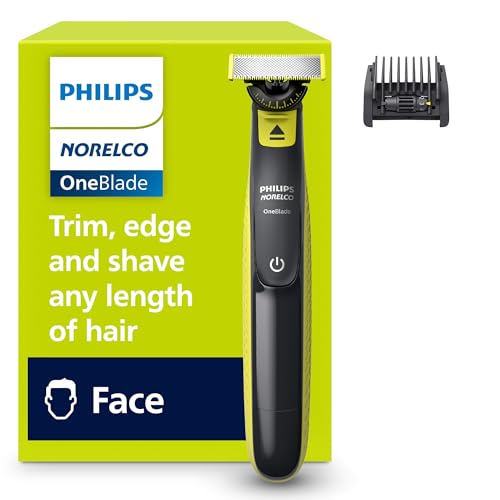
Buy the Philips OneBlade 360 for a first shave. It cannot take skin the way a blade can - Philips publishes rounded tips and a glide coating, and it does not shave bare by design - it is fully waterproof, and the published four-month blade life keeps the running cost predictable. Buy the Gillette Mach3 if he wants a normal razor: three blades rather than five is less irritation on skin that has never been shaved, and the refills are the cheapest Gillette sells.
| # | Pick | Lasts | Score | Price |
|---|---|---|---|---|
| 1 | Philips Norelco OneBlade 360 Trimming, edging and shaving with one blade | 1,300 shaves* | 7.1/10 | $29.96 - view on Amazon |
| 2 | Gillette Mach3 Fewer blades on skin that reacts to five | ~20 shaves | 5.2/10 | $9.97 - view on Amazon |
| 3 | Mühle R89 The mildest of the classic three | 5,200 shaves* | 8.7/10 | $48.00 - view on Amazon |
| 4 | Rockwell 6S Dialing in your own aggression | 5,200 shaves* | 8.6/10 | $120.00 - view on Amazon |
Prices last verified October 19, 2026. They move constantly; the figure on Amazon when you click is the real one.
What a first razor actually needs to be
Almost nothing about a first razor is about closeness. First growth is soft, sparse and mostly on the upper lip and chin, and the shave itself is easy. What is hard is everything around it: judging pressure, learning which way the hair grows, and not turning a spot into a scar.
- It should be hard to cut yourself with. A cutter that never sits directly against skin removes the worst outcome entirely.
- It should be cheap to keep. A teenager will lose it, leave it wet, or forget it exists for a month. Published blade life matters more than published engineering.
- It should not demand technique on day one. Anything with a setting to choose is a decision a beginner cannot make.
- It should suit acne-prone skin. Most teenage faces are, and the tool interacts with that daily.
Published figures
| Option | What it is | Published blade life | Water | Forgiveness |
|---|---|---|---|---|
| Philips OneBlade 360 | Hybrid blade, never shaves bare | 4 months, with an indicator | Fully waterproof | Highest - cutter never sits on skin |
| Gillette Mach3 | 3-blade cartridge | Up to 15 shaves per refill | Rinseable | High - pivotless but familiar |
| Mühle R89 | Mild double-edge, one blade included | Blade life depends on use | Rinseable | Lowest here - a bare blade |
| Rockwell 6S (the skip) | Adjustable DE, six gaps | Blade life depends on use | Rinseable | Needs a decision a beginner cannot make |
The pick: Philips OneBlade 360
It is the only tool here that structurally cannot do the thing parents worry about. The blade oscillates behind rounded tips with a glide coating - both published - and it takes stubble down close without ever going bare, so there is no edge pressed against skin.
It is also the cheapest to teach with. A published four-month blade with a wear indicator means no guessing about replacement, it is fully waterproof so it can live in a shower, and the comb set from 0.2 to 5 mm covers the stage where he wants to keep a little rather than remove everything.
The honest cons. It will not give a properly clean-shaven face, which is exactly what an eighteen-year-old may eventually want. The blades are proprietary. And the power adapter is not included, which Philips publishes.
The normal-razor answer: Gillette Mach3
If he wants what his friends use, this is the sensible version of it. Three DuraComfort blades in a published open-blade architecture rather than five, which means fewer edges crossing skin that has never been shaved, and Gillette publishes up to 15 shaves per refill.
Mach3 refills are also the cheapest of the Gillette systems, which matters when the razor gets left in a gym bag.
The honest cons. Gillette publishes no pivot claim for this head and no hardware specifications at all. It is a cartridge system, so the running cost never stops - the cartridge roundup sets that out, and the calculator shows what it adds up to.
If he wants to learn properly: Mühle R89
A mild closed comb at 64 grams with a blade in the box. For a teenager who is genuinely interested - and supervised for the first few shaves - a double-edge teaches pressure and grain better than anything else, and the blades cost cents.
The honest cons. It is a bare blade: nicks are part of learning, and a careless first pass on a neck will bleed. Mühle publishes very little beyond weight and envelope size, and this is not the tool for somebody who wants to shave in two minutes before school.
What to teach alongside it
- Shave last in the shower. Hair takes water in slowly and wet hair cuts far more easily.
- With the grain first, always. Against the grain is a technique to earn, not to start with.
- Never press. Pressure is what causes burn, weepers and bumps - the razor burn page covers it.
- Shave around spots, not over them. The one rule that prevents scarring.
- Something fragrance-free afterwards. Not a stinging splash.
- Not every day. Two or three times a week is plenty at this stage, and the skin recovers between.
The beginner guide is the fuller version of all of this, and it is worth reading with him rather than handing over.
Every pick, with the working
Each entry shows the published specifications, the axis scores they produce and what you give up. The order is the computed order, not a commercial one, and the arithmetic is open underneath every score.
Our pickTrimming, edging and shaving with one blade
Philips Norelco OneBlade 360
Not a shaver and not a trimmer: a single oscillating blade that trims with a comb, edges without one and takes stubble down close without ever going properly bare. 45 minutes of runtime, five comb lengths from 0.2 to 5 mm, waterproof, and Philips publishes a four-month blade life with an indicator that tells you when it is up.
- Runtime
- 45 min
- Charge time
- Not published
- Length settings
- 5
- Cutting range
- 0.2 - 5 mm
- Head replacement
- Every 4 months
- Waterproof
- Yes
- Made in
- Not published
- Refill
- Proprietary to the maker
- Warranty
- Not published
- Assumed service life
- 1,300 uses
The arithmetic: 260 uses a year x 5 years of assumed service life = 1300 uses.
What it gets right
- Published four-month blade life with a wear indicator on the blade itself
- Five comb settings from 0.2 mm to 5 mm plus bare-blade edging
- 45-minute runtime, 100% waterproof, usable in the shower
- The cheapest entry point to a powered shave here by a wide margin
Flaws
- It will not give you a properly bare shave; that is a design decision, not a fault
- Proprietary blades, replaced on a schedule, which is the real cost of ownership
- 45 minutes of runtime
The working behind the 7.1
- How long it lasts: not scored
- Not scored. This is a durable item, not a consumable, so how long it lasts is an assumption about service life rather than something the pack size tells us.
- Ease of switching: 9.5
- Published 4-month blade life with an indicator, so the one maintenance decision is made for you (++), waterproof and shower-usable (+), five published comb lengths (+), proprietary blades on a schedule (-).
- Refill economics: 4.0
- Only this maker's refill fits, so the ongoing price is set by the maker rather than by a market. This is where the real cost of ownership hides.
- What the maker publishes: 6.0
- 3 of 5 specifications a buyer would expect are published: runtimeMin, waterproof, headReplacementMonths. Not published: chargeMin, cuttingElements. 3 / 5 x 10 = 6.0.
Axes with no published input are dropped and the remaining weights re-normalized, so a product is not punished for a category where an axis does not apply. Specifications compiled 3 September 2026 from Philips Norelco OneBlade 360 published specifications.
2Fewer blades on skin that reacts to five
Gillette Mach3
Three DuraComfort blades in an open-blade architecture with a lubrication strip, and a published blade life of up to 15 shaves per refill. Gillette publishes no pivot claim for this head at all, which is a fair description of what the Mach3 is: the simple one, and the cheapest Gillette system here to feed.
- Material
- Not published
- Head
- 3-blade cartridge
- Blades in the box
- 2
- Blades per pack
- 2
- Made in
- Not published
- Refill
- Proprietary to the maker
- Warranty
- Not published
- How long it lasts
- 20 uses
The arithmetic: 2 cartridges x 10 shaves per cartridge (assumed) = 20 shaves.
What it gets right
- Published 3 blades per cartridge - fewer edges over the same skin than a five-blade head
- Published blade life: each refill lasts up to 15 comfortable shaves
- Open-blade architecture, published, so it clogs less on longer growth
- Mach3 refills are the cheapest of the Gillette systems in this ledger
Flaws
- Gillette publishes no pivot or flex claim for this head
- No trimmer on the back
- No weight, material or warranty published by Gillette
- Gillette's own site sells the refills, not this handle pack
The working behind the 5.2
- How long it lasts: 1.5
- 2 cartridges x 10 shaves per cartridge (assumed) = 20 shaves. At five shaves a week, that is about 0.9 months. A 6-month supply scores 10 in this category, so 0.9 / 6 x 10 = 1.5.
- Ease of switching: 9.5
- The most familiar format there is (++), three blades rather than five suits reactive skin (+), but no pivot is published (-) and the cartridges are proprietary (-).
- Refill economics: 4.0
- Only this maker's refill fits, so the ongoing price is set by the maker rather than by a market. This is where the real cost of ownership hides.
- What the maker publishes: 3.3
- 1 of 3 specifications a buyer would expect are published: unitsPerPack. Not published: material, madeIn. 1 / 3 x 10 = 3.3.
Axes with no published input are dropped and the remaining weights re-normalized, so a product is not punished for a category where an axis does not apply. Specifications compiled 3 September 2026 from Gillette Mach3 published blade count, architecture and blade life.
3The mildest of the classic three
Mühle R89
The R89 is the lightest of the three classic closed combs at 64 grams and the only one that puts a blade in the box, which matters more than it sounds when the alternative is ordering two things and waiting for both. Mühle publishes a 41 x 94 mm envelope and nothing else, which is the one place it is less forthcoming than Edwin Jagger.
- Weight
- 64 g
- Length
- 94 mm
- Material
- Chrome-plated metal, engraved handle
- Head
- Closed comb
- Blade gap
- Not published
- Blades in the box
- 1
- Made in
- Germany
- Refill
- Universal standard
- Warranty
- Not published
- Assumed service life
- 5,200 uses
The arithmetic: 260 shaves a year x 20 years of assumed service life = 5200 shaves.
What it gets right
- Ships with a blade, so it is a complete first purchase on its own
- 64 g — the lightest of the three classics, which suits a lighter touch
- Closed comb, nothing adjustable, chrome-plated with an engraved handle for grip
- Standard blade fitment
Flaws
- Mühle does not publish a blade gap, so its mildness cannot be compared numerically to anything
- Lightest of the three, which means slightly more of the pressure is yours to supply
- One blade in the box is a sample, not a supply
The working behind the 8.7
- How long it lasts: not scored
- Not scored. This is a durable item, not a consumable, so how long it lasts is an assumption about service life rather than something the pack size tells us.
- Ease of switching: 8.0
- Closed comb (+), no adjustment (+), one blade included so it works on arrival (+), 64 g is the lightest of the classic three, so slightly more pressure is yours to control (-).
- Refill economics: 10.0
- The refill is a commodity standard that dozens of factories make, so the price is set by competition and no single maker can raise it.
- What the maker publishes: 8.6
- 6 of 7 specifications a buyer would expect are published: weightG, lengthMm, material, madeIn, headType, bladesIncluded. Not published: bladeGapNote. 6 / 7 x 10 = 8.6.
Axes with no published input are dropped and the remaining weights re-normalized, so a product is not punished for a category where an axis does not apply. Specifications compiled 3 September 2026 from Mühle R89 listed specifications (Maggard Razors).
4Dialing in your own aggression
Rockwell 6S
Skip this one. A genuinely excellent razor and the wrong first one. Six published blade gaps from 0.008 to 0.031 inches is a feature for somebody who already knows what their face tolerates, and a decision nobody shaving for the first time can make. Give it to the same person in three years and it will be the last razor they buy; hand it to a fifteen-year-old and the most likely outcome is a plate set too aggressive and a neck that bleeds.
The 6S is the one razor here that publishes the number everybody else hides. Three reversible plates give six blade gaps from 0.008 to 0.031 inches, so you can start on R1, find the setting your face tolerates, and never wonder whether the razor or your technique is the problem. It is 118 grams of 316L stainless and it ships with five blades.
- Weight
- 118 g
- Length
- 95 mm
- Material
- 316L stainless steel
- Head
- Adjustable, three reversible plates
- Blade gap
- 0.008 in to 0.031 in across R1-R6
- Blades in the box
- 5
- Length settings
- 6
- Made in
- USA
- Refill
- Universal standard
- Warranty
- Not published
- Assumed service life
- 5,200 uses
The arithmetic: 260 shaves a year x 20 years of assumed service life = 5200 shaves.
What it gets right
- Published blade gaps from 0.008 in to 0.031 in across six settings — the only razor in this ledger that discloses them
- 316L stainless, so there is no plating to wear through
- Five blades in the box; usable the day it arrives
- 118 g, the heaviest here, which suits a heavy beard and a light hand
Flaws
- Six settings is six chances to blame the razor instead of your angle in the first month
- Three loose plates are three things to keep track of
- Heaviest and largest of the group at 95 mm overall
The working behind the 8.6
- How long it lasts: not scored
- Not scored. This is a durable item, not a consumable, so how long it lasts is an assumption about service life rather than something the pack size tells us.
- Ease of switching: 7.0
- R1 plate is the mildest published gap in this ledger at 0.008 in (+), blades included (+), but six settings and three loose plates add decisions in exactly the month a new wet shaver has too many (-).
- Refill economics: 10.0
- The refill is a commodity standard that dozens of factories make, so the price is set by competition and no single maker can raise it.
- What the maker publishes: 10.0
- 7 of 7 specifications a buyer would expect are published: weightG, lengthMm, material, madeIn, headType, bladeGapNote, bladesIncluded. 7 / 7 x 10 = 10.0.
Axes with no published input are dropped and the remaining weights re-normalized, so a product is not punished for a category where an axis does not apply. Specifications compiled 3 September 2026 from Rockwell 6S published specifications (Fendrihan).
Prices last verified October 19, 2026. They move constantly; the figure on Amazon when you click is the real one.
Questions people actually ask
What age should a boy start shaving?
When there is something to shave and he wants to - there is no useful number. The first growth is usually soft and sparse on the upper lip, and it needs a tool that is forgiving rather than close.
Is an electric safer than a blade for a first razor?
Yes, in the literal sense: a hybrid like the OneBlade cannot open skin the way a cartridge can, because the cutter never sits directly against it. That is the reason it leads this page.
Should a teenager start with a safety razor?
Only with supervision and a mild razor. A double-edge teaches pressure and angle properly and costs almost nothing to run, but it is unforgiving of the exact mistakes a beginner makes - the technique guide is the place to start.
How often should a teenager shave?
As rarely as the growth allows. Every shave is a mechanical exfoliation of skin that is already dealing with hormonal acne, and shaving daily is what turns that into irritation.
What about acne?
Shave around active spots rather than over them - this is the single most important rule and it prevents scarring. That page covers the whole routine, including what to use before and after.
Does he need aftershave?
Not the stinging kind. A fragrance-free, alcohol-free balm or moisturizer is all a young face needs - the sensitive aftershave page covers why alcohol is the wrong thing on freshly shaved skin.