How long does a razor cartridge last?
Two makers publish a number, one does not, and dermatologists publish a third that is a fraction of both. All three are right about different faces - and only one of them is about your skin.
By Sawyer V. · Published
We have not tested any of this. Everything below is compiled from published manufacturer specifications, and the arithmetic is printed so you can check it. This page carries affiliate links: if you buy through one we earn a commission at no extra cost to you, and it does not change the order of the picks. Full disclosure.
The short version
Five to seven shaves if your skin bumps. Ten to fifteen if it does not. Gillette publishes up to 20 shaves per ProGlide refill and up to 15 per Mach3; the American Academy of Dermatology names five to seven for skin prone to razor bumps. Both are honest numbers about different things - the maker is describing when the blade stops feeling sharp, the dermatologists are describing when a blade starts causing trouble. Count shaves, not weeks, and change on the first tug rather than the third. The signal the makers themselves give is the lubrication strip: when the colored strip has faded through, the cartridge is done.
| # | Pick | Lasts | Score | Price |
|---|---|---|---|---|
| 1 | Gillette Mach3 Fewer blades on skin that reacts to five | ~20 shaves | 5.2/10 | $9.97 - view on Amazon |
| 2 | Gillette SkinGuard A cartridge built not to cut below the skin | ~40 shaves | 5.6/10 | $19.94 - view on Amazon |
| 3 | Harry's Original razor A cartridge system that publishes where its steel comes from | ~30 shaves | 6.7/10 | $11.99 - view on Amazon |
| 4 | Gillette ProGlide Staying with cartridges and wanting every feature | ~20 shaves | 5.2/10 | $16.97 - view on Amazon |
Prices last verified October 19, 2026. They move constantly; the figure on Amazon when you click is the real one.
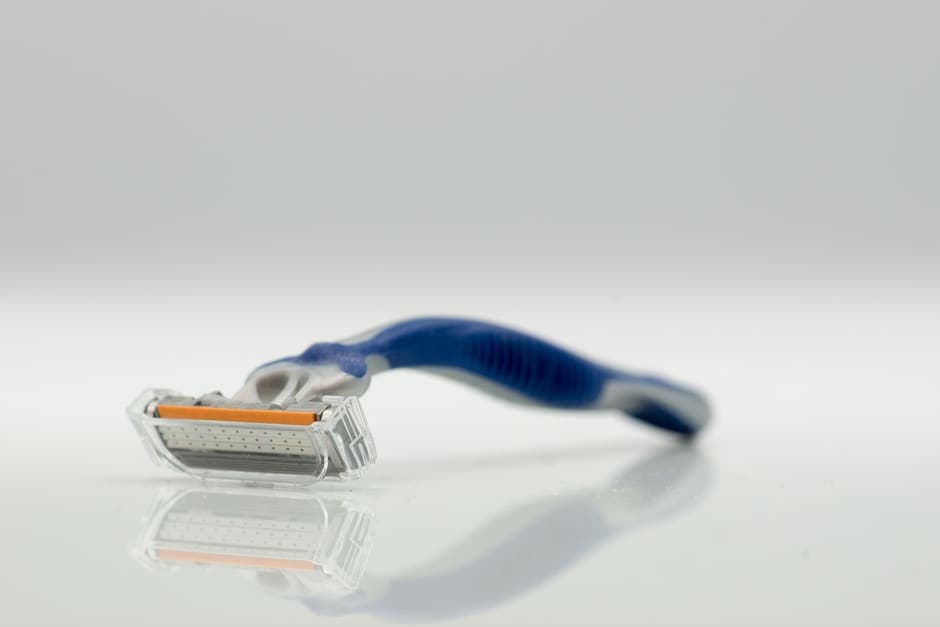
What each maker publishes
This is a category where the honest answer is partly a list of silences. Two Gillette lines publish a shave count. Nobody else here does.
| System | Published blades | Published blade life | Refill standard |
|---|---|---|---|
| Gillette ProGlide | 5 | Up to 20 shaves | Proprietary |
| Gillette Mach3 | 3 | Up to 15 shaves | Proprietary |
| Gillette SkinGuard | 2 | Not published | Proprietary |
| Harry's Original | 5 | Not published | Proprietary |
| Any double-edge razor | 1 | Five to seven shaves, by convention | Universal |
The last row is there for scale rather than as a recommendation. A double-edge blade is a commodity that costs a few cents, which is why its working life is discussed openly and why nobody argues about stretching one. The format comparison handles that argument; this page is about the cartridge you already own.
Which number applies to you
- Your skin has never objected. Use the published figure as a ceiling and expect to land somewhere under it. Ten to fifteen shaves on a five-blade cartridge is a realistic working life for an average beard with a clean rinse.
- You get razor burn, bumps or ingrown hairs. Work to five to seven, which is what the AAD names alongside using a single blade or an electric. This is the single highest-value change available to you and it is cheaper than anything you could buy.
- You shave your head as well as your face. A scalp is roughly three times the area, so the cartridge does three times the work per shave. Divide accordingly - the head shaving guide covers the rest.
- Your growth is coarse or dense. Fewer shaves, and this is the biggest single variable after area.
The wear indicator the makers already gave you
Every cartridge on this page has a lubrication strip, and it is the most useful thing on the razor for answering this question.
The strip is a soluble polymer band that wears away as you use it, and on most cartridges it is deliberately colored so that the fade is visible. When it has gone pale or worn through to white, the cartridge has stopped gliding and started dragging - and a dragging cartridge needs more pressure, which is the mechanism behind most razor burn.
It is not a precision instrument and it fades faster in a hot shower than in a sink. But it is a physical signal on the thing in your hand, which beats counting in your head, and it is the signal the makers themselves point at.
The three signs, in the order they arrive
- Tugging instead of cutting. The first and most reliable sign, and the right moment to change. A sharp cartridge severs hair without you noticing; a dull one catches and pulls before it cuts.
- Needing a pass you did not used to need. If two passes have quietly become three, the blade is compensating rather than your technique slipping.
- Nicks where you never normally catch. A dull cartridge skips rather than glides, and a skipping blade catches skin. By this point you are well past due.
If those signs are familiar and you are already changing often, the razor burn page ranks the causes - a stretched blade is near the top, above anything you could buy to fix it.
What genuinely extends a cartridge, and what does not
- Works: rinsing and drying it. Back-flush the cartridge under a hot tap until no hair or soap comes out, shake the water off, and store it somewhere dry. Corrosion and packed debris both blunt an edge, and both are avoidable in ten seconds.
- Works: storing it out of the shower. A razor that lives in the steam is wet for twenty-three hours a day. This is the main reason two people get different lifespans from the same cartridge.
- Works: softening the hair first. A hair cut while dry and stiff takes more force from the edge. Warm water and a real lather do more for blade life than any technique.
- Does not work: drying it with a hairdryer, or on your jeans. Stropping a cartridge on denim is a persistent folk remedy. The blades in a cartridge are fixed in a plastic housing at a set angle; dragging them backwards across fabric rolls a thin edge the wrong way, which is the opposite of sharpening.
- Does not work: oil in a jar. Soaking a cartridge in mineral oil is sold as a life extender. It keeps water off the steel, which is the same thing drying it does for nothing.
What each interval actually costs
We deliberately do not print prices in prose - this site only shows figures it can source live, which is why the numbers on this page sit in the buy buttons with a date against them. But the shape of the arithmetic is the point, and it is simple.
A cartridge is the most expensive consumable in wet shaving per use, by a wide margin, and it is proprietary on every system here. Going from fifteen shaves to five triples that line. For a face that never reacts, that is money for nothing. For a face that bumps, it is the cheapest effective treatment available and it is still a fraction of what a course of anything topical costs.
The cost-per-shave calculator takes your own prices and your own replacement interval, so you can see both versions of your own year rather than ours. And if the result is uncomfortable, that is the honest argument for a different cartridge system or for the format that uses commodity blades.
Every pick, with the working
Each entry shows the published specifications, the axis scores they produce and what you give up. The order is the computed order, not a commercial one, and the arithmetic is open underneath every score.
Our pickFewer blades on skin that reacts to five
Gillette Mach3
Three DuraComfort blades in an open-blade architecture with a lubrication strip, and a published blade life of up to 15 shaves per refill. Gillette publishes no pivot claim for this head at all, which is a fair description of what the Mach3 is: the simple one, and the cheapest Gillette system here to feed.
- Material
- Not published
- Head
- 3-blade cartridge
- Blades in the box
- 2
- Blades per pack
- 2
- Made in
- Not published
- Refill
- Proprietary to the maker
- Warranty
- Not published
- How long it lasts
- 20 uses
The arithmetic: 2 cartridges x 10 shaves per cartridge (assumed) = 20 shaves.
What it gets right
- Published 3 blades per cartridge - fewer edges over the same skin than a five-blade head
- Published blade life: each refill lasts up to 15 comfortable shaves
- Open-blade architecture, published, so it clogs less on longer growth
- Mach3 refills are the cheapest of the Gillette systems in this ledger
Flaws
- Gillette publishes no pivot or flex claim for this head
- No trimmer on the back
- No weight, material or warranty published by Gillette
- Gillette's own site sells the refills, not this handle pack
The working behind the 5.2
- How long it lasts: 1.5
- 2 cartridges x 10 shaves per cartridge (assumed) = 20 shaves. At five shaves a week, that is about 0.9 months. A 6-month supply scores 10 in this category, so 0.9 / 6 x 10 = 1.5.
- Ease of switching: 9.5
- The most familiar format there is (++), three blades rather than five suits reactive skin (+), but no pivot is published (-) and the cartridges are proprietary (-).
- Refill economics: 4.0
- Only this maker's refill fits, so the ongoing price is set by the maker rather than by a market. This is where the real cost of ownership hides.
- What the maker publishes: 3.3
- 1 of 3 specifications a buyer would expect are published: unitsPerPack. Not published: material, madeIn. 1 / 3 x 10 = 3.3.
Axes with no published input are dropped and the remaining weights re-normalized, so a product is not punished for a category where an axis does not apply. Specifications compiled 3 September 2026 from Gillette Mach3 published blade count, architecture and blade life.
2A cartridge built not to cut below the skin
Gillette SkinGuard
The only cartridge in this ledger whose maker publishes the opposite of a close shave as the design goal. Two optimally spaced blades with a guard bridging them, which Gillette publishes as positioning the blades to cut hair at skin level rather than below it - its stated purpose being to help prevent new razor bumps. Lubrication with aloe sits both before and after the blades, and Gillette calls the technology clinically proven for sensitive skin.
- Material
- Not published
- Head
- 2-blade cartridge with a guard between the blades
- Blades in the box
- 4
- Blades per pack
- 4
- Made in
- Not published
- Refill
- Proprietary to the maker
- Warranty
- Not published
- How long it lasts
- 40 uses
The arithmetic: 4 cartridges x 10 shaves per cartridge (assumed) = 40 shaves.
What it gets right
- 2 blades, the fewest of any cartridge here - fewer edges crossing the same skin per stroke
- Gillette publishes the guard as cutting hair AT skin level rather than below it, which is the mechanism behind ingrown hairs
- Lubrication published both before and after the blades, with aloe
- Gillette states the technology is clinically proven for sensitive skin
- A precision blade on the back of the cartridge for a nose or a beard line
Flaws
- Gillette publishes no blade-life figure for SkinGuard, though it publishes one for ProGlide and Mach3
- Proprietary cartridges, which is the whole running cost of the format
- No weight, material or warranty published
- Deliberately not a close shave - that is the point, and it will disappoint anybody chasing one
The working behind the 5.6
- How long it lasts: 3.1
- 4 cartridges x 10 shaves per cartridge (assumed) = 40 shaves. At five shaves a week, that is about 1.8 months. A 6-month supply scores 10 in this category, so 1.8 / 6 x 10 = 3.1.
- Ease of switching: 9.5
- It is the format somebody already owns, so nothing is learned (++), 2 published blades and a published cut-at-skin-level guard address the actual mechanism (++), but no blade life is published for this line (-) and the cartridges are proprietary (-).
- Refill economics: 4.0
- Only this maker's refill fits, so the ongoing price is set by the maker rather than by a market. This is where the real cost of ownership hides.
- What the maker publishes: 3.3
- 1 of 3 specifications a buyer would expect are published: unitsPerPack. Not published: material, madeIn. 1 / 3 x 10 = 3.3.
Axes with no published input are dropped and the remaining weights re-normalized, so a product is not punished for a category where an axis does not apply. Specifications compiled 3 September 2026 from Gillette SkinGuard published blade count, guard technology and lubrication.
3A cartridge system that publishes where its steel comes from
Harry's Original razor
Five blades Harry's publishes as engineered in its German factory from Swedish steel, with a flex hinge, a lubricating strip and a precision trimmer, on a weighted handle with a textured grip. It publishes the origin of its steel, which neither Gillette line does, and backs the kit with a published 30-day return rather than a warranty.
- Material
- Rubberized grip with a weighted core
- Head
- 5-blade cartridge, flex hinge
- Blades in the box
- 3
- Blades per pack
- 3
- Made in
- Blades engineered in Germany from Swedish steel; handle not published
- Refill
- Proprietary to the maker
- Warranty
- Not published (30-day return)
- How long it lasts
- 30 uses
The arithmetic: 3 cartridges x 10 shaves per cartridge (assumed) = 30 shaves.
What it gets right
- Published 5 blades per cartridge, engineered in Germany from Swedish steel
- Published flex hinge and precision trimmer
- Three cartridges in this box rather than two
- Published 30-day return policy
Flaws
- A return window is not a warranty, and no warranty term is published
- Proprietary cartridges, compatible only with the Harry's Original system
- No weight, length or country of manufacture published for the handle
- Retail copy still uses the retired 'Truman' name for the system Harry's now calls Original
The working behind the 6.7
- How long it lasts: 2.3
- 3 cartridges x 10 shaves per cartridge (assumed) = 30 shaves. At five shaves a week, that is about 1.4 months. A 6-month supply scores 10 in this category, so 1.4 / 6 x 10 = 2.3.
- Ease of switching: 9.5
- A familiar cartridge format with published steel origin (++), three cartridges in the box (+), but proprietary refills (-) and a return window standing in for a warranty (-).
- Refill economics: 4.0
- Only this maker's refill fits, so the ongoing price is set by the maker rather than by a market. This is where the real cost of ownership hides.
- What the maker publishes: 10.0
- 3 of 3 specifications a buyer would expect are published: unitsPerPack, material, madeIn. 3 / 3 x 10 = 10.0.
Axes with no published input are dropped and the remaining weights re-normalized, so a product is not punished for a category where an axis does not apply. Specifications compiled 3 September 2026 from Harry's Original published blade count, steel origin and handle construction.
4Staying with cartridges and wanting every feature
Gillette ProGlide
Five antifriction blades, a FlexBall pivoting head, a precision trimmer on the back and a lubrastrip Gillette publishes as carrying more lubricants than the Fusion5's. Gillette also publishes a blade-life figure - up to 20 shaves per refill - and publishes no weight, no materials and no warranty at all.
- Material
- Not published
- Head
- 5-blade cartridge, pivoting
- Blades in the box
- 2
- Blades per pack
- 2
- Made in
- Not published
- Refill
- Proprietary to the maker
- Warranty
- Not published
- How long it lasts
- 20 uses
The arithmetic: 2 cartridges x 10 shaves per cartridge (assumed) = 20 shaves.
What it gets right
- Published 5 blades per cartridge and a published FlexBall pivot
- Precision trimmer on the back, for under the nose and along a beard line
- Gillette publishes a blade life: up to 20 shaves per refill
- The handle takes every Gillette 5-blade refill except GilletteLabs, which Gillette states
Flaws
- No weight, length, material or warranty published by Gillette
- Proprietary cartridges, which is the entire running cost of the format
- This pack is a handle and 2 refills - a starter quantity rather than a supply
- 'Up to 20 shaves' is a maker's claim about its own consumable, not a tested figure
The working behind the 5.2
- How long it lasts: 1.5
- 2 cartridges x 10 shaves per cartridge (assumed) = 20 shaves. At five shaves a week, that is about 0.9 months. A 6-month supply scores 10 in this category, so 0.9 / 6 x 10 = 1.5.
- Ease of switching: 9.5
- It is the format most people already use, so there is nothing at all to learn (++), a pivoting head and a trimmer (+), but nothing about the hardware is published (-) and the cartridges are proprietary (-).
- Refill economics: 4.0
- Only this maker's refill fits, so the ongoing price is set by the maker rather than by a market. This is where the real cost of ownership hides.
- What the maker publishes: 3.3
- 1 of 3 specifications a buyer would expect are published: unitsPerPack. Not published: material, madeIn. 1 / 3 x 10 = 3.3.
Axes with no published input are dropped and the remaining weights re-normalized, so a product is not punished for a category where an axis does not apply. Specifications compiled 3 September 2026 from Gillette ProGlide published blades, FlexBall, trimmer and blade life.
Prices last verified October 19, 2026. They move constantly; the figure on Amazon when you click is the real one.
Questions people actually ask
How many shaves does a razor cartridge actually last?
On the published figures, up to 20 shaves for a Gillette ProGlide and up to 15 for a Mach3. In practice most people get fewer, because the published figure assumes an average beard and a clean rinse. If you have coarse growth, shave a head as well as a face, or take three passes, expect meaningfully less.
Why do dermatologists say five to seven when Gillette says twenty?
Because they are measuring different failures. Gillette's number describes when the blade stops delivering a comfortable shave. The AAD's figure describes keeping a blade sharp enough not to drag - and dragging is what produces razor burn and ingrown hairs. If your skin never objects, the maker's number is fine. If it does, the dermatology number is the one that applies.
Does Harry's publish a blade life?
Not on the pages we could verify. Harry's publishes a good deal about the cartridge itself - five blades, engineered in Germany from Swedish steel, a flex hinge - and backs the kit with a published 30-day return, but we found no stated shave count, so this page does not give it one. Same for Gillette SkinGuard, which is the odd gap: it is the razor Gillette sells to people who need to change blades most often, and it is the one line with no published interval.
Should I count days or shaves?
Shaves, with one exception. A blade is dulled by cutting, so the shave count is what matters. The exception is corrosion: a cartridge left wet, clogged and sitting in a shower degrades on the calendar whether you use it or not. That is why rinsing and drying actually extends life, and why a razor stored in the shower does not last as long as one stored dry.
Is stretching a cartridge a false economy?
On proprietary cartridges it is a real saving and a real cost. Tripling your replacement rate triples the single most expensive line in the format - which is exactly the arithmetic that makes a double-edge razor look the way it does. Put your own prices into the calculator and the comparison takes about thirty seconds.
Does the number of blades change how long a cartridge lasts?
Yes, and not in the direction people expect. More blades spread the work, so a five-blade cartridge can publish a longer life than a three-blade one - which is how Gillette gets to 20 shaves on the ProGlide and 15 on the Mach3. The catch is that five edges crossing the same skin is the thing reactive skin objects to in the first place, so the longer-lasting cartridge is the one more likely to cause the problem that makes you change it early.
What about a double-edge blade?
Five to seven shaves for most people, from a blade that costs a few cents - the double-edge version of this page covers it. The interesting part is that the DE figure and the dermatology figure are the same number, which is not a coincidence: a single commodity blade is cheap enough that nobody has any reason to stretch it.
Sources
- Gillette ProGlide published blades, FlexBall, trimmer and blade life
- Gillette Mach3 published blade count, architecture and blade life
- Gillette SkinGuard published blade count, guard technology and lubrication
- Harry's Original published blade count, steel origin and handle construction
- American Academy of Dermatology guidance on preventing razor bumps