How to shave your head
A scalp is a face you cannot see, with different growth directions and no mirror that shows the back. Here is the order that solves both.
By Sawyer V. · Published · Last updated
We have not tested any of this. Everything below is compiled from published manufacturer specifications, and the arithmetic is printed so you can check it. This page carries affiliate links: if you buy through one we earn a commission at no extra cost to you, and it does not change the order of the picks. Full disclosure.
The short version
Clipper it down before any blade touches it - a razor on hair longer than about 2 mm pulls and clogs. Then hydrate for two to three minutes, lather a quarter of the head at a time, and shave with the grain first in four sections. Take a second pass across the grain rather than against it. Check the back with your hands, not a mirror. Finish with a fragrance-free moisturizer, and put sunscreen on it every day after.
| # | Pick | Lasts | Score | Price |
|---|---|---|---|---|
| 1 | Wahl Elite Pro (79602) The widest published guard range | 1,300 shaves* | 5.6/10 | $69.99 - view on Amazon |
| 2 | Merkur 34C HD One razor, no research | 5,200 shaves* | 8.9/10 | $60.00 - view on Amazon |
| 3 | Skull Shaver Pitbull Gold PRO The palm-held shape, if a head is the main job | 1,300 shaves* | 6.9/10 | $120.99 - view on Amazon |
| 4 | CeraVe Moisturizing Cream 539 g Dry skin, face and body, one tub | ~36 uses | 8.6/10 | $17.80 - view on Amazon |
Prices last verified September 24, 2026. They move constantly; the figure on Amazon when you click is the real one.
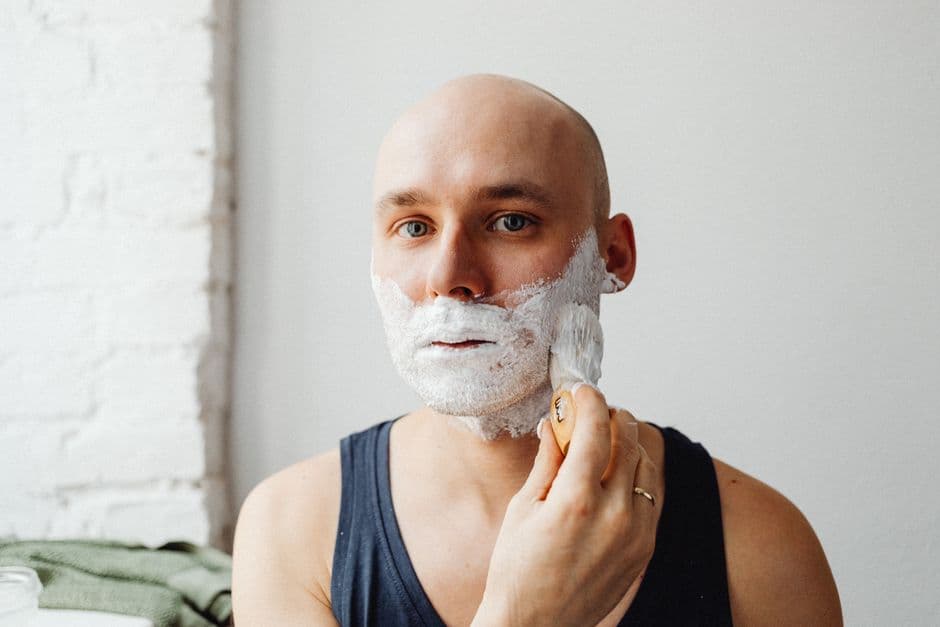
Why a scalp is not a big face
Three differences, and each one changes a step.
- You cannot see most of it. A two-mirror setup shows you the back reversed, at an angle, while you hold a blade. Almost nobody works that way successfully. The technique that does work is doing the back by feel and checking with your palms.
- The growth directions change more. A beard has two or three directions. A scalp has a crown whorl, a nape that often grows upward, and sides that fan. Mapping is not optional here the way it nearly is on a face.
- The surface area is roughly three times larger. Which means more strokes, lather that dries before you reach it, and a much higher total irritation load per shave. Working in quarters exists to solve all three.
Step one is not the razor
The most common failed first head shave is somebody taking a blade to a week of growth. A razor is designed to cut stubble; on longer hair it pulls, clogs after two strokes and leaves you with a half-shaved head and a blocked razor.
Get it to stubble first. Clippers with no guard, or the shortest guard you have - the Wahl Elite Pro publishes a range from 1/16 inch upwards, and the bare blade is shorter still. If you are cutting your own hair regularly anyway, that guide covers the clipper work in more detail, and the guard size table has the millimeter equivalents.
Mapping the grain, once
Do this once, dry, on stubble, and remember it. Run a flat hand over the scalp forwards, backwards and both sideways. Smooth means you are going with the grain; rough means against.
| Area | Usual growth direction | So the with-grain stroke is |
|---|---|---|
| Front and top | Forward | Front to back |
| Sides | Downward | Top to bottom |
| Crown | A whorl - radiates outward | Outward from the center, in short strokes |
| Nape | Often upward | Bottom to top |
The nape is the one that catches people. It frequently grows upward, which means the instinctive downward stroke is against the grain - and the nape is also where scalp ingrown hairs almost always appear.
The shave, in quarters
- Hydrate for two to three minutes. Shave after a shower, or hold a hot wet towel on. Scalp hair is coarse and this is the step that makes the difference.
- Lather one quarter at a time. A brush lather on a whole head dries before you get to the fourth section. Front left, shave it, front right, shave it, and so on.
- With the grain, short strokes, no pressure. A heavier razor helps here because its own weight supplies the force on a surface you are working blind - the same argument as on a face, only more so.
- Re-lather, then go across the grain. Not against. Across gets you most of the closeness at a fraction of the ingrown risk, and on a scalp that risk is concentrated exactly where you cannot see it.
- Check with both palms. Rough patches are obvious by touch. Re-lather any you find - dry-shaving a missed patch is how a good head shave turns into two days of irritation.
Aftercare, which is where scalps differ most
Two things, and both are less optional than they are on a face.
- Moisturize immediately. Fragrance-free, on damp skin. A scalp that has just had two passes over it is a large area of freshly abraded skin, and a 539 g tub of ceramide cream is the cheapest way to cover it daily without rationing.
- Sunscreen, from the next morning. This is the genuinely important one. The top of a head receives more direct sun than any other part of the body, and the skin there has spent your whole life covered. The sunscreen roundup ranks on published SPF and filter concentrations rather than on the marketing.
If bumps appear anyway - usually at the nape, usually a day or two later - that is ingrown hairs rather than razor burn, and the fix is the opposite of what feels right.
Blade or machine, in the end
A blade shave is closer and takes fifteen minutes. A dedicated head shaver takes three and is very difficult to cut yourself with, at the cost of a slightly less smooth result and a proprietary head consumable. If you are shaving your head every second day, that time difference compounds into something that decides the question on its own - the roundup covers the powered option, including which makers publish a head replacement interval and which do not.
Every pick, with the working
Each entry shows the published specifications, the axis scores they produce and what you give up. The order is the computed order, not a commercial one, and the arithmetic is open underneath every score.
Our pickThe widest published guard range
Wahl Elite Pro (79602)
Corded, with self-sharpening precision blades Wahl publishes as cutting 40 per cent faster, twelve color-coded guards spanning 1/16 inch to 1 inch, an adjustable taper lever and an eight-foot braided cord. The guard range is the reason to pick it: 1/16 to 1 inch covers a skin-close neckline and a long top from one box.
- Material
- Not published
- Runtime
- Not published
- Charge time
- Not published
- Length settings
- 12
- Waterproof
- Not published
- Made in
- Not published
- Refill
- Proprietary to the maker
- Warranty
- Not published
- Assumed service life
- 1,300 uses
The arithmetic: 260 uses a year x 5 years of assumed service life = 1300 uses.
What it gets right
- Twelve published guards from 1/16 in to 1 in - the widest range in this ledger
- Self-sharpening precision blades with a published cutting-speed claim
- Secure-Fit guides with stainless steel clips, so a guard does not pop mid-stroke
- Eight-foot braided cord, which is the difference between reaching your own neckline and not
Flaws
- Corded only
- Twelve guards is a lot of plastic to store and keep in order
- No published motor rating or warranty
The working behind the 5.6
- How long it lasts: not scored
- Not scored. This is a durable item, not a consumable, so how long it lasts is an assumption about service life rather than something the pack size tells us.
- Ease of switching: 8.5
- Twelve published guards from 1/16 in to 1 in cover every length a head needs from one box (++), secure-fit clips (+), corded with no runtime to manage (+), but no published motor or warranty figure (-).
- Refill economics: 4.0
- Only this maker's refill fits, so the ongoing price is set by the maker rather than by a market. This is where the real cost of ownership hides.
- What the maker publishes: 2.0
- 1 of 5 specifications a buyer would expect are published: settings. Not published: runtimeMin, chargeMin, material, warrantyLabel. 1 / 5 x 10 = 2.0.
Axes with no published input are dropped and the remaining weights re-normalized, so a product is not punished for a category where an axis does not apply. Specifications compiled 3 September 2026 from Wahl Elite Pro 79602 published specifications.
2One razor, no research
Merkur 34C HD
Buy this one if you want to stop reading and start shaving. It is 68 grams of chrome-plated brass on a short knurled handle, which is heavy enough that you naturally stop pressing, and the head is a plain closed comb with nothing to set, adjust or get wrong. It has been in production in Solingen for decades, so parts, advice and blades are everywhere.
- Weight
- 68 g
- Length
- 80 mm
- Material
- Chrome-plated brass
- Head
- Closed comb, two-piece
- Blade gap
- Not published
- Blades in the box
- 0
- Made in
- Germany
- Refill
- Universal standard
- Warranty
- Not published
- Assumed service life
- 5,200 uses
The arithmetic: 260 shaves a year x 20 years of assumed service life = 5200 shaves.
What it gets right
- 68 g in a 80 mm body: the weight does the work, which is exactly the habit a cartridge user has to unlearn
- Closed comb with no adjustment, so there is one variable fewer on your first month
- Two-piece construction; the head unscrews as a unit and there is nothing to lose in the sink
- Takes any standard double-edge blade, so the refill is a commodity
Flaws
- The 80 mm handle is short for large hands, and Merkur's own longer handles are a separate purchase
- No blade in the box, so the first order needs a blade pack alongside it
- Chrome over brass will show wear at the edges over years in a way stainless will not
The working behind the 8.9
- How long it lasts: not scored
- Not scored. This is a durable item, not a consumable, so how long it lasts is an assumption about service life rather than something the pack size tells us.
- Ease of switching: 8.5
- Closed comb (+), no adjustment to set (+), 68 g published weight in the range where the razor's own mass supplies the pressure (+), no blade included so the first order is two items (-).
- Refill economics: 10.0
- The refill is a commodity standard that dozens of factories make, so the price is set by competition and no single maker can raise it.
- What the maker publishes: 8.6
- 6 of 7 specifications a buyer would expect are published: weightG, lengthMm, material, madeIn, headType, bladesIncluded. Not published: bladeGapNote. 6 / 7 x 10 = 8.6.
Axes with no published input are dropped and the remaining weights re-normalized, so a product is not punished for a category where an axis does not apply. Specifications compiled 3 September 2026 from Merkur 34C HD listed specifications (Fendrihan).
3The palm-held shape, if a head is the main job
Skull Shaver Pitbull Gold PRO
A four-head rotary shaver in a palm-grip body rather than a handle, which is the entire argument: shaving a scalp one-handed by feel is a different ergonomic problem from shaving a face in a mirror, and a wand shape fights you. Published 1400 mAh battery, 90 minutes of runtime and an IPX5 rating, with a stated 3 to 6 month head life.
- Runtime
- 90 min
- Charge time
- Not published
- Cutting elements
- 4
- Head replacement
- Every 4 months
- Waterproof
- No
- Refill
- Proprietary to the maker
- Warranty
- Not published
- Assumed service life
- 1,300 uses
The arithmetic: 260 uses a year x 5 years of assumed service life = 1300 uses.
What it gets right
- Palm grip rather than a handle, which is the right shape for reaching the back of your own head
- Published 1400 mAh cell and 90 minutes of cordless runtime
- Published head replacement window of 3 to 6 months at daily use - most makers publish nothing
- LED display shows battery as a percentage rather than three bars
Flaws
- IPX5 is splash and spray resistance, not immersion - it is not a rinse-under-the-tap rating
- You replace the entire four-head unit, not individual cutters, so the refill is chunky and proprietary
- Four heads against five on the closest competitors
The working behind the 6.9
- How long it lasts: not scored
- Not scored. This is a durable item, not a consumable, so how long it lasts is an assumption about service life rather than something the pack size tells us.
- Ease of switching: 8.0
- Palm-grip shape suited to a scalp you cannot see (++), published runtime, battery capacity and head life (+), but IPX5 rather than an immersion rating (-) and a proprietary whole-unit head replacement (-).
- Refill economics: 4.0
- Only this maker's refill fits, so the ongoing price is set by the maker rather than by a market. This is where the real cost of ownership hides.
- What the maker publishes: 8.0
- 4 of 5 specifications a buyer would expect are published: runtimeMin, cuttingElements, waterproof, headReplacementMonths. Not published: chargeMin. 4 / 5 x 10 = 8.0.
Axes with no published input are dropped and the remaining weights re-normalized, so a product is not punished for a category where an axis does not apply. Specifications compiled 3 September 2026 from Skull Shaver Pitbull Gold PRO published battery, runtime, IP rating and head life.
4Dry skin, face and body, one tub
CeraVe Moisturizing Cream 539 g
539 grams of a fragrance-free cream with three published ceramides, hyaluronic acid and petrolatum, using CeraVe's MVE delivery. It is the same formula people use on their faces, in a tub big enough for a body, which makes it the most economical way to fix dry skin anywhere. Full ingredient list published.
- Net weight
- 539 g
- Fragrance
- Fragrance-free
- Made in
- United States
- Refill
- Nothing to refill
- Warranty
- Not applicable
- How long it lasts
- 36 uses
Published key ingredients: Ceramides NP, AP, EOP, Sodium hyaluronate, Petrolatum, Glycerin, Cholesterol.
The arithmetic: 539 g / 15 per whole-body application (assumed) = about 36 applications.
What it gets right
- Three published ceramides (NP, AP, EOP) plus cholesterol and phytosphingosine - a real barrier-lipid formula
- Fragrance-free, published, which is the single most useful property in a body moisturizer
- 539 g: the largest moisturizer container in this ledger, and second only to a 1 kg shaving soap overall
- Petrolatum in the formula, which is the most evidence-backed occlusive there is
Flaws
- The tub means fingers in the product; the pump version costs more for the same formula
- Thick enough to be unpleasant in summer or under clothes immediately
- No published concentration for the ceramides or the hyaluronic acid
The working behind the 8.6
- How long it lasts: 8.3
- 539 g / 15 per whole-body application (assumed) = about 36 applications. At five shaves a week, that is about 1.7 months. A 2-month supply scores 10 in this category, so 1.7 / 2 x 10 = 8.3.
- Ease of switching: 9.5
- Fragrance-free with a full published ingredient list (++), a genuine barrier-lipid formula rather than an occlusive alone (+), 539 g so cost per use is the lowest here (+), but a tub rather than a pump (-) and heavy enough to be uncomfortable in heat (-).
- Refill economics: 8.0
- Nothing to refill. The only future cost is replacing the item itself.
- What the maker publishes: 8.0
- 4 of 5 specifications a buyer would expect are published: netWeightG, keyIngredients, fragranceFree, madeIn. Not published: volumeMl. 4 / 5 x 10 = 8.0.
Axes with no published input are dropped and the remaining weights re-normalized, so a product is not punished for a category where an axis does not apply. Specifications compiled 3 September 2026 from CeraVe Moisturizing Cream published size and ingredient list.
Prices last verified September 24, 2026. They move constantly; the figure on Amazon when you click is the real one.
Questions people actually ask
Should I use a razor or an electric shaver on my head?
A blade gets closer; a dedicated head shaver is faster and much harder to cut yourself with. If you shave your head daily, the speed usually wins. The head shaver roundup covers the powered option, including the one figure - head replacement interval - that decides what it costs to own.
How often should you shave your head?
Every one to three days for a smooth look, depending on growth rate. Daily is harder on scalp skin than daily face shaving because you are covering more area with more strokes, which is why the across-the-grain rule matters more here than it does on a face.
Why does my scalp get bumps after shaving?
Usually ingrown hairs from shaving against the grain, and usually at the nape where the growth direction changes. The fix is the same as on a face: stop going against the grain, and accept slightly less closeness. A closer shave makes bumps worse, not better.
Do I need sunscreen on a shaved head?
Yes, and it is the least optional thing on this page. A shaved scalp is skin that has never been exposed, on the highest point of the body, at the angle that receives the most direct sun. The sunscreen roundup covers the published SPF and filter figures.
Can I shave my head with a safety razor?
Yes, and a mild closed comb like the Merkur is a reasonable choice because the weight does the work on a surface you are working blind. What a safety razor does not do is follow a scalp's curvature quickly - expect a head shave to take three or four times as long as a face shave with the same razor.