How to strop a straight razor
Stropping is not sharpening and confusing the two is how people ruin an edge. One is maintenance you do before every shave; the other is metal removal you do twice a year.
By Sawyer V. · Published
We have not tested any of this. Everything below is compiled from published manufacturer specifications, and the arithmetic is printed so you can check it. This page carries affiliate links: if you buy through one we earn a commission at no extra cost to you, and it does not change the order of the picks. Full disclosure.
The short version
Spine first, edge trailing, almost no pressure. Lay the razor flat on the leather, draw it back along the strop with the spine leading, roll it over on its spine at the end of the stroke - never over the edge - and come back. Do the linen belt first and the leather second. Around 30 laps on leather before each shave is plenty, and the point is to realign a sharp edge, not to sharpen a dull one. If the razor is genuinely dull, stropping will not fix it; it needs a stone.
| # | Pick | Lasts | Score | Price |
|---|---|---|---|---|
| 1 | Illinois #361 Leather Razor Strop The longest published stropping surface | 2,600 shaves* | 8.1/10 | Check price on Amazon |
| 2 | Illinois #827 Russian Leather Razor Strop Two belts, published dimensions, made in the USA | 2,600 shaves* | 8.1/10 | Check price on Amazon |
| 3 | Dovo Best Quality 5/8 The traditional razor, honed and ready | 5,200 shaves* | 5.5/10 | Check price on Amazon |
| 4 | Feather Artist Club SS Straight-razor geometry, no honing | 5,200 shaves* | 4.2/10 | $155.95 - view on Amazon |
Prices last verified September 24, 2026. They move constantly; the figure on Amazon when you click is the real one.
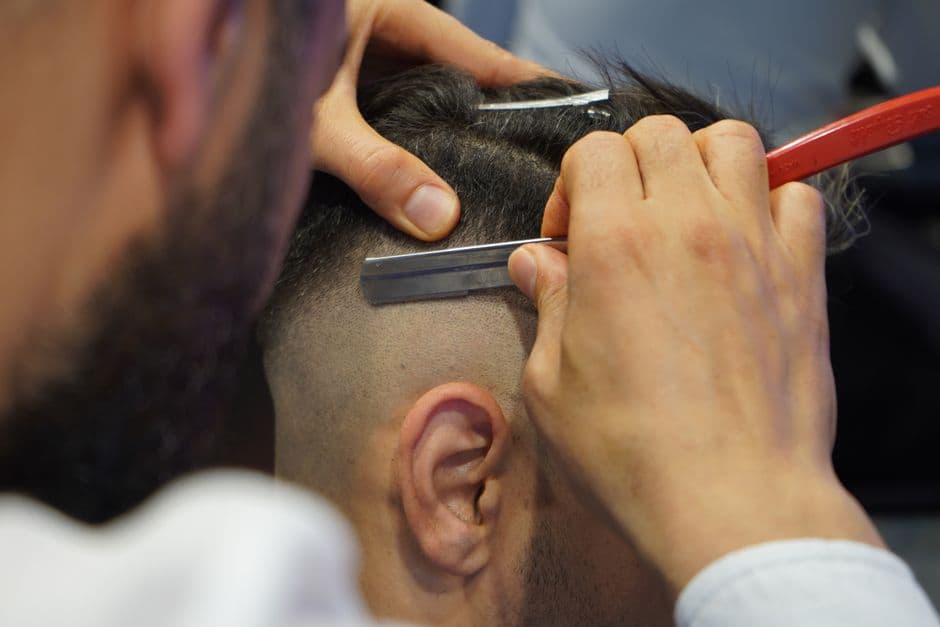
What stropping actually does
A straight razor edge is thin enough that it deforms in normal use. Not chips - deformation. The last few microns of steel bend fractionally out of line as they meet hair and skin, and a bent edge feels dull long before it actually is dull.
A strop pushes that steel back into line. Leather is soft, slightly yielding and faintly abrasive when loaded with nothing at all, so drawing the edge backwards across it burnishes the metal rather than cutting it.
What you need
| Strop | Width | Stropping surface | Overall | Belts |
|---|---|---|---|---|
| Illinois #361 | 2.5 in | 22 in | 24 in | Leather + linen |
| Illinois #827 | 2.5 in | 16 in | 24 in | Russian leather + linen |
Both publish two independent belts and a hanging clip, and both are published as made in the USA. Six inches of extra working surface on the 361 is not a luxury: a longer belt means fewer strokes for the same number of laps and more room to run out a stroke without rushing the turn.
You also need somewhere to hang it. The strop roundup covers the choice between them; anything with a fixed hook at roughly chest height works.
The motion, step by step
- Hang the strop and pull it taut. Slack leather is the single biggest cause of a rolled edge, because a sagging surface wraps up around the bevel. Firm tension, and keep it there for every stroke.
- Lay the razor flat. Spine and edge both touching. There is no angle to hold on a strop - unlike a stone, the razor lies flat and its own spine sets the geometry.
- Draw it back, spine leading. The edge trails behind the spine for the whole stroke. Move at a steady, unhurried pace; speed adds nothing and costs control.
- Roll over the spine at the end. At the end of the stroke, flip the razor by rolling it on its spine - the edge lifts clear and turns through the air. Rolling it over the edge drags the edge into the leather and is precisely what you are trying to avoid.
- Come back the other way. Spine leading again. That down-and-back is one lap.
- Linen first, then leather. Roughly 20 laps on linen to warm and clean the edge, then about 30 on leather to finish it.
Pressure through all of it is close to the weight of the razor. If the leather is visibly deflecting under the blade you are pressing far too hard.
The four mistakes that damage an edge
- Rolling over the edge instead of the spine. The classic. It folds the very steel you are trying to straighten, and it cuts the strop. Every turn goes over the spine.
- Pressing. A strop is soft enough to wrap around an edge under pressure, which rounds the bevel over - the exact opposite of the intent. Light is correct.
- Slack leather. Same mechanism as pressing: the surface deforms around the edge rather than supporting it flat.
- Lifting the spine. The razor lies flat. Lifting the spine puts the edge into the leather at an angle and turns a maintenance stroke into damage.
Looking after the strop
A new leather belt is often stiff and a little slick. It improves with use, and the standard treatment is your own palm: rub the leather briskly with the heel of your hand for a minute or two before the first few sessions. Nothing else is required, and oils and pastes are not a beginner step.
Keep it dry, keep it out of direct sun, and keep it somewhere it cannot get knocked against a doorframe. A nick in the leather is permanent and every stroke afterwards runs over it.
When stropping is not the answer
If a properly stropped razor tugs on the first pass, pulls at the neck, or leaves you finishing with an electric, the edge is past the point a strop can recover. That is a honing job - a progression of stones, or a professional service. On a razor like the Dovo Best Quality, which publishes 1.2210 silver steel at roughly 61 HRC, that interval is measured in months of regular use rather than weeks.
And if none of this appeals, the honest answer is the one at the bottom of the picks: a shavette takes a replaceable blade and asks nothing of you between shaves. The straight-versus-safety comparison sets out what you give up either way.
Every pick, with the working
Each entry shows the published specifications, the axis scores they produce and what you give up. The order is the computed order, not a commercial one, and the arithmetic is open underneath every score.
Our pickThe longest published stropping surface
Illinois #361 Leather Razor Strop
The same 2.5 inch width and 24 inch overall length, but with a 22 inch stropping surface against the #827's 16 - six more inches of working leather, which is fewer strokes for the same result and more room for error on the return. Also two belts, also a hanging clip, also published as made in the USA. Illinois describes it as smooth leather without naming the type, which is the one place it discloses less.
- Length
- 610 mm
- Material
- Smooth leather with linen belt
- Made in
- USA
- Refill
- Nothing to refill
- Warranty
- Not published
- Assumed service life
- 2,600 uses
The arithmetic: 260 uses a year x 10 years of assumed service life = 2600 uses.
What it gets right
- 22 in published stropping surface - the longest here, and six inches more than the #827
- Two independent belts published, linen and leather
- Published 2.5 in width and 24 in overall length
- Published as made in the USA
Flaws
- Leather type is described only as 'smooth leather', not named as the #827's is
- A longer strop needs more clearance, which is a real constraint in a small bathroom
- Same break-in period as any new leather
- No published hardness, draw or thickness figure - nobody in this category publishes those
The working behind the 8.1
- How long it lasts: not scored
- Not scored. This is a durable item, not a consumable, so how long it lasts is an assumption about service life rather than something the pack size tells us.
- Ease of switching: 7.0
- The longest published stropping surface here, so fewer strokes per session (+), two belts and published dimensions (+), but the leather type is not named (-) and it needs more clearance than the shorter one (-).
- Refill economics: 8.0
- Nothing to refill. The only future cost is replacing the item itself.
- What the maker publishes: 10.0
- 3 of 3 specifications a buyer would expect are published: lengthMm, material, madeIn. 3 / 3 x 10 = 10.0.
Axes with no published input are dropped and the remaining weights re-normalized, so a product is not punished for a category where an axis does not apply. Specifications compiled 3 September 2026 from Illinois #361 published dimensions and construction.
2Two belts, published dimensions, made in the USA
Illinois #827 Russian Leather Razor Strop
2.5 inches wide with a 16 inch stropping surface and 24 inches overall including the hand grip, in Russian leather, with a separate linen belt and a hanging clip. Published as made in the USA. Two independent belts is the specification that matters: linen first to warm and align the edge, leather second to finish it - a single-belt strop only does half the job.
- Length
- 610 mm
- Material
- Russian leather with linen belt
- Made in
- USA
- Refill
- Nothing to refill
- Warranty
- Not published
- Assumed service life
- 2,600 uses
The arithmetic: 260 uses a year x 10 years of assumed service life = 2600 uses.
What it gets right
- Two independent belts published - linen and leather, which is the full stropping sequence
- Published dimensions: 2.5 in wide, 16 in stropping surface, 24 in overall
- Russian leather named specifically rather than 'genuine leather'
- Published as made in the USA
- Hanging clip published, so it works against a fixed point rather than needing a bench
Flaws
- 16 inches of working surface is shorter than the #361, so more strokes per session
- A hanging strop needs a fixed anchor and about three feet of clearance
- Leather has to be broken in, and a new strop is stiffer than it will ever be again
- Nothing about a strop is published in terms of hardness or draw, which is what enthusiasts actually argue about
The working behind the 8.1
- How long it lasts: not scored
- Not scored. This is a durable item, not a consumable, so how long it lasts is an assumption about service life rather than something the pack size tells us.
- Ease of switching: 7.0
- Two published belts and published dimensions make the sequence and the space requirement knowable before you buy (++), published US manufacture (+), but a 16 in surface means more strokes (-) and a hanging strop needs an anchor point (-).
- Refill economics: 8.0
- Nothing to refill. The only future cost is replacing the item itself.
- What the maker publishes: 10.0
- 3 of 3 specifications a buyer would expect are published: lengthMm, material, madeIn. 3 / 3 x 10 = 10.0.
Axes with no published input are dropped and the remaining weights re-normalized, so a product is not punished for a category where an axis does not apply. Specifications compiled 3 September 2026 from Illinois #827 published dimensions, leather type and origin.
3The traditional razor, honed and ready
Dovo Best Quality 5/8
Skip this one. This is the wrong first razor for almost everybody. A straight razor is a multi-month skill acquisition attached to a maintenance regime, and the shave is not better than a safety razor's until you are good at it. Buy it because you want the craft, not because you want a closer shave.
A real straight razor from Solingen: 1.2210 silver steel hardened to roughly 61 HRC, full hollow ground, factory honed. Dovo publishes the steel grade and the hardness, which almost nobody in this category does, and that pair of numbers is the whole reason to buy this rather than a cheaper blade. It also commits you to a strop, and eventually to honing.
- Weight
- 42 g
- Length
- 159 mm
- Material
- 1.2210 silver steel, approx. 61 HRC, PMMA scales
- Head
- Full hollow ground, round point, 5/8 in blade
- Blades in the box
- 0
- Made in
- Germany
- Refill
- Nothing to refill
- Warranty
- Not published
- Assumed service life
- 5,200 uses
The arithmetic: 260 shaves a year x 20 years of assumed service life = 5200 shaves.
What it gets right
- Published steel: 1.2210 silver steel at approximately 61 HRC, a hardness figure you can actually compare
- Full hollow grind, which is the grind that gives the audible feedback beginners use to judge angle
- Factory honed, so the first shave does not depend on your honing ability
- 42 g in a 159 mm body: light enough that the blade angle does the work rather than the mass
Flaws
- Carbon steel rusts if you leave it wet, every time, without exception
- Needs a strop before every shave and a hone every few months - two more purchases and a skill
- PMMA scales rather than horn or wood at this price point
- The steepest learning curve of any shaving tool on this site
The working behind the 5.5
- How long it lasts: not scored
- Not scored. This is a durable item, not a consumable, so how long it lasts is an assumption about service life rather than something the pack size tells us.
- Ease of switching: 1.5
- Published steel grade and hardness (+), factory honed so the first shave works (+), but carbon steel that rusts unattended (--), a mandatory strop and eventual honing (--), and a months-long angle-and-pressure learning curve with a bare blade (--).
- Refill economics: 8.0
- Nothing to refill. The only future cost is replacing the item itself.
- What the maker publishes: 10.0
- 6 of 6 specifications a buyer would expect are published: weightG, lengthMm, material, madeIn, headType, bladesIncluded. 6 / 6 x 10 = 10.0.
Axes with no published input are dropped and the remaining weights re-normalized, so a product is not punished for a category where an axis does not apply. Specifications compiled 3 September 2026 from Dovo Best Quality 5/8 published steel, hardness and dimensions.
4Straight-razor geometry, no honing
Feather Artist Club SS
Skip this one. On this page as the way out of stropping rather than as a strop. It takes a replaceable Feather blade, so there is no edge to maintain - you drop the old blade in a bank and fit a new one. If everything below reads like a chore you will resent twice a week, this is the honest alternative: the same straight-razor hold and angle, none of the upkeep, and a published 1.25 mm blade exposure so you know what you are holding.
A shavette rather than a straight razor: SUS317 stainless steel holding a replaceable Feather blade, so you get the straight-razor hold and angle with none of the stropping or honing. Feather publishes the blade dimensions and, unusually, the blade exposure - 1.25 mm - which is the number that actually predicts how forgiving it is.
- Material
- SUS317 stainless steel, synthetic resin handle
- Head
- Replaceable-blade shavette, 1.25 mm blade exposure
- Blades in the box
- 0
- Made in
- Japan
- Refill
- Proprietary to the maker
- Warranty
- Not published
- Assumed service life
- 5,200 uses
The arithmetic: 260 shaves a year x 20 years of assumed service life = 5200 shaves.
What it gets right
- Published blade exposure of 1.25 mm, a figure essentially nobody else in shaving publishes
- Replaceable blades: no strop, no hone, no rust management
- SUS317 stainless body that dismantles for cleaning, which is why barbers use it
- Blade dimensions published to a hundredth of a millimeter (50 x 8.2 x 0.31 mm)
Flaws
- Feather Artist Club blades are proprietary - only Feather's own blade fits
- Sharper and less forgiving than a honed straight razor, because the blade is a fresh factory edge every time
- Still a bare edge held at an angle you set: the technique risk of a straight razor without the technique reward
The working behind the 4.2
- How long it lasts: not scored
- Not scored. This is a durable item, not a consumable, so how long it lasts is an assumption about service life rather than something the pack size tells us.
- Ease of switching: 3.0
- No stropping, honing or rust management (++), published blade exposure so the aggression is knowable before you buy (+), but a proprietary blade only Feather makes (-) and a fresh factory edge held freehand, which is less forgiving than a honed straight razor (--).
- Refill economics: 4.0
- Only this maker's refill fits, so the ongoing price is set by the maker rather than by a market. This is where the real cost of ownership hides.
- What the maker publishes: 6.7
- 4 of 6 specifications a buyer would expect are published: material, madeIn, headType, bladesIncluded. Not published: weightG, lengthMm. 4 / 6 x 10 = 6.7.
Axes with no published input are dropped and the remaining weights re-normalized, so a product is not punished for a category where an axis does not apply. Specifications compiled 3 September 2026 from Feather Artist Club SS published material, blade size and exposure.
Prices last verified September 24, 2026. They move constantly; the figure on Amazon when you click is the real one.
Questions people actually ask
Does stropping sharpen a razor?
No. Sharpening removes metal on a stone to create a new edge. Stropping realigns and polishes the edge that is already there - the very fine edge of a straight razor deforms microscopically in use, and the strop straightens it back. That is why stropping happens before every shave and honing happens roughly twice a year.
How many laps should I do?
A common routine is about 20 laps on linen and 30 on leather before a shave. One lap is a stroke down and a stroke back. More is not better: the work is done long before you get bored, and every extra stroke is another chance to roll the edge.
Why does the spine lead?
Because a strop is soft. If the edge led, it would dig into the leather and either cut the strop or fold the edge over. Leading with the spine drags the edge backwards across the surface, which is the only direction that burnishes it instead of damaging it.
Do I need the linen belt as well?
It is the half people skip. Linen is slightly abrasive and warms and cleans the edge; leather finishes it. Both Illinois strops here publish two independent belts for exactly that sequence, and a single-belt strop only does the second half of the job.
How do I know it is working?
The shave tells you. A properly stropped edge goes through the first pass without tugging at the neck. If you are stropping correctly and the razor still pulls after a few weeks, the edge has gone beyond what a strop can recover and needs honing.
Can I strop a shavette or a safety razor blade?
No, and there is no reason to. A shavette and a DE blade are disposable by design - you replace them rather than maintain them, which is the entire trade they offer.