Straight razor vs safety razor
Both put a single unguarded edge on your face. What separates them is what happens on the other 23 hours of the day.
By Sawyer V. · Published
We have not tested any of this. Everything below is compiled from published manufacturer specifications, and the arithmetic is printed so you can check it. This page carries affiliate links: if you buy through one we earn a commission at no extra cost to you, and it does not change the order of the picks. Full disclosure.
The short answer
Buy a safety razor. It is the same single-blade proposition with the angle set for you by the head, which removes the one variable that takes months to learn. A straight razor is worth owning if you want the craft, the ritual and the object - and it costs you a daily strop, a periodic hone and a rust habit for a shave that is not meaningfully closer. The middle road is a shavette: straight-razor hold, disposable blade, no maintenance at all.
| # | Pick | Lasts | Score | Price |
|---|---|---|---|---|
| 1 | Merkur 34C HD One razor, no research | 5,200 shaves* | 8.9/10 | $60.00 - view on Amazon |
| 2 | Dovo Best Quality 5/8 The traditional razor, honed and ready | 5,200 shaves* | 5.5/10 | Check price on Amazon |
| 3 | Feather Artist Club SS Straight-razor geometry, no honing | 5,200 shaves* | 4.2/10 | $155.95 - view on Amazon |
Prices last verified September 24, 2026. They move constantly; the figure on Amazon when you click is the real one.
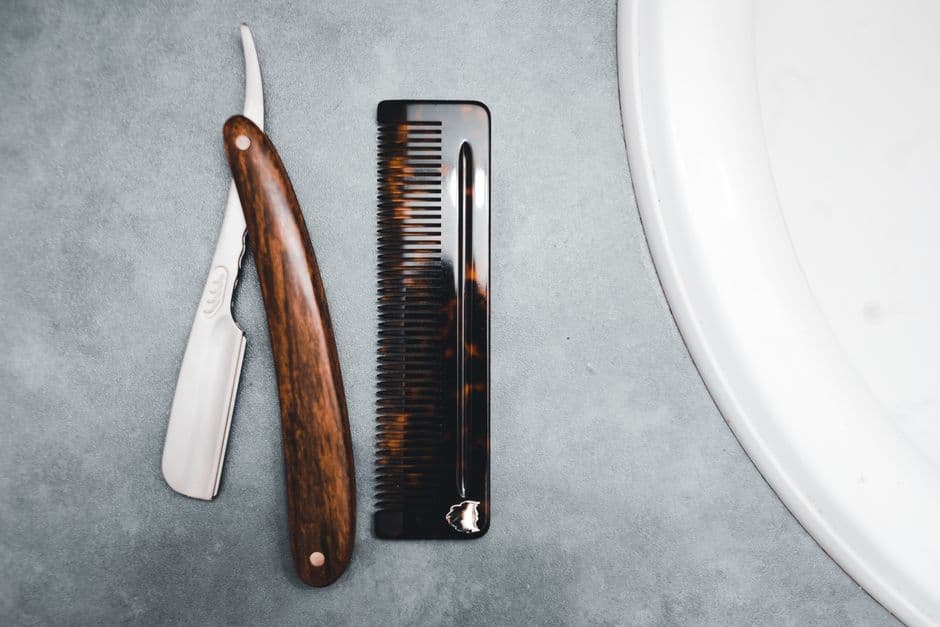
They are the same idea, differently packaged
Both are one blade. Neither has a lubricating strip, a pivoting head or five cartridges stacked in a plastic housing. The mechanism that makes a safety razor work - a single edge held at a fixed angle, cutting hair rather than dragging at it - is the same mechanism a straight razor uses. This is why the shave quality question has a boring answer.
The interesting differences are three: who sets the angle, what you do to keep the edge, and how long the tool takes to learn.
Who sets the angle
This is the whole argument. A safety razor head fixes the blade at a designed angle to the guard. You set the razor flat against the skin and the head does the rest - the Merkur 34C publishes a closed comb and nothing to adjust, which is exactly the point. Your only job is not to press.
On a straight razor you set the angle yourself, every stroke, on a face you cannot fully see. The target is roughly 30 degrees, usually taught as two spine-widths off the skin. Too steep and it cuts you; too flat and it skips. Getting that consistent across a jawline, under a nose and down a neck is not a weekend project.
What you do to keep the edge
| Safety razor | Straight razor | |
|---|---|---|
| Blade | Replace, every ~5 shaves (assumed) | Permanent |
| Daily | Rinse, dry | Strop 20-30 passes, dry carefully |
| Periodic | Nothing | Hone, or send it out |
| Corrosion risk | Low; stainless or plated brass | High; Dovo publishes carbon steel |
| Consumable market | Universal, dozens of makers | None - you buy a strop and stones once |
| What a mistake costs | A new 10-cent blade | A regrind, or the razor |
The carbon-steel line is the one people underestimate. Dovo publishes 1.2210 silver steel, which is a carbon steel, and carbon steel left wet rusts - not eventually, but by tomorrow. A safety razor forgotten in the shower is fine. A straight razor forgotten in the shower is a project.
The cost argument, done properly
The straight-razor pitch is that it never needs a blade. That is true and it is not the whole sum. Against it: a strop is a purchase, honing is a purchase or a skill, and the thing it is being compared to costs very little to feed. A hundred double-edge blades at our assumed five shaves each is 500 shaves, which at five shaves a week is close to two years.
We do not publish a figure for either, because this site does not publish prices it cannot verify. What we publish is the consumption model, so you can put your own numbers in and get an answer that is actually about your situation. The usual result surprises people: the gap is small, and it is small in the direction of the safety razor being cheaper than expected rather than the straight razor being expensive.
Who should buy which
- Leaving cartridges, want a better shave: safety razor. The beginner roundup is written for exactly this person and there is no version of this comparison where a straight razor is the right first answer.
- Already shave with a safety razor, want the next thing: a shavette. Same hold, no maintenance, and you will know within a month whether the angle work appeals to you.
- Want the object, the ritual and the craft: a straight razor, and buy the strop at the same time rather than later. The Dovo is on the roundup.
- Skin reacts badly to blades: neither. An electric shaver cannot cut below the skin surface, and for ingrown hairs that limitation is the treatment.
The verdict
A safety razor is the better tool for getting a good shave. A straight razor is the better object, and shaving with it is a genuinely different experience that a lot of people find worth the trouble. What it is not is a shortcut to a closer shave, and the pages that sell it that way are skipping the part where you strop it every morning for six months first.
If you have not yet fixed pressure and preparation, neither razor is your problem - those two account for more bad shaves than the choice on this page ever will.
Every pick, with the working
Each entry shows the published specifications, the axis scores they produce and what you give up. The order is the computed order, not a commercial one, and the arithmetic is open underneath every score.
Our pickOne razor, no research
Merkur 34C HD
Buy this one if you want to stop reading and start shaving. It is 68 grams of chrome-plated brass on a short knurled handle, which is heavy enough that you naturally stop pressing, and the head is a plain closed comb with nothing to set, adjust or get wrong. It has been in production in Solingen for decades, so parts, advice and blades are everywhere.
- Weight
- 68 g
- Length
- 80 mm
- Material
- Chrome-plated brass
- Head
- Closed comb, two-piece
- Blade gap
- Not published
- Blades in the box
- 0
- Made in
- Germany
- Refill
- Universal standard
- Warranty
- Not published
- Assumed service life
- 5,200 uses
The arithmetic: 260 shaves a year x 20 years of assumed service life = 5200 shaves.
What it gets right
- 68 g in a 80 mm body: the weight does the work, which is exactly the habit a cartridge user has to unlearn
- Closed comb with no adjustment, so there is one variable fewer on your first month
- Two-piece construction; the head unscrews as a unit and there is nothing to lose in the sink
- Takes any standard double-edge blade, so the refill is a commodity
Flaws
- The 80 mm handle is short for large hands, and Merkur's own longer handles are a separate purchase
- No blade in the box, so the first order needs a blade pack alongside it
- Chrome over brass will show wear at the edges over years in a way stainless will not
The working behind the 8.9
- How long it lasts: not scored
- Not scored. This is a durable item, not a consumable, so how long it lasts is an assumption about service life rather than something the pack size tells us.
- Ease of switching: 8.5
- Closed comb (+), no adjustment to set (+), 68 g published weight in the range where the razor's own mass supplies the pressure (+), no blade included so the first order is two items (-).
- Refill economics: 10.0
- The refill is a commodity standard that dozens of factories make, so the price is set by competition and no single maker can raise it.
- What the maker publishes: 8.6
- 6 of 7 specifications a buyer would expect are published: weightG, lengthMm, material, madeIn, headType, bladesIncluded. Not published: bladeGapNote. 6 / 7 x 10 = 8.6.
Axes with no published input are dropped and the remaining weights re-normalized, so a product is not punished for a category where an axis does not apply. Specifications compiled 3 September 2026 from Merkur 34C HD listed specifications (Fendrihan).
2The traditional razor, honed and ready
Dovo Best Quality 5/8
Skip this one. This is the wrong first razor for almost everybody. A straight razor is a multi-month skill acquisition attached to a maintenance regime, and the shave is not better than a safety razor's until you are good at it. Buy it because you want the craft, not because you want a closer shave.
A real straight razor from Solingen: 1.2210 silver steel hardened to roughly 61 HRC, full hollow ground, factory honed. Dovo publishes the steel grade and the hardness, which almost nobody in this category does, and that pair of numbers is the whole reason to buy this rather than a cheaper blade. It also commits you to a strop, and eventually to honing.
- Weight
- 42 g
- Length
- 159 mm
- Material
- 1.2210 silver steel, approx. 61 HRC, PMMA scales
- Head
- Full hollow ground, round point, 5/8 in blade
- Blades in the box
- 0
- Made in
- Germany
- Refill
- Nothing to refill
- Warranty
- Not published
- Assumed service life
- 5,200 uses
The arithmetic: 260 shaves a year x 20 years of assumed service life = 5200 shaves.
What it gets right
- Published steel: 1.2210 silver steel at approximately 61 HRC, a hardness figure you can actually compare
- Full hollow grind, which is the grind that gives the audible feedback beginners use to judge angle
- Factory honed, so the first shave does not depend on your honing ability
- 42 g in a 159 mm body: light enough that the blade angle does the work rather than the mass
Flaws
- Carbon steel rusts if you leave it wet, every time, without exception
- Needs a strop before every shave and a hone every few months - two more purchases and a skill
- PMMA scales rather than horn or wood at this price point
- The steepest learning curve of any shaving tool on this site
The working behind the 5.5
- How long it lasts: not scored
- Not scored. This is a durable item, not a consumable, so how long it lasts is an assumption about service life rather than something the pack size tells us.
- Ease of switching: 1.5
- Published steel grade and hardness (+), factory honed so the first shave works (+), but carbon steel that rusts unattended (--), a mandatory strop and eventual honing (--), and a months-long angle-and-pressure learning curve with a bare blade (--).
- Refill economics: 8.0
- Nothing to refill. The only future cost is replacing the item itself.
- What the maker publishes: 10.0
- 6 of 6 specifications a buyer would expect are published: weightG, lengthMm, material, madeIn, headType, bladesIncluded. 6 / 6 x 10 = 10.0.
Axes with no published input are dropped and the remaining weights re-normalized, so a product is not punished for a category where an axis does not apply. Specifications compiled 3 September 2026 from Dovo Best Quality 5/8 published steel, hardness and dimensions.
3Straight-razor geometry, no honing
Feather Artist Club SS
A shavette rather than a straight razor: SUS317 stainless steel holding a replaceable Feather blade, so you get the straight-razor hold and angle with none of the stropping or honing. Feather publishes the blade dimensions and, unusually, the blade exposure - 1.25 mm - which is the number that actually predicts how forgiving it is.
- Material
- SUS317 stainless steel, synthetic resin handle
- Head
- Replaceable-blade shavette, 1.25 mm blade exposure
- Blades in the box
- 0
- Made in
- Japan
- Refill
- Proprietary to the maker
- Warranty
- Not published
- Assumed service life
- 5,200 uses
The arithmetic: 260 shaves a year x 20 years of assumed service life = 5200 shaves.
What it gets right
- Published blade exposure of 1.25 mm, a figure essentially nobody else in shaving publishes
- Replaceable blades: no strop, no hone, no rust management
- SUS317 stainless body that dismantles for cleaning, which is why barbers use it
- Blade dimensions published to a hundredth of a millimeter (50 x 8.2 x 0.31 mm)
Flaws
- Feather Artist Club blades are proprietary - only Feather's own blade fits
- Sharper and less forgiving than a honed straight razor, because the blade is a fresh factory edge every time
- Still a bare edge held at an angle you set: the technique risk of a straight razor without the technique reward
The working behind the 4.2
- How long it lasts: not scored
- Not scored. This is a durable item, not a consumable, so how long it lasts is an assumption about service life rather than something the pack size tells us.
- Ease of switching: 3.0
- No stropping, honing or rust management (++), published blade exposure so the aggression is knowable before you buy (+), but a proprietary blade only Feather makes (-) and a fresh factory edge held freehand, which is less forgiving than a honed straight razor (--).
- Refill economics: 4.0
- Only this maker's refill fits, so the ongoing price is set by the maker rather than by a market. This is where the real cost of ownership hides.
- What the maker publishes: 6.7
- 4 of 6 specifications a buyer would expect are published: material, madeIn, headType, bladesIncluded. Not published: weightG, lengthMm. 4 / 6 x 10 = 6.7.
Axes with no published input are dropped and the remaining weights re-normalized, so a product is not punished for a category where an axis does not apply. Specifications compiled 3 September 2026 from Feather Artist Club SS published material, blade size and exposure.
Prices last verified September 24, 2026. They move constantly; the figure on Amazon when you click is the real one.
Questions people actually ask
Which gives a closer shave?
In practiced hands, a straight razor, by a small margin that most people cannot detect by evening. In unpracticed hands, a safety razor, by a large margin, because the head holds the angle you would otherwise be getting wrong. Closeness is not the reason to choose between them.
Is a straight razor cheaper in the long run?
It has no blade cost, which sounds decisive and is not. Add a strop, eventual honing or a honing stone, and the fact that a hundred double-edge blades at our assumed five shaves each is 500 shaves. Put your own figures into the calculator rather than trusting the intuition - the gap is much smaller than the no-blade-cost framing suggests.
Can you use a straight razor every day?
Yes, and daily use is easier on the edge than occasional use, because a stropped edge stays aligned. What daily use requires is that you strop every time. The edge degrades from being used unstropped, not from being used.
Which is safer?
The safety razor, and it is not close - the head is a guard, which is where the name comes from. A straight razor exposes several inches of edge at an angle you are holding by feel. Both cut you if you press; only one cuts you badly.