Is a safety razor worth it?
The money argument is real and smaller than the internet claims. The comfort argument is bigger than it claims. And there is a group of people who should not switch at all.
By Sawyer V. · Published
We have not tested any of this. Everything below is compiled from published manufacturer specifications, and the arithmetic is printed so you can check it. This page carries affiliate links: if you buy through one we earn a commission at no extra cost to you, and it does not change the order of the picks. Full disclosure.
The short version
Worth it if you shave regularly and the current result irritates you. A double-edge blade costs a small fraction of a cartridge, so the running cost drops substantially - but the honest headline is comfort, not money: one sharp blade on skin irritates less than four dragged over the same patch. Not worth it if you shave twice a week, are always in a hurry, or already get on fine with what you have. There is no prize for switching.
| # | Pick | Lasts | Score | Price |
|---|---|---|---|---|
| 1 | Merkur 34C HD One razor, no research | 5,200 shaves* | 8.9/10 | $60.00 - view on Amazon |
| 2 | Double-edge blade sampler Your actual first blade purchase | Not published | 8.9/10 | Check price on Amazon |
| 3 | Proraso Green shaving soap The safe first soap | ~100 lathers | 7.7/10 | $10.00 - view on Amazon |
| 4 | Henson AL13 Medium The lightest touch, machined to spec | 5,200 shaves* | 8.5/10 | $14.95 - view on Amazon |
Prices last verified September 24, 2026. They move constantly; the figure on Amazon when you click is the real one.
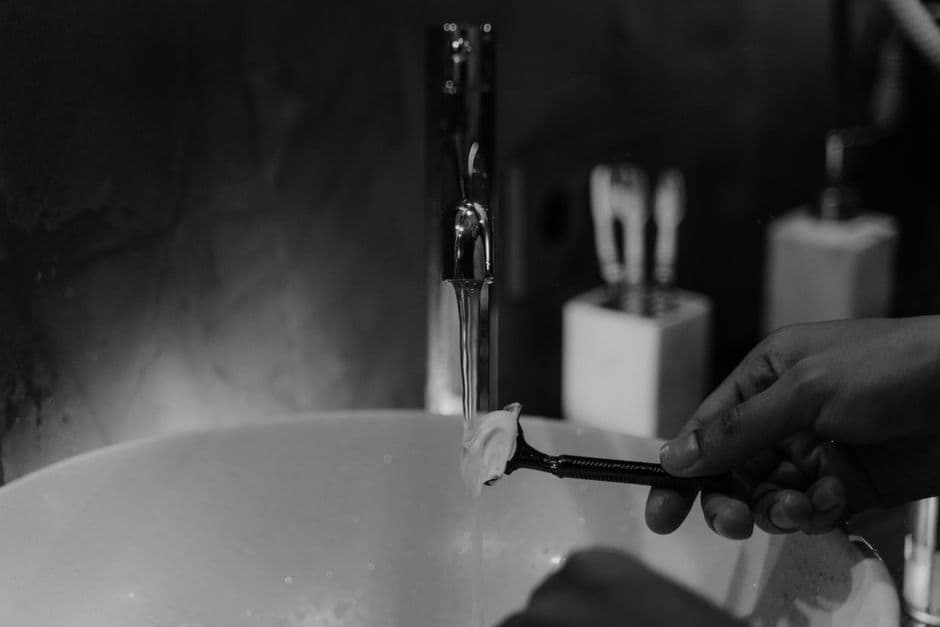
There are two arguments and people lead with the weaker one
Almost every case for switching leads with money. It is the wrong lead, because the saving is real but slower than it sounds, and because it is not why people who switch actually stay.
| Argument | Real? | How long to notice |
|---|---|---|
| Cheaper per shave | Yes, substantially | Months - the kit has to pay back first |
| More comfortable | Yes, for irritation-prone skin | Weeks, once technique lands |
| Closer shave | Not reliably | n/a - a good cartridge is very close |
| Less waste | Yes - steel blade, no plastic cartridge | Immediately |
The comfort argument is the real one
A cartridge pulls four or five blades across the same piece of skin in a single stroke. The first blade cuts the hair; the ones behind it are traveling over skin that has just been cut, and some designs lift the hair before cutting so the tip retracts below the surface afterwards.
A safety razor puts one sharp edge on the skin per pass. You take more passes, but each one meets less-abused skin, and you control the angle and the pressure instead of the cartridge deciding both.
That is why the people who switch for money mostly stay for comfort, and why razor bumps and razor burn improve for a lot of people who change nothing else.
What it actually costs you
- Two to three weeks of worse shaves. This is the real price and nobody advertises it. The technique is different enough that your first attempts will be patchy.
- A few nicks. Fewer with a mild razor, and they stop once the angle becomes automatic.
- Two to four minutes a morning. Mostly lather. Permanent, not a learning-curve cost.
- Up-front kit. Razor, blade sampler, soap, and realistically a brush. The starter kit page is the minimum sensible list.
- A blade decision you cannot outsource. Blade preference depends on your beard, skin and water, so a sampler is not optional.
Who should switch
- Anyone who gets razor burn or bumps from cartridges. The strongest case, and the one with a mechanism behind it rather than a preference.
- Anyone shaving most days. Both the money and the comfort arguments scale with frequency.
- Anyone who resents cartridge prices on principle. A legitimate reason, and the saving is genuinely there.
- Anyone who wants the ten minutes to be pleasant. The least measurable reason and one of the most common honest ones.
Who should not, and we mean it
- Anyone who shaves twice a week. The savings barely accumulate and the technique never becomes automatic, because you are relearning it each time.
- Anyone shaving in four minutes flat. This costs time every day, forever. That is a real constraint, not a failure of commitment.
- Anyone who already has no complaints. There is no prize for switching. If your current shave is comfortable and you do not mind the cost, the correct answer is to keep doing it.
- Anyone who travels constantly. Blades are restricted in cabin baggage - the travel guide covers the rules and they are a genuine friction.
The honest alternative nobody mentions
If the problem is irritation rather than cost, there is a cheaper experiment than switching razor systems: change the soap and the technique first.
A real lather instead of canned foam, two passes instead of three, no pressure, and an alcohol-free balm afterwards will fix a meaningful share of cartridge irritation without buying a razor at all. The razor burn page ranks the causes, and the razor is not first on the list.
Try that for a month. If it helps but not enough, the safety razor is the next step and you will already own the lather half of the kit.
The verdict
Worth it for daily shavers with irritation-prone skin. For that person it is one of the few grooming changes with a real mechanism behind it, and the cost saving is a bonus rather than the reason.
Not worth it as a money-saving exercise alone, and not worth it if your current shave is fine. The full comparison sets the two systems against each other, and the beginner guide is the place to start if the answer is yes.
Every pick, with the working
Each entry shows the published specifications, the axis scores they produce and what you give up. The order is the computed order, not a commercial one, and the arithmetic is open underneath every score.
Our pickOne razor, no research
Merkur 34C HD
Buy this one if you want to stop reading and start shaving. It is 68 grams of chrome-plated brass on a short knurled handle, which is heavy enough that you naturally stop pressing, and the head is a plain closed comb with nothing to set, adjust or get wrong. It has been in production in Solingen for decades, so parts, advice and blades are everywhere.
- Weight
- 68 g
- Length
- 80 mm
- Material
- Chrome-plated brass
- Head
- Closed comb, two-piece
- Blade gap
- Not published
- Blades in the box
- 0
- Made in
- Germany
- Refill
- Universal standard
- Warranty
- Not published
- Assumed service life
- 5,200 uses
The arithmetic: 260 shaves a year x 20 years of assumed service life = 5200 shaves.
What it gets right
- 68 g in a 80 mm body: the weight does the work, which is exactly the habit a cartridge user has to unlearn
- Closed comb with no adjustment, so there is one variable fewer on your first month
- Two-piece construction; the head unscrews as a unit and there is nothing to lose in the sink
- Takes any standard double-edge blade, so the refill is a commodity
Flaws
- The 80 mm handle is short for large hands, and Merkur's own longer handles are a separate purchase
- No blade in the box, so the first order needs a blade pack alongside it
- Chrome over brass will show wear at the edges over years in a way stainless will not
The working behind the 8.9
- How long it lasts: not scored
- Not scored. This is a durable item, not a consumable, so how long it lasts is an assumption about service life rather than something the pack size tells us.
- Ease of switching: 8.5
- Closed comb (+), no adjustment to set (+), 68 g published weight in the range where the razor's own mass supplies the pressure (+), no blade included so the first order is two items (-).
- Refill economics: 10.0
- The refill is a commodity standard that dozens of factories make, so the price is set by competition and no single maker can raise it.
- What the maker publishes: 8.6
- 6 of 7 specifications a buyer would expect are published: weightG, lengthMm, material, madeIn, headType, bladesIncluded. Not published: bladeGapNote. 6 / 7 x 10 = 8.6.
Axes with no published input are dropped and the remaining weights re-normalized, so a product is not punished for a category where an axis does not apply. Specifications compiled 3 September 2026 from Merkur 34C HD listed specifications (Fendrihan).
2Your actual first blade purchase
Double-edge blade sampler
This is the one thing on the site we will tell you to buy before you have read the rest of it. Blades are the cheapest variable in shaving and the one that changes the result most, and no amount of reading will tell you which edge suits your face. A sampler settles it in about six weeks for the price of a sandwich.
- Material
- Varies by seller
- Blades per pack
- Not published
- Made in
- Varies by seller
- Refill
- Universal standard
- Warranty
- Not applicable
- How long it lasts
- Not published
What it gets right
- Answers the only question in wet shaving that genuinely cannot be answered by reading
- Costs less than a single pack of cartridges
- Ends the beginner's habit of blaming the razor for a blade problem
Flaws
- Contents vary between sellers, so what you get is not a fixed specification
- You will end up with a few blades you never use again
The working behind the 8.9
- How long it lasts: not scored
- Not scored. This is a durable item, not a consumable, so how long it lasts is an assumption about service life rather than something the pack size tells us.
- Ease of switching: 9.5
- Removes the single largest unknown of the first two months (++). Contents are not a published specification, so the yield figure cannot be computed (-).
- Refill economics: 10.0
- The refill is a commodity standard that dozens of factories make, so the price is set by competition and no single maker can raise it.
- What the maker publishes: 6.7
- 2 of 3 specifications a buyer would expect are published: material, madeIn. Not published: unitsPerPack. 2 / 3 x 10 = 6.7.
Axes with no published input are dropped and the remaining weights re-normalized, so a product is not punished for a category where an axis does not apply. Specifications compiled 3 September 2026 from Double-edge blade range (West Coast Shaving).
3The safe first soap
Proraso Green shaving soap
150 grams of eucalyptus-and-menthol soap in a bowl, made in Italy, free of parabens, silicones and preservatives. It lathers easily enough that a first attempt with a new brush still produces something usable, which is the only quality that matters in a first soap. The menthol is loud; if you dislike it, buy the white tub instead.
- Net weight
- 150 g
- Fragrance
- Fragranced
- Made in
- Italy
- Refill
- Nothing to refill
- Warranty
- Not applicable
- How long it lasts
- 100 uses
Published key ingredients: Stearic acid, Coconut oil, Glycerin, Menthol, Eucalyptus globulus leaf oil.
The arithmetic: 150 g net weight / 1.5 g per lather (assumed) = about 100 lathers.
What it gets right
- 150 g published net weight in a reusable bowl
- Lathers readily, which forgives a beginner's brush technique
- Published ingredient list; no parabens, silicones or preservatives
- Sold in most places that sell any wet shaving at all
Flaws
- The menthol and eucalyptus is a strong opinion for a product you use every day
- Contains fragrance and geraniol, so not the choice for a genuinely reactive face
The working behind the 7.7
- How long it lasts: 3.8
- 150 g net weight / 1.5 g per lather (assumed) = about 100 lathers. At five shaves a week, that is about 4.6 months. A 12-month supply scores 10 in this category, so 4.6 / 12 x 10 = 3.8.
- Ease of switching: 9.0
- Lathers with very little technique (+), 150 g published net weight in a bowl you can load straight from (+), but a fragranced, mentholated formula is a strong choice to impose on a face you have just started shaving differently (-).
- Refill economics: 8.0
- Nothing to refill. The only future cost is replacing the item itself.
- What the maker publishes: 10.0
- 4 of 4 specifications a buyer would expect are published: netWeightG, madeIn, keyIngredients, fragranceFree. 4 / 4 x 10 = 10.0.
Axes with no published input are dropped and the remaining weights re-normalized, so a product is not punished for a category where an axis does not apply. Specifications compiled 3 September 2026 from Proraso Green shaving soap published specifications.
4The lightest touch, machined to spec
Henson AL13 Medium
Henson's argument is that razor burn is an engineering problem, and it publishes the tolerances to back it: blade angle fixed at 30 degrees, machined to as tight as 12.7 micrometers at an aerospace facility in Ontario. At 37 grams it is by far the lightest razor here, which inverts the usual advice — you cannot let this one do the work, you have to let it float.
- Weight
- 37 g
- Length
- Not published
- Material
- Aircraft aluminum, Type II anodized
- Head
- Fixed exposure, 30-degree blade angle
- Blade gap
- Machined to as tight as 12.7 micrometers; exposure fixed by model
- Blades in the box
- 5
- Made in
- Canada (Ontario)
- Refill
- Universal standard
- Warranty
- Not published
- Assumed service life
- 5,200 uses
The arithmetic: 260 shaves a year x 20 years of assumed service life = 5200 shaves.
What it gets right
- Published machining tolerance of 12.7 micrometers and a fixed 30-degree blade angle, which nobody else in this ledger discloses
- 37 g aluminum body with a Type II anodized finish; nothing to chip or peel
- Five blades in the box
- Sold in Mild, Medium and Aggressive so the choice is made once, at purchase, rather than every morning
Flaws
- 37 g is very light, which removes the weight cue a cartridge user relies on
- The exposure level is fixed at purchase; changing your mind means another razor
- Aluminum will not feel like the heirloom object a stainless razor does
The working behind the 8.5
- How long it lasts: not scored
- Not scored. This is a durable item, not a consumable, so how long it lasts is an assumption about service life rather than something the pack size tells us.
- Ease of switching: 7.5
- Fixed geometry with a published 30-degree blade angle removes the angle guesswork (+), blades included (+), but 37 g is the lightest here and the razor's own mass supplies almost none of the pressure (-).
- Refill economics: 10.0
- The refill is a commodity standard that dozens of factories make, so the price is set by competition and no single maker can raise it.
- What the maker publishes: 8.6
- 6 of 7 specifications a buyer would expect are published: weightG, material, madeIn, headType, bladeGapNote, bladesIncluded. Not published: lengthMm. 6 / 7 x 10 = 8.6.
Axes with no published input are dropped and the remaining weights re-normalized, so a product is not punished for a category where an axis does not apply. Specifications compiled 3 September 2026 from Henson AL13 published specifications.
Prices last verified September 24, 2026. They move constantly; the figure on Amazon when you click is the real one.
Questions people actually ask
How much does it actually save?
A double-edge blade costs a small fraction of a cartridge and lasts roughly a week of daily shaving. The saving is real and it takes months to repay the razor - the arithmetic depends on your prices, which is why the cost page lets you put your own numbers in rather than us publishing a figure we cannot source.
How long does it take to learn?
Expect two or three weeks of mediocre shaves and probably a couple of nicks. The technique is genuinely different - no pressure, shallow angle, with the grain first - and it is the real cost of switching. The method is here.
Is it really more comfortable?
For most people with irritation problems, yes, and the mechanism is simple. A cartridge drags four or five blades across the same skin in one stroke; a safety razor puts one sharp edge on it. Fewer edges per pass is the whole argument.
Is it more dangerous?
You will nick yourself more in the first month and less after that. A mild razor with minimal exposure - the Henson is the clearest example - shortens that period considerably.
How much longer does it take each morning?
Two to four minutes more once you are competent, mostly in building lather. If that is not time you have, this is a genuine reason not to switch and we would rather say so.
Do I have to buy a brush and soap too?
Realistically yes, and it is a large part of why the switch works. A soap holds a cushion for a three-pass shave in a way canned foam does not - the soap roundup covers it, and this is the part people skip and then blame the razor.