Retinol vs niacinamide
These get compared as rivals and they are not even competing. One is a instruction, the other is a support - and most men should start with the support.
By Sawyer V. · Published · Last updated
We have not tested any of this. Everything below is compiled from published manufacturer specifications, and the arithmetic is printed so you can check it. This page carries affiliate links: if you buy through one we earn a commission at no extra cost to you, and it does not change the order of the picks. Full disclosure.
The short answer
Start with niacinamide. It supports the skin barrier, it is tolerated by almost everybody, and a face that gets shaved five days a week is usually barrier-compromised before it is anything else. Add a retinoid later, once that is stable. Retinol changes how skin cells behave, which is a bigger effect and a bigger irritation cost. They are not alternatives - most good routines end up with both, in that order.
| # | Pick | Lasts | Score | Price |
|---|---|---|---|---|
| 1 | CeraVe Resurfacing Retinol Serum Starting retinol without the peeling | ~15 uses | 7.2/10 | $16.49 - view on Amazon |
| 2 | CeraVe PM Facial Moisturizing Lotion The one bottle that also fixes post-shave | ~45 uses | 8.7/10 | $28.61 - view on Amazon |
| 3 | Differin Adapalene Gel 0.1% A regulated retinoid with a drug-facts label | ~23 uses | 6.9/10 | $23.97 - view on Amazon |
Prices last verified September 24, 2026. They move constantly; the figure on Amazon when you click is the real one.
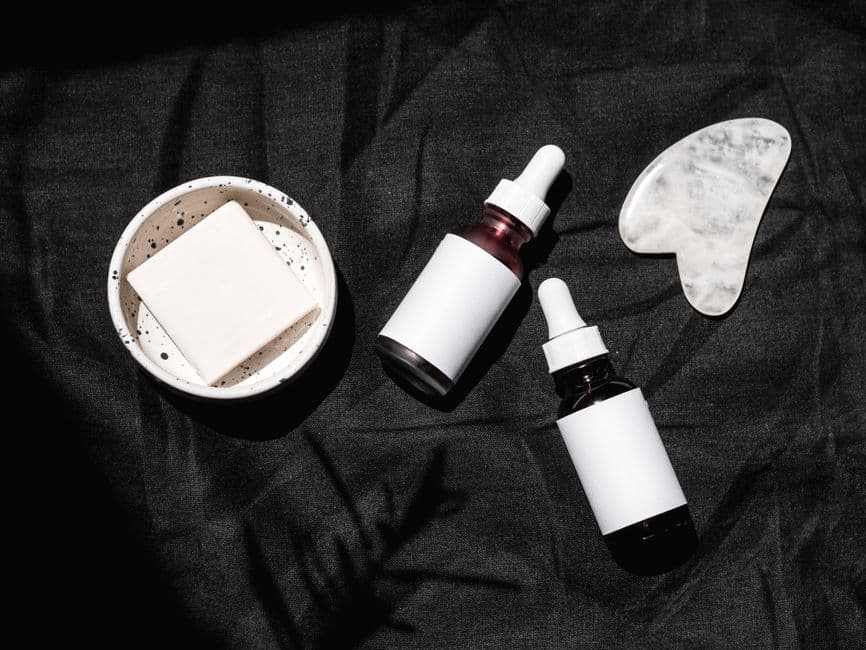
They are not doing the same job
The comparison is framed as a choice because both appear on serum bottles at similar prices. Mechanically they have almost nothing to do with each other.
- Retinoids are an instruction. They bind to receptors in skin cells and change how those cells behave - how fast they turn over, how they differentiate. That is a large intervention, which is why it produces large results and large irritation.
- Niacinamide is support. Vitamin B3. It contributes to ceramide production and barrier function, and it has a reasonable record for redness and for sebum regulation. It does not instruct cells to do anything different.
| Retinoid | Niacinamide | |
|---|---|---|
| Mechanism | Receptor-mediated; changes cell behavior | Barrier and enzyme support |
| Best for | Texture, post-acne marks, lines, acne | Redness, barrier, oiliness |
| Irritation risk | High, especially weeks 1-4 | Very low |
| Sun sensitivity | Increased - sunscreen mandatory | None added |
| Time to visible result | 8-12 weeks | 4-8 weeks, subtler |
| Safe from day one | No - ramp up | Yes |
The interaction myth
You will still find advice not to use them together. It traces back to a misapplied reading of research on niacinamide converting to nicotinic acid at certain pH values - a laboratory condition rather than a bathroom one.
In practice, formulators put them in the same bottle deliberately: CeraVe's retinol serum lists niacinamide fifth alongside encapsulated retinol. If the interaction were a problem, that product would not exist. Niacinamide's barrier support is if anything the reason people tolerate the retinoid.
Why niacinamide goes first for most men
This is where the recommendation departs from the general skincare consensus, and the reason is specific to this site's reader.
A face that gets shaved five days a week is having its top layer scraped off five days a week. That is a barrier under continuous mechanical load before any product is involved. On that skin, the first useful intervention is barrier support - and adding a retinoid to a compromised barrier is how people end up with weeks of stinging and a conclusion that their skin is sensitive.
Reading the labels honestly
Niacinamide is cheap and stable, which means it appears on a great many labels at concentrations that do nothing. Two signals separate the real from the decorative:
- Placement. Ingredients are listed in descending order down to one per cent. Niacinamide second or third means it is a substantial part of the formula. Niacinamide near the end means it is present.
- A published percentage. Rarer than it should be, and the products that give one are telling you something the others are not. The label-reading guide covers how to do this on any product.
Retinol is the reverse problem: it is unstable and expensive, so the incentive runs toward putting in less and saying less about it. The retinoid roundup ranks on exactly that - and the winner there is a regulated drug precisely because somebody was required to publish the number.
What this means for a shopping list
- If your skin is currently irritated: niacinamide only, and probably already inside your moisturizer. Nothing else changes until that settles.
- If your complaint is texture or post-acne marks: a retinoid, started encapsulated or regulated, twice a week.
- If your complaint is oiliness: niacinamide first - and check whether you are over-washing, which is the more common cause.
- Long term: both. Niacinamide in the morning routine, retinoid at night, sunscreen without exception.
Every pick, with the working
Each entry shows the published specifications, the axis scores they produce and what you give up. The order is the computed order, not a commercial one, and the arithmetic is open underneath every score.
Our pickStarting retinol without the peeling
CeraVe Resurfacing Retinol Serum
Encapsulated retinol alongside niacinamide, three published ceramides and licorice root, in 30 ml. Encapsulation slows the release, which is why this is the gentlest way into retinol - and CeraVe does not publish the retinol percentage, which is the honest mark against it.
- Volume
- 30 ml
- Fragrance
- Fragrance-free
- Made in
- United States
- Refill
- Nothing to refill
- Warranty
- Not applicable
- How long it lasts
- 15 uses
Published key ingredients: Encapsulated retinol (percentage not published), Niacinamide, Ceramides NP, AP, EOP, Licorice root extract.
The arithmetic: 30 ml / 2 ml per application (assumed) = about 15 applications.
What it gets right
- Encapsulated retinol releases slowly, which is the mechanism that reduces irritation
- Niacinamide fifth on the published list plus three named ceramides
- Full INCI published in order
- Fragrance-free and built on the same barrier system as the rest of the line
Flaws
- CeraVe publishes no retinol percentage, so the strength is unknown and uncomparable
- Encapsulation trades speed for tolerability - results take longer
- Contains alcohol and isopropyl myristate, both worth knowing about on reactive skin
The working behind the 7.2
- How long it lasts: 1.7
- 30 ml / 2 ml per application (assumed) = about 15 applications. At five shaves a week, that is about 0.7 months. A 4-month supply scores 10 in this category, so 0.7 / 4 x 10 = 1.7.
- Ease of switching: 9.0
- Encapsulation genuinely reduces the irritation that makes people quit retinol (++), ceramides and niacinamide in the same bottle (+), fragrance-free (+), but no published percentage so it cannot be compared to anything (--).
- Refill economics: 8.0
- Nothing to refill. The only future cost is replacing the item itself.
- What the maker publishes: 10.0
- 4 of 4 specifications a buyer would expect are published: volumeMl, keyIngredients, fragranceFree, madeIn. 4 / 4 x 10 = 10.0.
Axes with no published input are dropped and the remaining weights re-normalized, so a product is not punished for a category where an axis does not apply. Specifications compiled 3 September 2026 from CeraVe Resurfacing Retinol Serum published ingredient list.
2The one bottle that also fixes post-shave
CeraVe PM Facial Moisturizing Lotion
89 ml, oil-free, fragrance-free, non-comedogenic, with three ceramides, niacinamide and hyaluronic acid published in order. It is sold as a night cream and works perfectly well as a post-shave moisturizer, which means one bottle instead of two.
- Volume
- 89 ml
- Fragrance
- Fragrance-free
- Refill
- Nothing to refill
- Warranty
- Not applicable
- How long it lasts
- 45 uses
Published key ingredients: Niacinamide, Ceramide NP, Ceramide AP, Ceramide EOP, Sodium hyaluronate.
The arithmetic: 89 ml / 2 ml per application (assumed) = about 45 applications.
What it gets right
- Fragrance-free, oil-free and non-comedogenic with a fully published ingredient list
- Niacinamide is the fourth ingredient — an actual concentration, not a marketing mention
- Ceramides 1, 3 and 6-II plus hyaluronic acid
- Doubles as a post-shave, so it replaces a second product
Flaws
- 89 ml is a small bottle for daily face-and-neck use
- Lightweight; a genuinely dry face in winter will want something heavier
The working behind the 8.7
- How long it lasts: 6.9
- 89 ml / 2 ml per application (assumed) = about 45 applications. At five shaves a week, that is about 2.1 months. A 3-month supply scores 10 in this category, so 2.1 / 3 x 10 = 6.9.
- Ease of switching: 9.5
- Fragrance-free, oil-free, non-comedogenic, and it removes a product from the routine by doubling as a post-shave (++). 89 ml is small for twice-daily use (-).
- Refill economics: 8.0
- Nothing to refill. The only future cost is replacing the item itself.
- What the maker publishes: 10.0
- 3 of 3 specifications a buyer would expect are published: volumeMl, keyIngredients, fragranceFree. 3 / 3 x 10 = 10.0.
Axes with no published input are dropped and the remaining weights re-normalized, so a product is not punished for a category where an axis does not apply. Specifications compiled 3 September 2026 from CeraVe PM Facial Moisturizing Lotion published specifications.
3A regulated retinoid with a drug-facts label
Differin Adapalene Gel 0.1%
Adapalene at a published 0.1 per cent, filed with the FDA and listed on DailyMed with a full drug-facts label. It is a third-generation retinoid rather than a cosmetic retinol, which means the concentration is regulated, the directions are regulated, and the whole formula is a matter of public record. Nothing else in this category is documented to that standard.
- Volume
- 45 ml
- Fragrance
- Fragrance-free
- Made in
- United States
- Refill
- Nothing to refill
- Warranty
- Not applicable
- How long it lasts
- 23 uses
Published key ingredients: Adapalene 0.1%, Carbomer 940, Propylene glycol, Methylparaben.
The arithmetic: 45 ml / 2 ml per application (assumed) = about 23 applications.
What it gets right
- Adapalene 0.1 per cent on a regulated drug-facts label, not a marketing claim
- Full inactive ingredient list filed publicly: seven items
- More photostable than retinol, so it does not degrade the way cosmetic retinoids do
- Directions, warnings and duration all published rather than left to a brand blog
Flaws
- It is for acne; anti-aging use is off-label and not what the label supports
- A purge period in the first weeks is normal and unpleasant
- Contains methylparaben and propylene glycol, both published
The working behind the 6.9
- How long it lasts: 2.7
- 45 ml / 2 ml per application (assumed) = about 23 applications. At five shaves a week, that is about 1.1 months. A 4-month supply scores 10 in this category, so 1.1 / 4 x 10 = 2.7.
- Ease of switching: 7.5
- A regulated active at a published concentration with a full public drug-facts label (++), photostable (+), directions published (+), but the purge period is real (-) and the label supports acne rather than the anti-aging use people buy it for (-).
- Refill economics: 8.0
- Nothing to refill. The only future cost is replacing the item itself.
- What the maker publishes: 10.0
- 4 of 4 specifications a buyer would expect are published: volumeMl, keyIngredients, fragranceFree, madeIn. 4 / 4 x 10 = 10.0.
Axes with no published input are dropped and the remaining weights re-normalized, so a product is not punished for a category where an axis does not apply. Specifications compiled 3 September 2026 from Differin Gel published adapalene 0.1% drug facts (DailyMed).
Prices last verified September 24, 2026. They move constantly; the figure on Amazon when you click is the real one.
Questions people actually ask
Can you use retinol and niacinamide together?
Yes. The old advice against it came from a misreading of a pH-conversion study, and the formulations that pair them are common - CeraVe puts niacinamide in the same bottle as its encapsulated retinol. If anything, niacinamide's barrier support makes the retinoid easier to tolerate.
Which one is stronger?
Retinol, by a wide margin, and that is not automatically an advantage. A stronger effect on cell behavior comes with a proportionally larger irritation cost and a mandatory sunscreen commitment. Niacinamide does less and asks for nothing.
What concentration of niacinamide should I look for?
Published ones are usually between 2 and 10 per cent, and higher is not better - above about 5 per cent a meaningful minority report flushing. The more useful signal is placement: niacinamide second or third on an ingredient list is doing work, and niacinamide twenty-eighth is on the label for the label.
Does niacinamide help with shaving irritation?
It supports barrier function and has a reasonable record for redness, which is the relevant mechanism. It is not a fix for the actual cause - pressure - which the razor burn page ranks first. Treat it as support rather than treatment.
If I can only use one, which?
Niacinamide, if you shave regularly and your skin is at all reactive. Retinol, if your actual complaint is texture, post-acne marks or lines and your barrier is fine. The question “is my skin currently irritated?” decides it.