Vitamin C vs retinol
Almost every version of this question is framed as a choice. It is not one - they do different jobs at different ends of the day. What you actually have to ration is irritation.
By Sawyer V. · Published
We have not tested any of this. Everything below is compiled from published manufacturer specifications, and the arithmetic is printed so you can check it. This page carries affiliate links: if you buy through one we earn a commission at no extra cost to you, and it does not change the order of the picks. Full disclosure.
The short answer
They are not alternatives - vitamin C goes on in the morning and retinol at night. Vitamin C is an antioxidant that works alongside sunscreen against daytime damage; retinol is a renewer that increases cell turnover overnight. If you can only start one, start retinol - it has the deepest evidence base for texture and fine lines, and the visible return is larger. If you shave daily, start it at 0.5% twice a week, not nightly, and never on a day you have nicked yourself. The real constraint is not which molecule works - it is how much irritation one face that gets dragged by a blade every morning can absorb.
| # | Pick | Lasts | Score | Price |
|---|---|---|---|---|
| 1 | CeraVe Skin Renewing Vitamin C Serum Vitamin C with the barrier put back | ~15 uses | 7.5/10 | $23.86 - view on Amazon |
| 2 | The Ordinary Retinol 0.5% in Squalane A published percentage in eight ingredients | ~15 uses | 6.1/10 | $9.30 - view on Amazon |
| 3 | Paula's Choice C15 Super Booster The only one that publishes its pH | ~10 uses | 7.1/10 | $59.00 - view on Amazon |
| 4 | CeraVe Resurfacing Retinol Serum Starting retinol without the peeling | ~15 uses | 7.2/10 | $16.49 - view on Amazon |
Prices last verified October 19, 2026. They move constantly; the figure on Amazon when you click is the real one.
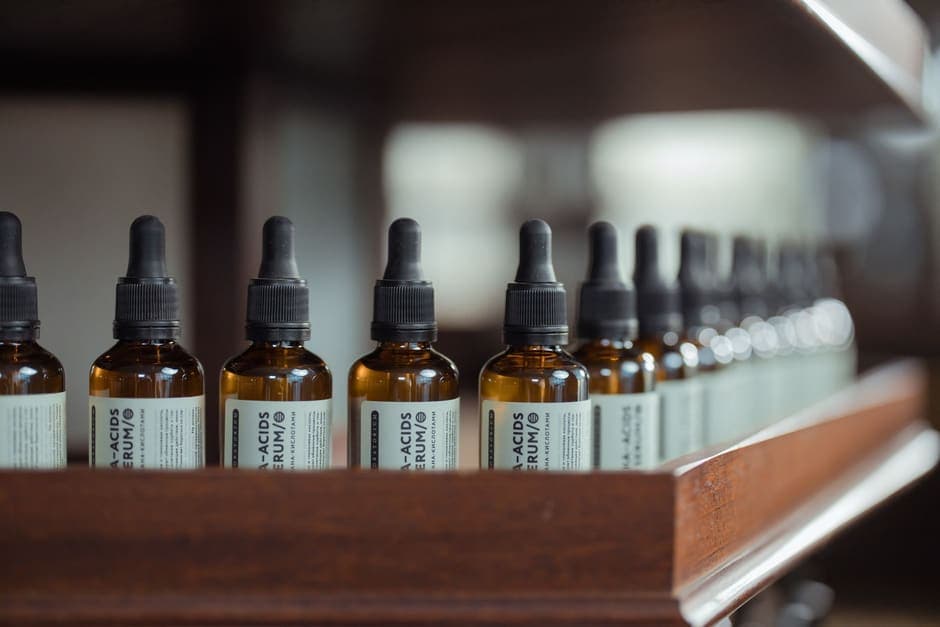
They do different jobs at different times
The framing of this question is the problem. "Vitamin C or retinol" implies a choice between two things that do the same job better or worse. They do not.
| Vitamin C | Retinol | |
|---|---|---|
| What it does | Antioxidant - neutralizes daytime free radicals | Increases cell turnover and collagen signaling |
| When | Morning, under sunscreen | Night |
| Works on | Dullness, uneven tone, environmental damage | Texture, fine lines, clogged pores, marks |
| Visible return | Gradual brightening | The larger of the two, over months |
| Irritation risk | Low to moderate | High at the start |
| Sun sensitivity | Sits under sunscreen by design | Markedly increases it |
| Start at | Any time | Twice a week, then build |
Why retinol is the one to start with
If you are adding a single active to a routine, retinol is the higher-return choice. It has the deepest evidence behind it, it works on the things men most often want changed - texture and clogged pores - and the result is visible rather than subtle.
It is also the one most likely to go wrong if you rush it. The standard failure is nightly use from day one, which produces flaking and redness in week two, gets blamed on the product, and ends with the bottle in a drawer.
- Twice a week, at night, for the first month. Pea-sized, on dry skin, after cleansing.
- Moisturize after. Not before, unless your skin is very reactive, in which case buffering with moisturizer first is a legitimate way to slow the dose.
- Never on a night you have nicked yourself shaving. Broken skin plus an active is how a small cut becomes a week of irritation - the shaving cut page covers the rest.
- Build to every other night over a couple of months, and stop there. More is not better.
The retinol roundup ranks the field on published concentration, and it is worth noting that The Ordinary publishes 0.5% in squalane while CeraVe publishes a full list but encapsulates rather than stating a percentage - a real difference in how much you can know before buying.
What vitamin C is actually for
Vitamin C is a morning product and its job is to work with sunscreen rather than instead of it: an antioxidant mopping up the damage UV causes that the sunscreen does not block.
The thing to understand before buying is stability. L-ascorbic acid is the best-studied form and the least stable - it oxidizes in light and air, and a serum that has gone brown has already converted to something that does less. That is why concentration alone is a poor way to shop here, and why packaging and finishing the bottle matter.
- Buy the smallest size you will actually use up. A large bottle is worse value if the last third is oxidized.
- Published concentration is still the first filter - Paula's Choice publishes 15%, The Ordinary publishes 23% in a suspension. The vitamin C roundup compares them on what is actually declared.
- It goes under sunscreen, never instead of it.
Running both, if you want to
Once retinol is settled at every other night and your skin is calm, adding vitamin C in the morning is low-risk. The sequence that works:
Morning - cleanse, vitamin C, moisturizer, sunscreen. Night - cleanse, retinol on dry skin, moisturizer. The layering guide covers why thin-to-thick is the rule and where everything else fits.
If you want a third active, niacinamide is the usual candidate and it is the gentlest of the group - retinol versus niacinamide is the sibling comparison to this page, and the routine page puts the whole thing in order for a face that shaves.
Every pick, with the working
Each entry shows the published specifications, the axis scores they produce and what you give up. The order is the computed order, not a commercial one, and the arithmetic is open underneath every score.
Our pickVitamin C with the barrier put back
CeraVe Skin Renewing Vitamin C Serum
10 per cent L-ascorbic acid alongside all three ceramides - NP, AP and EOP - plus hyaluronic acid and panthenol, with the full 26-item list published and free of added fragrance, allergy-tested and non-comedogenic all stated. The lowest concentration here and the most complete formula: the ceramides are there to put back the barrier support an acidic serum costs you.
- Volume
- 30 ml
- Fragrance
- Fragrance-free
- Refill
- Nothing to refill
- Warranty
- Not applicable
- How long it lasts
- 15 uses
Published key ingredients: L-ascorbic acid 10%, Ceramide NP, AP, EOP, Sodium hyaluronate, Panthenol.
The arithmetic: 30 ml / 2 ml per application (assumed) = about 15 applications.
What it gets right
- Published 10 per cent L-ascorbic acid, the gentlest concentration here
- All three ceramides published by name, plus hyaluronic acid and panthenol
- Full 26-item ingredient list published
- Published free of added fragrance, allergy-tested, non-comedogenic and paraben-free
- The barrier support is the reason this is the one to start with on reactive skin
Flaws
- No pH published, which on a water-based L-ascorbic serum is the figure that decides whether the 10 per cent does anything
- Alcohol denat. is sixth on the published list, which is high for anyone with dry or reactive skin
- Container size is not stated on CeraVe's own product page
- 10 per cent is the lowest concentration of the three, so results are slower
The working behind the 7.5
- How long it lasts: 2.3
- 30 ml / 2 ml per application (assumed) = about 15 applications. At five shaves a week, that is about 0.7 months. A 3-month supply scores 10 in this category, so 0.7 / 3 x 10 = 2.3.
- Ease of switching: 9.5
- A full published list with three named ceramides and a fragrance-free claim makes it the easiest to tolerate (++), non-comedogenic and allergy-tested published (+), but no published pH (-) and alcohol denat. sixth on the list (-).
- Refill economics: 8.0
- Nothing to refill. The only future cost is replacing the item itself.
- What the maker publishes: 10.0
- 3 of 3 specifications a buyer would expect are published: volumeMl, keyIngredients, fragranceFree. 3 / 3 x 10 = 10.0.
Axes with no published input are dropped and the remaining weights re-normalized, so a product is not punished for a category where an axis does not apply. Specifications compiled 3 September 2026 from CeraVe Skin Renewing Vitamin C Serum published concentration and full ingredient list.
2A published percentage in eight ingredients
The Ordinary Retinol 0.5% in Squalane
30 ml of retinol at a published 0.5 per cent, suspended in squalane, in an eight-ingredient water-free formula. The percentage is the point: retinol strength is the one variable that decides both how well it works and how badly it stings, and most brands print the word and hide the number.
- Volume
- 30 ml
- Fragrance
- Fragrance-free
- Made in
- Canada
- Refill
- Nothing to refill
- Warranty
- Not applicable
- How long it lasts
- 15 uses
Published key ingredients: Retinol 0.5%, Squalane, Jojoba seed oil, Tomato fruit extract.
The arithmetic: 30 ml / 2 ml per application (assumed) = about 15 applications.
What it gets right
- Published 0.5 per cent retinol - a real, comparable strength figure
- Eight ingredients total, with retinol fourth and squalane first
- Water-free, which is how retinol stays stable in a bottle
- The Ordinary publishes a low, intermediate and high strength, so there is a ladder to move along
Flaws
- Retinol at 0.5 per cent is not a beginner strength; it will peel unprepared skin
- Squalane base is an oil, which some people find heavy on the face overnight
- Sun sensitivity: this obliges daily sunscreen without exception
The working behind the 6.1
- How long it lasts: 1.7
- 30 ml / 2 ml per application (assumed) = about 15 applications. At five shaves a week, that is about 0.7 months. A 4-month supply scores 10 in this category, so 0.7 / 4 x 10 = 1.7.
- Ease of switching: 6.0
- Published concentration and an eight-item list (++), water-free so the retinol stays stable (+), a published strength ladder to move along (+), but 0.5 per cent is not a starting strength (-) and it obliges daily sunscreen (-).
- Refill economics: 8.0
- Nothing to refill. The only future cost is replacing the item itself.
- What the maker publishes: 10.0
- 4 of 4 specifications a buyer would expect are published: volumeMl, keyIngredients, fragranceFree, madeIn. 4 / 4 x 10 = 10.0.
Axes with no published input are dropped and the remaining weights re-normalized, so a product is not punished for a category where an axis does not apply. Specifications compiled 3 September 2026 from The Ordinary Retinol 0.5% published concentration and ingredient list.
3The only one that publishes its pH
Paula's Choice C15 Super Booster
15 per cent L-ascorbic acid at a published pH of 3.1 to 3.5, with ferulic acid, vitamin E and peptides in a 20 ml bottle and the full ingredient list published. The pH is the figure that separates this from the rest of the shelf: L-ascorbic acid only penetrates skin below about pH 3.5, so a percentage without a pH is a number that may be doing nothing.
- Volume
- 20 ml
- Fragrance
- Fragrance-free
- Refill
- Nothing to refill
- Warranty
- Not applicable
- How long it lasts
- 10 uses
Published key ingredients: L-ascorbic acid 15%, Ferulic acid, Tocopherol (vitamin E), Peptides, pH 3.1-3.5.
The arithmetic: 20 ml / 2 ml per application (assumed) = about 10 applications.
What it gets right
- Published pH of 3.1-3.5 - the only vitamin C product here that gives one at all
- Published 15 per cent L-ascorbic acid, the concentration most of the research uses
- Ferulic acid and vitamin E both on the published list, which is the combination that stabilizes L-ascorbic
- Full ingredient list published
- 20 ml published, in an opaque pump that limits light and air exposure
Flaws
- 20 ml is the smallest container here, and vitamin C is a use-it-or-lose-it purchase
- Water-based L-ascorbic oxidizes over months regardless of packaging - it will go amber
- Neither the ferulic nor the vitamin E percentage is published, only their presence
- Costs several times the CeraVe for the same active at a lower concentration than The Ordinary
The working behind the 7.1
- How long it lasts: 1.5
- 20 ml / 2 ml per application (assumed) = about 10 applications. At five shaves a week, that is about 0.5 months. A 3-month supply scores 10 in this category, so 0.5 / 3 x 10 = 1.5.
- Ease of switching: 9.0
- A published pH alongside a published percentage is the only way to know an L-ascorbic serum is doing anything at all (++), ferulic and vitamin E both listed (+), but 20 ml is small for a product that oxidizes on a clock (-).
- Refill economics: 8.0
- Nothing to refill. The only future cost is replacing the item itself.
- What the maker publishes: 10.0
- 3 of 3 specifications a buyer would expect are published: volumeMl, keyIngredients, fragranceFree. 3 / 3 x 10 = 10.0.
Axes with no published input are dropped and the remaining weights re-normalized, so a product is not punished for a category where an axis does not apply. Specifications compiled 3 September 2026 from Paula's Choice C15 published concentration, pH and full ingredient list.
4Starting retinol without the peeling
CeraVe Resurfacing Retinol Serum
Encapsulated retinol alongside niacinamide, three published ceramides and licorice root, in 30 ml. Encapsulation slows the release, which is why this is the gentlest way into retinol - and CeraVe does not publish the retinol percentage, which is the honest mark against it.
- Volume
- 30 ml
- Fragrance
- Fragrance-free
- Made in
- United States
- Refill
- Nothing to refill
- Warranty
- Not applicable
- How long it lasts
- 15 uses
Published key ingredients: Encapsulated retinol (percentage not published), Niacinamide, Ceramides NP, AP, EOP, Licorice root extract.
The arithmetic: 30 ml / 2 ml per application (assumed) = about 15 applications.
What it gets right
- Encapsulated retinol releases slowly, which is the mechanism that reduces irritation
- Niacinamide fifth on the published list plus three named ceramides
- Full INCI published in order
- Fragrance-free and built on the same barrier system as the rest of the line
Flaws
- CeraVe publishes no retinol percentage, so the strength is unknown and uncomparable
- Encapsulation trades speed for tolerability - results take longer
- Contains alcohol and isopropyl myristate, both worth knowing about on reactive skin
The working behind the 7.2
- How long it lasts: 1.7
- 30 ml / 2 ml per application (assumed) = about 15 applications. At five shaves a week, that is about 0.7 months. A 4-month supply scores 10 in this category, so 0.7 / 4 x 10 = 1.7.
- Ease of switching: 9.0
- Encapsulation genuinely reduces the irritation that makes people quit retinol (++), ceramides and niacinamide in the same bottle (+), fragrance-free (+), but no published percentage so it cannot be compared to anything (--).
- Refill economics: 8.0
- Nothing to refill. The only future cost is replacing the item itself.
- What the maker publishes: 10.0
- 4 of 4 specifications a buyer would expect are published: volumeMl, keyIngredients, fragranceFree, madeIn. 4 / 4 x 10 = 10.0.
Axes with no published input are dropped and the remaining weights re-normalized, so a product is not punished for a category where an axis does not apply. Specifications compiled 3 September 2026 from CeraVe Resurfacing Retinol Serum published ingredient list.
Prices last verified October 19, 2026. They move constantly; the figure on Amazon when you click is the real one.
Questions people actually ask
Can I use vitamin C and retinol together?
Yes, at opposite ends of the day: vitamin C in the morning under sunscreen, retinol at night. The old advice that they cancel each other out is mostly about formulation pH and does not apply to using them twelve hours apart. The real reason to separate them is cumulative irritation rather than chemistry.
Which should I start first?
Retinol, if you only start one - it has the strongest published evidence for texture, and the change is more visible. Start it alone for a month before adding anything else, so that if your skin reacts you know what caused it. That is the same one-variable-at-a-time logic this site applies to blades and to sensitive skin generally.
Does retinol thin your skin?
No - that is a persistent misreading. Retinol thins the outermost dead layer while increasing turnover below it. What people experience as thinning in the first weeks is irritation and flaking from going too fast, which is why every sensible protocol starts at twice a week.
Why does my vitamin C serum turn brown?
L-ascorbic acid oxidizes in light and air, and a brown serum has already converted to a form that does less. That is a real difference between formulations: water-based L-ascorbic acid in a clear dropper bottle degrades fastest, while suspended or derivative forms are more stable. Buy the smallest size you will finish, and keep it closed and dark.
I shave every day. Is retinol a bad idea?
It is a reason to go slowly, not a reason to skip it. A blade is already exfoliating your face every morning - that is genuinely what it does - so a nightly retinol on top is doubling up. Twice a week, at night, never on freshly nicked skin, and stop for a few days if you get razor burn. The layering guide covers the order.
Do I still need sunscreen?
More than before, and non-negotiably. Both actives increase sensitivity to UV - retinol markedly. Vitamin C is specifically intended to sit under sunscreen rather than replace it. The sunscreen roundup covers that, and the SPF explainer covers what the numbers mean.